
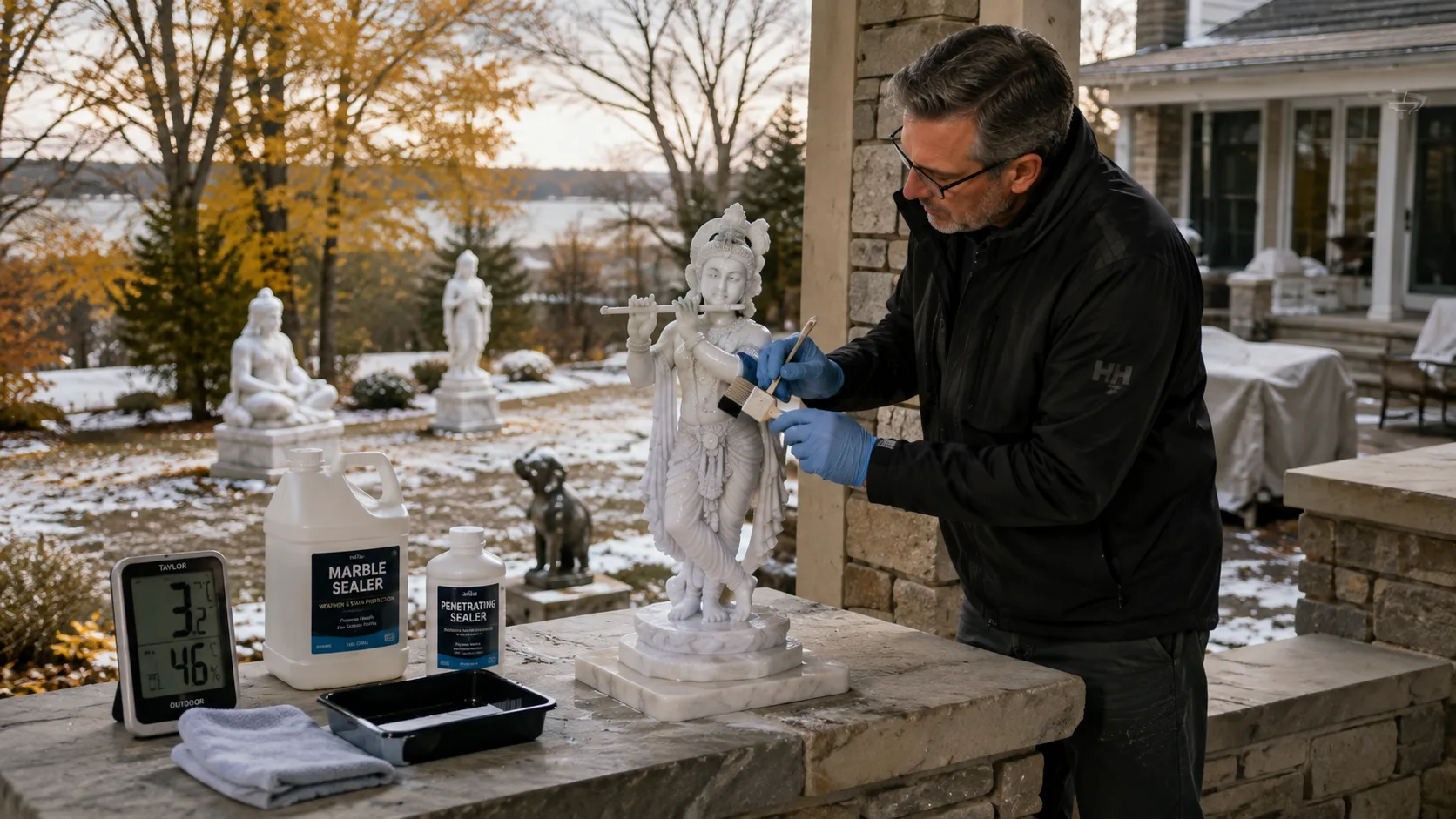
Your marble statue survives one Canadian winter. Two winters. Then you notice it. A hairline crack in the carved details. Slight discoloration on the surface. Maybe a chunk of carved decoration looking compromised. This is freeze-thaw damage. It’s the enemy of marble in Canada. And it’s completely preventable if you understand what’s happening and how to protect against it.
Marble statues can last centuries. Literally centuries. You see them in ancient temples and outdoor installations worldwide that have survived thousands of years. But they survive in climates where freeze-thaw cycles don’t stress the stone repeatedly every single winter. Canada is different. The repeated temperature swings, the water penetration, the freeze-thaw-thaw-freeze cycle create stress that degrades marble faster than almost any other climate condition.
The good news is this damage is almost entirely preventable. You don’t need expensive technology or complicated processes. You need understanding. You need to know what’s actually happening to your marble during Canadian winters. And you need to take simple protective steps before harsh weather arrives.
At Kamal Moorti’s Canada marble statue collection, we work with customers across Canada. We ship statues through Toronto winters, Vancouver rains, Calgary cold, and Montreal snow. We’ve learned which protection strategies actually work. We’ve seen what happens when people skip protection. We know the difference between statues that last decades and statues that deteriorate within years.
This guide covers everything you need to know about protecting your marble statue through Canadian seasons and ensuring generational longevity.
Understanding Freeze-Thaw Damage
Before you can prevent damage, you need to understand exactly what’s happening.
Marble is porous stone. Not like a sponge, but at the microscopic level, marble has tiny spaces. Water gets into these spaces. This is normal and unavoidable.
Here’s where Canadian winters become problematic. When the temperature drops below freezing, that water inside the marble freezes. Water expands when it freezes. Approximately nine percent expansion. That expansion creates internal pressure on the marble structure.
The marble itself is strong enough to handle expansion once or twice. The problem is repetition. Through a Canadian winter, you might have dozens of freeze-thaw cycles. Temperature drops below freezing overnight. Water freezes. Expansion stress builds. The next day, temperature rises above freezing. Ice melts. Stress releases. But the marble has been stressed.
Repeat this cycle daily for months. The marble undergoes enormous cumulative stress. And marble, despite being hard and impressive-looking, is actually vulnerable to cumulative stress damage.
The damage shows up in specific ways. Hairline cracks appear in fine carved details. These are stress fracture points. Flaking or spalling occurs where the surface actually separates from the interior marble. This looks like chunks missing. Weathering accelerates because now damaged areas expose fresh marble that hasn’t been sealed.
This isn’t sudden catastrophic failure. It’s progressive deterioration. A statue might show minimal damage after one winter but significant damage after three harsh winters if unprotected.
How Water Gets Into Marble in the First Place
You can’t prevent water in marble entirely. But you can minimize it dramatically.
Water enters marble through:
Direct contact. Rain, snow, meltwater, and irrigation all introduce water directly. Standing water is worst. Water pooling around the statue base seeps into marble constantly.
Capillary action. Water travels up marble from wet ground like it travels up a paper towel. A statue sitting on wet ground absorbs water through its base.
Humidity. Even without direct water contact, humid Canadian air deposits moisture. Summer humidity, spring thaw moisture, winter humidity all contribute.
Surface porosity. Untreated marble is porous. Sealed marble is much less porous. Unsealed marble acts like a sponge compared to sealed marble.
Most of this is unavoidable. But you can dramatically reduce it through protection strategies we’ll discuss.
Seasonal Damage Prevention: A Canadian Timeline
Protection timing matters enormously. You need to take specific actions at specific times for maximum effectiveness.
Summer and Early Fall
This is the preparation phase. No harsh winter stress yet, but this is when you prepare.
Inspect your marble statue carefully. Look for existing damage. Small cracks, flaking, discoloration. Document what you see with photographs. This establishes baseline condition.
Clean your statue thoroughly. Soft cloth, gentle pressure, and mild soap if needed. Remove surface dirt and debris. This is maintenance, not damage prevention, but it matters for what comes next.
Check drainage around the statue. If it’s positioned where water pools, adjust positioning if possible. If adjustment isn’t possible, consider creating drainage channels to divert water away.
If your statue shows previous freeze-thaw damage or you’re in an especially harsh climate zone, consider consulting professionals about protective sealing. Early fall is ideal timing.
Late Fall, Before First Frost
This is a critical protection window. You have days or weeks before freezing arrives. Act now.
Professional sealing. This is the most important step for outdoor statues in harsh climates. Professional marble sealant reduces water absorption significantly. It doesn’t make marble waterproof, but it dramatically reduces porosity.
Sealing needs to be applied by someone who understands marble. You can’t use generic concrete sealer. Marble-specific sealants exist for this reason. They protect marble without altering appearance.
Application typically happens in fall before freezing. The sealer cures over several days before cold arrives. One application lasts one to two years depending on climate and sealant quality.
Check all positioning. Make sure the statue is on solid, level ground. Winter ground settling shouldn’t destabilize the piece. Verify drainage one final time.
Protective covering consideration. For especially valuable or delicate outdoor statues, temporary covering during harsh winter protects from direct snow and ice accumulation. Light tarps or protective covers work. Ensure covering allows some air circulation to prevent moisture accumulation under cover.
Move vulnerable pieces indoors if possible. If you have outdoor statues that are portable, moving them to a sheltered garage or covered porch for winter prevents direct weather exposure. This is extreme protection but necessary for especially delicate pieces.
Winter
Once harsh weather arrives, your role becomes monitoring rather than prevention.
Check your statue periodically through winter. After heavy snow or ice, inspect for damage. After temperature swings, look for new cracks or issues. Early detection matters. A small crack caught immediately can be sealed and prevented from expanding.
Remove snow and ice accumulation if possible. Don’t use salt-based ice melt, which damages marble. Calcium chloride is better if deicing is necessary. Ideally, avoid ice melt entirely and just let ice melt naturally with temperature swings.
Keep drainage paths clear. If water drains away from the statue, that’s better than water pooling. Clear snow and ice from around the base if possible.
Monitor temperature swings. Especially harsh freeze-thaw cycles (rapid temperature changes from minus fifteen to plus five) create most stress. During these periods, extra vigilance helps.
Early Spring
Thaw time brings its own challenges.
As snow and ice melt, water flows everywhere. Ensure water flows away from your statue base, not toward it. Channel meltwater away through strategic placement of temporary channels or drainage solutions.
Inspect thoroughly as weather warms. Look for new cracks, spalling, or damage that developed through winter. Document with photos.
If you noticed minor damage through winter, address it now before the warm season. Small cracks can be sealed. Spalling can be assessed for repair needs.
Clean your statue gently as weather permits. Don’t power wash. A soft brush and mild water are adequate.
Late Spring Through Summer
No freeze-thaw stress, but maintenance continues.
Regular inspection remains important. Look for existing damage progression. Some cracks discovered in spring might develop further if not sealed.
Ensure sealing from previous fall is still effective. If it’s been two years since sealing, consider resealing in the next fall. If it’s only one year, you probably have good protection for another season.
Clean statues as needed. Dust, pollen, and debris accumulate over warm months. Quarterly gentle cleaning maintains appearance.
Longevity Strategies for Canadian Marble Statues
Beyond seasonal protection, long-term strategies ensure your marble statue lasts decades or longer.
Quality marble selection. Denser marble resists freeze-thaw damage better than softer marble. When commissioning pieces, discuss marble type specifically for the Canadian climate. Our artisans can recommend marble that performs best in harsh climates.
Proper carving techniques. How marble is carved affects freeze-thaw vulnerability. Thin carved sections are stress points. Professional carvers minimize stress point vulnerability while maintaining artistic detail. This is one reason authentic hand-carved marble statues perform better than mass-produced alternatives.
Regular sealing maintenance. Annual or biennial resealing prevents water accumulation. It’s the most important longevity investment you can make. Professional sealing costs far less than marble restoration.
Proper installation. Foundation stability, level positioning, and good drainage all contribute to longevity. A statue on unstable or uneven ground suffers more stress than properly installed work.
Professional inspection. Annual professional inspection catches problems early. An expert looks for stress patterns you might miss. Small issues prevented before they become large problems save money and preserve statues.
Documentation. Photograph your statue regularly. Compare photos year to year. You see damage progression clearly. This helps determine when professional intervention is needed.
Climate adaptation. Understand your specific Canadian climate zone. Toronto winters differ from Calgary winters. Vancouver rain differs from Montreal snow. Tailor protection strategies to your specific region’s challenges.
Repair and Restoration for Damaged Marble
Sometimes damage happens despite best efforts. Professional marble restoration can repair or minimize visible damage.
Crack sealing. Small cracks can be sealed with marble-specific fillers. The repair won’t be invisible, but it stops further damage progression.
Spalling repair. Where the marble surface has flaked off, professionals can fill and restore surface appearance. Depending on damage severity, repair quality varies.
Complete restoration. For severely damaged statues, professional restoration can return them to near-original appearance. This is expensive but possible for valuable pieces.
Contact our Canada team if your marble statue sustains damage. We can recommend restoration professionals and guide next steps.
Regional Canadian Climate Considerations
Different regions require different protection strategies.
Northern Canada (harsh freezing):
Maximum protection needed. Professional sealing essential. Winter covering recommended for valuable pieces. Shorter outdoor exposure window. Move vulnerable pieces indoors during worst months.
Central Canada (moderate-harsh freezing):
Professional sealing important. Drainage management critical. Regular winter inspection needed. Most pieces can remain outdoors year-round with proper care.
Coastal Canada (moderate freezing, high moisture):
Salt air adds complexity. Regular cleaning is important to remove salt residue. Professional sealing is still essential. Humidity management matters as much as freeze-thaw.
Temperate Canadian regions:
Less freeze-thaw stress, but don’t skip protection entirely. Regular maintenance and monitoring are still needed. Sealing still recommended.
Cost of Protection vs. Cost of Damage
Some people skip protection to save money. This is a false economy.
Professional marble sealing costs $150 to $500 depending on statue size and complexity. Annual inspection adds another $100 to $200. This is a small investment.
Marble restoration for freeze-thaw damage costs $500 to $5,000 depending on damage severity. Major restoration can cost far more.
Over ten years, regular protection and maintenance costs $2,000 to $4,000. Damage repair without proper protection can cost $2,000 to $10,000+.
The math is clear. Protect your statue. Prevention costs far less than repair.
Long-Term Outlook for Protected Marble Statues
Here’s the encouraging truth. Properly protected marble statues in Canadian climates can last generations.
We have customers with statues installed five, ten, fifteen years ago. With proper sealing and maintenance, these statues show minimal damage. They look remarkably similar to their first-year appearance.
Compare this to unprotected statues. After five harsh Canadian winters, visible deterioration is often significant.
The difference isn’t marble quality. Both groups likely started with similar quality work. The difference is protection strategy.
Your marble statue can become a family heirloom. Your grandchildren can admire it. It can pass to future generations. This isn’t fantasy. It’s achievable with proper care.
Creating Your Marble Protection Plan
Here’s how to develop a specific plan for your Canadian statue.
Assess your climate zone. Understand your specific region’s freeze-thaw patterns. This determines protection intensity.
Evaluate current statue condition. Document existing damage with photographs. This baseline helps you measure protection effectiveness.
Determine if professional sealing is needed. For outdoor statues in harsh climates, it’s essential. For indoor statues, it’s less critical but still valuable.
Schedule seasonal maintenance. Mark calendar reminders for fall preparation, winter monitoring, and spring inspection.
Budget for protection. Allocate $200 to $500 annually for sealing and professional inspection.
Plan for longevity. Think in terms of decades. What do you want your statue to look like in ten years? Twenty years? Work backward from that vision.
Our Canada team can help develop a specific protection plan for your situation. Climate zone, statue type, and current condition all factor into recommendations.
Moving Forward with Your Marble Statue Protection
If you have an existing statue, start protecting it now. Don’t wait for damage to appear.
If you’re commissioning a new marble statue, ask specifically about marble type and protection requirements. Browse our Canada collection and discuss climate-specific recommendations.
Whether new or existing, your marble statue is an investment worth protecting. Take simple steps through the year. Spend modest money on sealing and inspection. Your statue will reward you with decades of beauty and presence.
Canadian winters are harsh. But they don’t have to damage your marble statues. With understanding and proper care, your marble statue can be a beautiful permanent presence in your Canadian home for generations.


Pingback: Radha Krishna Marble Statue Manufacturing Kitchener