
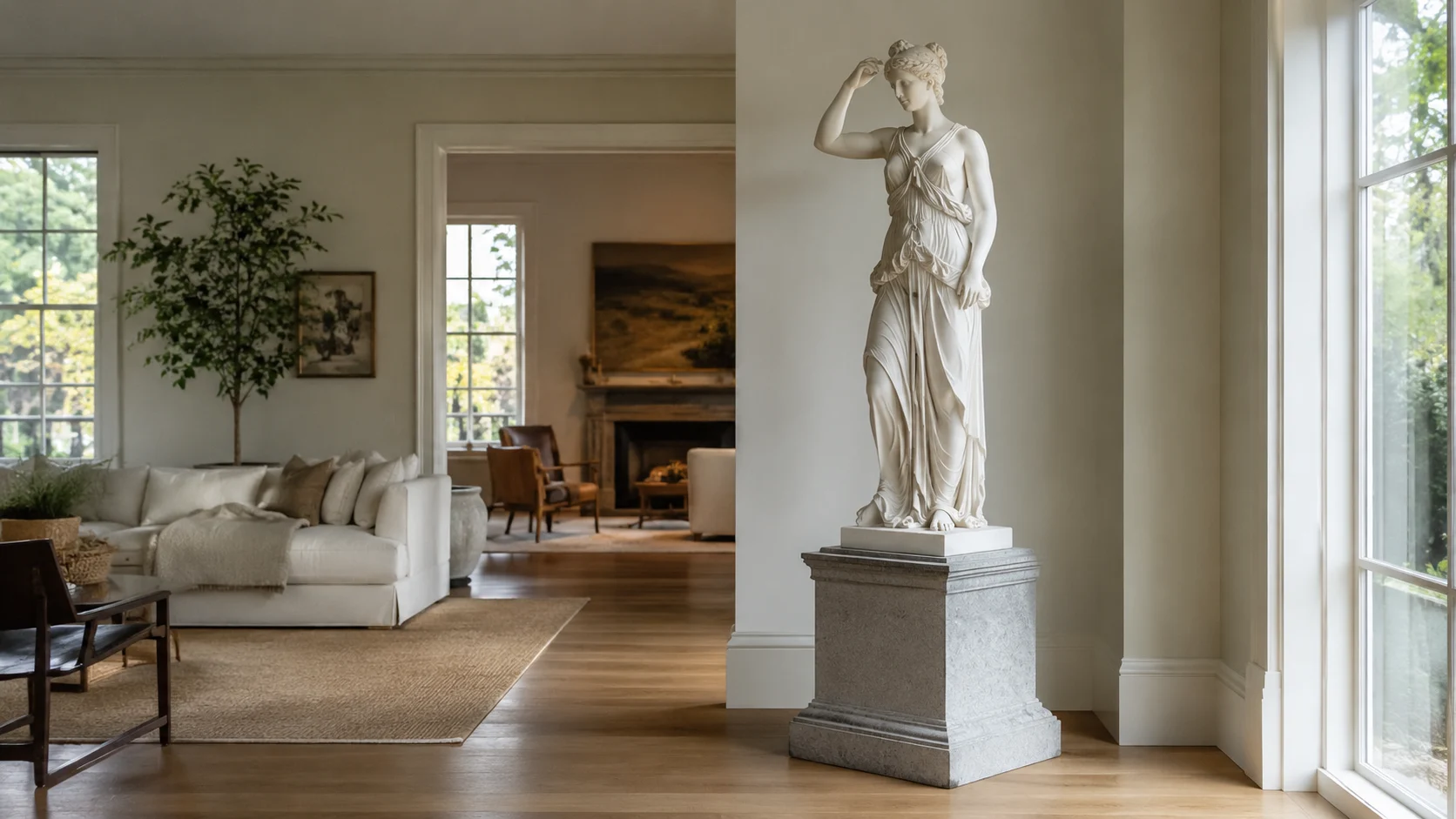
A marble statue size guide can prevent a beautiful sculpture from feeling too small for its setting or too large for the room around it. Before selecting a marble statue for a home, measure the available display surface, the open floor area, the ceiling height, and the walking path around the planned location.
Marble is visually substantial. Even a compact sculpture can become a focal point because of its carving, color variation, polished surfaces, and weight. That is why choosing a marble statue is not only about height. The base depth, projection of arms or drapery, plinth dimensions, viewing distance, and furniture nearby all affect how the piece will look once installed.
For buyers looking at marble statues USA collections, the most practical approach is to start with the space rather than the statue. Decide where the sculpture will live, measure carefully, think about how people move through the area, and then choose a scale that suits the room.
A small figure on a bookshelf, a classical sculpture on an entry console, and a life-size garden statue each need very different planning. This guide explains how to choose a size that feels intentional in an American home, apartment, foyer, patio, or garden.
Start With the Intended Location
The same marble sculpture can look entirely different depending on where it is placed. A 12-inch statue may look substantial on a narrow console table, but it can disappear on a large fireplace mantel. A 36-inch floor sculpture can make a strong statement in an open foyer, while the same piece may make a compact living room feel crowded.
Before browsing marble statues USA options, identify the exact location and take a few measurements.
Measure:
- The width and depth of the shelf, table, mantel, niche, pedestal, or floor area
- The distance from the sculpture to the nearest seating, doorway, or walkway
- The clear vertical space above the piece
- The height of nearby furniture
- The width of the statue’s base, not only the sculpture’s height
- Any overhang created by wings, raised arms, instruments, drapery, or accessories
If you are placing a statue on furniture, measure the furniture itself and the usable surface. Decorative objects, lamps, picture frames, plants, and trays reduce the room available for a sculpture.
For a floor-standing statue, use painter’s tape or a sheet of cardboard to mark the intended footprint. Leave it in place for a day or two. Walk around it as you normally would. This simple test can reveal whether the planned location interrupts a route to a door, blocks cabinet access, or makes a seating arrangement feel tighter.
Marble Statue Sizes at a Glance
There is no single correct dimension for every home. The right scale depends on the setting, the design of the statue, and how close people will stand to it. Still, these ranges can help you begin planning.
| Statue height | Typical setting | Space-planning consideration |
| Under 12 inches | Bookshelf, desk, mantel, bedside table, niche | Best as an accent. Give it a stable, uncluttered surface |
| 12 to 24 inches | Console table, sideboard, entry table, substantial shelf | Works well as a visible focal object without taking over the room |
| 24 to 36 inches | Pedestal, fireplace hearth area, large console, room corner | Needs dedicated visual space and a secure support surface |
| 36 to 60 inches | Foyer, stair landing, covered patio, garden focal point | Consider viewing distance, circulation, weight, and base dimensions |
| More than 60 inches | Estate garden, formal landscape, large commercial setting | Requires professional planning for foundation, transport, and installation |
These ranges are planning references rather than fixed rules. A slender standing figure and a seated figure of the same height can have very different footprints. A sculpture with a wide robe, pedestal, or outstretched wings can require much more visual and physical room than its height suggests.
Choosing a Marble Statue for Home Interiors
A marble statue for home interiors should suit the room’s purpose as well as its dimensions. A formal foyer can support a more prominent piece than a working desk area. A quiet bedroom may call for a smaller object that adds character without becoming visually dominant.
Small Statues: Under 12 Inches
Small marble sculptures work best when they have a clear display role. They can add detail to a bookshelf, mantel, cabinet, desk, or niche without competing with every other item in the room.
This scale is useful for:
- Apartment living rooms with limited floor area
- Library shelves and built-in cabinetry
- Side tables beside a reading chair
- Home offices
- Bedroom dressers
- Small entryway consoles
- Display niches
A small statue should not be buried among unrelated decor. Give it some empty space around the base so its silhouette can be seen. A single sculpture paired with a low stack of books or a small vase often looks more considered than a shelf packed with multiple objects.
When positioning a small marble statue, think about where people will view it. A sculpture placed at seated eye level can work well on a bookshelf. A small piece on a mantel needs enough height or contrast behind it to remain visible from across the room.
Medium Statues: 12 to 24 Inches
For many American homes, medium-scale sculptures offer the most flexibility. They are large enough to show carving details and create a focal point, but they can still work on furniture or a properly sized pedestal.
A 12-to-24-inch marble statue may suit:
- An entryway console
- A living-room sideboard
- A fireplace mantel with adequate depth
- A dining-room buffet
- A wide window ledge
- A dedicated pedestal in a hallway
- A covered porch or sheltered outdoor alcove
When a statue sits on a table or console, the display surface should look stable and proportionate. A tall sculpture on a narrow table can appear top-heavy even when the furniture can physically support the weight.
Consider the statue’s visual relationship to the furniture below it. A sculpture that is too short may look lost against a wide sideboard. One that is too tall can interrupt sightlines, especially in dining rooms or seating areas where people need to see across the space.
If the design includes fine facial features or detailed carving, place it where viewers can stand close enough to appreciate those elements.
Large Interior Statues: 24 to 60 Inches
A large interior marble sculpture needs a home within the home. Rather than squeezing it beside a sofa or placing it in the middle of a busy room, give it a location that naturally draws the eye.
Good options include:
- A double-height foyer
- A broad stair landing
- A large living-room corner
- A gallery-style hallway
- A recessed architectural niche
- A sunroom with a strong floor and open sightlines
- A dedicated pedestal near a feature wall
Large pieces are easier to appreciate when there is enough distance to see the complete form. If a viewer has to stand directly beside the statue to look at it, the carving may feel cramped rather than impressive.
For a standing sculpture, consider both the statue and its support. A pedestal raises the visual center of the work, changes the total height, and can make a medium statue feel more prominent. Before choosing a pedestal, calculate the combined height of the statue and base.
For example, a 30-inch sculpture placed on a 20-inch pedestal creates a total display height of 50 inches. That may be appropriate near a tall entryway wall, but it may feel too tall beside a low sofa or beneath a low ceiling.
Match the Statue to Furniture Scale
When a statue is displayed on furniture, the furniture becomes part of the composition. A well-sized sculpture can create a focal point. A poorly scaled one can make a console, mantel, or cabinet feel cluttered.
Console Tables and Entryways
A marble sculpture on an entryway console should leave practical room for the entry itself. People need a place for keys, mail, a lamp, or other daily-use items. Avoid selecting a statue so wide that it occupies the entire surface.
A vertical sculpture can work particularly well on a long, narrow console because it adds height without using too much width. However, check its depth. A statue that projects too far forward can make the console difficult to use or create an uncomfortable pinch point near the door.
Mantels
Mantel displays often work best with one primary object rather than many competing pieces. Measure the mantel depth carefully, particularly when the sculpture has a deep base or a forward-facing pose.
A marble statue should sit fully on the mantel surface. Do not let the base overhang the edge, and avoid placing it where it could be affected by excessive heat from a working fireplace. If the fireplace is used, follow the fireplace manufacturer’s guidance for mantel clearances and heat exposure.
Sideboards and Buffets
A dining-room sideboard can handle a medium-sized statue visually, especially when there is open wall space above it. Keep sightlines in mind. A tall figure may block views across the room if the sideboard sits near a dining table.
A seated sculpture or lower, broader design can be a better choice where the room already has tall artwork, mirrors, or cabinetry.
Bookshelves and Built-Ins
Bookshelves give small marble statues a natural home, but only if the shelf depth and load capacity are suitable. Measure the shelf depth, then leave a margin between the front of the statue and the shelf edge.
A marble piece can be heavier than it looks. Before placing one on a floating shelf or older built-in, confirm that the shelf is securely installed and appropriate for the load. If there is any uncertainty, choose a lower shelf, a freestanding cabinet, or a dedicated pedestal.
Plan for Weight and Support
Size and weight are closely connected with marble. A taller sculpture will often be heavier, but form matters too. A compact seated statue with a thick base may weigh more than a taller, slender figure.
Do not estimate support capacity based on appearance alone. A delicate-looking console, floating shelf, or glass table may not be appropriate for a heavy stone object. Check the manufacturer’s load guidance for the furniture when available, or consult a qualified installer or furniture professional if you are unsure.
For floor installations, think beyond the statue itself:
- Is the floor level?
- Is the surface protected from scratching?
- Is there a stable, flat area for the base?
- Does the statue need a plinth or protective pad?
- Can the sculpture be safely moved into the home?
- Are there stairs, narrow hallways, tight turns, or low doorways on the delivery path?
A marble statue may require more planning during delivery than after installation. Measure the route from the driveway or entry door to the final location. Account for door frames, elevator dimensions, stair landings, and turns in hallways.
For a significant piece, discuss delivery, handling, and installation details with the seller before ordering. The goal is to avoid choosing a sculpture that fits the room but cannot be moved safely into it.
Marble Sculpture Placement by Room
Living Room
The living room usually works best with a statue that has a clear visual relationship to the seating area. A small sculpture can sit on a side table or bookshelf. A larger statue can occupy a corner, sit near a fireplace, or stand beside a feature wall.
Avoid placing a floor sculpture where it blocks conversation paths between the sofa, chairs, and doorway. In a compact room, a vertical piece on a pedestal may use less floor area than a wide seated sculpture.
For an open-plan living room, use the sculpture to help define a zone. A statue near an entry, reading nook, or fireplace can create a visual pause without dividing the room with bulky furniture.
Entryway
An entryway offers a strong opportunity for marble sculpture placement because it introduces the home’s character immediately. Still, the space must remain practical.
Small foyers are usually better suited to a tabletop statue or a shallow wall niche. Larger foyers can accommodate a floor-standing figure, especially near a staircase, curved wall, or open landing.
Do not place a statue in the direct line of a swinging door or where it narrows a route between the entrance and the rest of the home.
Dining Room
In a dining room, choose a statue that does not interfere with chairs being pulled out or with people moving around the table. Sideboards, corner pedestals, and recessed areas are often safer than central floor positions.
If you display a marble sculpture on a buffet, leave enough room for the tableware and serving needs of the household. A decorative display should support the room’s use, not make it harder to host a meal.
Bedroom
Bedrooms generally benefit from smaller, calmer sculptural accents. A compact marble figure on a dresser, shelf, or writing desk can add texture without making the room feel formal or crowded.
Keep the piece secure. Avoid tall, heavy statues on narrow nightstands or unstable dressers. Position them away from areas where bedding, bags, or clothing might catch on the base.
Home Office
A small statue can add personality to a desk, credenza, or bookcase. In a work area, it is usually better to choose a piece that does not reduce usable desk surface or distract from a monitor, task lighting, or paperwork.
A bookshelf display at eye level can be a practical choice. It keeps the statue visible while preserving the main work surface.
Outdoor Marble Statues: Scale and Site Planning
Outdoor marble statues need more than visual planning. They are exposed to weather, moisture, dirt, landscape equipment, and changing light. The setting must be selected with long-term care in mind.
A small garden statue can work near a planting bed, fountain, garden bench, courtyard wall, or sheltered patio. Larger sculptures need a clear viewing approach and a stable foundation.
When choosing outdoor marble statues, assess:
- The size of the garden or patio
- The width of paths around the statue
- The foundation or base beneath it
- Drainage around the site
- Shade and sun exposure
- Proximity to sprinklers
- Potential contact with lawn equipment
- Visibility from windows, doors, and seating areas
A statue positioned at the far end of a path can serve as a focal point. A larger piece can work well in a formal garden axis, beside a pool area, or near an estate entrance if there is sufficient scale around it.
Avoid placing a large sculpture immediately beside a narrow path. It can make the landscape feel constrained and may be vulnerable to bumps from equipment, carts, or foot traffic.
For outdoor pieces, the base is as important as the statue. A foundation should be level and stable. If you are planning a substantial sculpture, seek site-specific guidance from a qualified landscape contractor, installer, or structural professional.
Use Viewing Distance to Choose Scale
A statue’s ideal size depends partly on how far away it will usually be viewed.
If it will be seen from only a few feet away, intricate detail is easier to appreciate and a smaller sculpture can feel meaningful. If it will be viewed from across a large room, through a picture window, or from the far end of a garden, it needs enough scale and contrast to remain visible.
Think about the main viewing point:
- From a sofa across the living room
- From the front door into the foyer
- From the dining table
- From a patio seating area
- From a garden path
- From inside the home looking toward an outdoor display
A larger statue is not always better. If the viewer is close, a very large figure may feel overwhelming. If the viewer is far away, a smaller statue may lose its detail and visual impact.
The best result comes from matching the sculpture’s scale to the intended viewing distance, not simply buying the largest piece that fits physically.
Common Marble Statue Sizing Mistakes
Measuring Height but Ignoring Depth
A statue can fit below the ceiling or within the height of a niche while still extending too far into the room. Always measure the base depth and the widest projection of the sculpture.
Forgetting the Pedestal
A pedestal changes the total height, weight, and footprint of the display. Plan the statue and plinth as one installation.
Overcrowding the Display Area
A marble sculpture needs visual breathing room. If it is surrounded by lamps, plants, books, frames, and smaller ornaments, its shape can get lost.
Blocking a Walking Route
A floor sculpture should not force people to turn sideways, step around a base, or avoid part of the room. Test the footprint before the statue arrives.
Choosing an Unstable Surface
Stone requires dependable support. Do not place a heavy marble statue on furniture that has not been checked for stability and load capacity.
Ignoring Delivery Access
A sculpture may fit beautifully in a room but be difficult to bring through the home. Measure doorways, halls, staircases, elevators, and turns before purchasing.
Treating Outdoor Placement Like Indoor Placement
A garden statue needs consideration for ground stability, drainage, exposure, maintenance access, and safe installation. A visually attractive location is not automatically a suitable installation location.
A Simple Space-Planning Checklist
Before selecting a marble statue for home display, complete this checklist:
- Choose the exact display location.
- Measure width, depth, and vertical clearance.
- Measure furniture or pedestal dimensions if the statue will not sit directly on the floor.
- Check walking paths, door swings, drawers, and seating clearance.
- Record the statue’s height, base width, base depth, and widest projection.
- Consider total display height if using a pedestal.
- Confirm the surface can support the piece securely.
- Measure delivery access from the entrance to the final location.
- Identify the most common viewing distance.
- For outdoor marble statues, plan the foundation and drainage before installation.
This process may feel detailed, but it makes the purchase easier. Instead of choosing only by appearance, you can compare marble statues USA selections against the actual requirements of your room or landscape.
Frequently Asked Questions
What size marble statue is best for a living room?
The best size depends on the available display area and viewing distance. Small sculptures under 12 inches often work well on shelves and side tables. Pieces between 12 and 24 inches can suit consoles or sideboards, while larger statues generally need a dedicated corner, pedestal, foyer, or open floor area.
Can I place a large marble statue in a small home?
Yes, but it needs a dedicated location and enough circulation space around it. A tall, narrow sculpture on a stable pedestal may work better than a wide piece that occupies too much floor area. Measure the footprint and test the position before making a final decision.
How much space should be around a floor-standing marble statue?
The exact amount depends on the room and traffic pattern, but people should be able to move comfortably around the sculpture without brushing against it. Consider door swings, furniture use, hallways, and routes between rooms. Marking the base outline on the floor is a useful way to test the space.
Should a marble statue be displayed on a pedestal?
A pedestal can help create a more formal display and bring a sculpture closer to eye level. It must be wide, stable, and suitable for the statue’s weight. Calculate the total height of both pieces before deciding on placement.
What should I check before buying outdoor marble statues?
Check the statue’s footprint, planned foundation, drainage, viewing distance, exposure to weather, nearby paths, and delivery access. Larger outdoor sculptures may need professional installation and a purpose-built base.
Choose the Size Before the Sculpture
The right marble statue can bring a room, entryway, patio, or garden into focus. The right size makes that impact feel natural. It allows the sculpture to be seen clearly, gives it a stable place to sit, and keeps the surrounding space comfortable to use.
Start with measurements. Think about the support surface, the base, the sightlines, the route through the room, and the way the sculpture will be viewed day after day. Then compare available designs against those requirements.
For a closer look at available marble statues USA collections, visit Statues World and discuss the intended placement, dimensions, and delivery requirements before selecting a piece.



Pingback: Krishna Marble Statue Manufacturing Minneapolis