
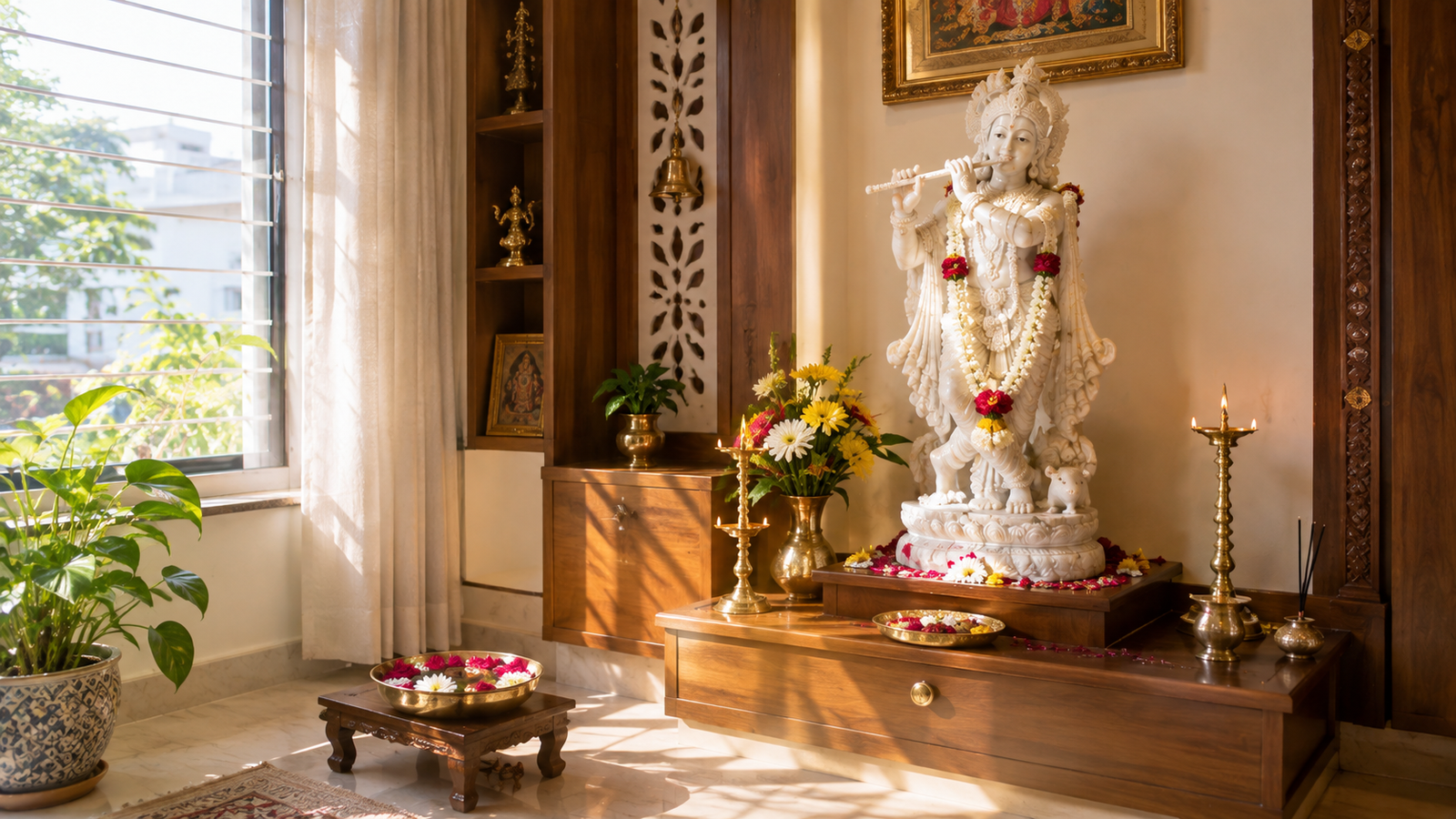
Setting up a home temple Krishna is one of those projects that feels simple in theory and surprisingly detailed once you actually start. Which corner of the house. Which direction the statue should face. How high the platform should be. Whether the room you already have in mind is even the right choice to begin with. None of this needs to be complicated, but it does help to walk through it deliberately rather than figuring it out after the statue has already arrived.
This guide covers both the practical side of installing a marble Krishna statue in a home temple and the traditional vastu principles many households choose to follow, with the understanding that practices can vary meaningfully by family, region, and personal tradition.
Choosing the Right Location in Your Home
Before thinking about the statue itself, it helps to settle on where the home temple will actually live. In vastu tradition, the northeast corner of the house, sometimes called the ishaan corner, is widely considered the most favorable direction for a prayer space, associated with clarity, positive energy, and the rising sun. Where a fully separate northeast room is not available, many households designate a northeast facing corner within a larger room instead, which is generally considered a reasonable alternative.
A few locations are commonly avoided when possible. Directly beneath a staircase, next to or facing a bathroom, and directly in line with the main entrance door are all spots many families choose to steer clear of for a permanent temple setup, based on traditional guidance around energy flow and respect for the sacred space. That said, not every home has the layout flexibility to follow every guideline perfectly, and most traditions place more emphasis on maintaining the space with cleanliness and sincerity than achieving textbook perfect positioning.
Which Direction Should the Statue Face
Once the room or corner is decided, the statue’s facing direction is the next consideration. A commonly followed guideline is to position the statue so it faces east or north, allowing the worshipper to face east or north while praying, directions traditionally associated with positive energy and new beginnings. Facing south is generally avoided in most traditional guidance, though again, family and regional practices vary, and it is worth following whatever tradition feels meaningful within your own household.
Choosing the Right Height for Placement
Height matters more than people often expect. A Krishna statue is traditionally placed at a level where it can be viewed comfortably at eye level or slightly above when standing or sitting for prayer, generally meaning the platform sits at roughly chest height for a person seated in front of it, though this naturally varies depending on whether your household prays standing, sitting on the floor, or using a chair.
Avoid placing the statue directly on the floor without any platform, since a raised position, even a modest one, reflects the respect traditionally given to a devotional image. A dedicated wooden or marble platform, sized appropriately for the statue, is generally the better long term choice over an improvised low shelf.
What to Keep Near, and What to Avoid
A few traditional guidelines shape what typically surrounds a Krishna statue in a home temple. Fresh flowers, a diya, an incense holder, and a small space for offerings are commonly placed nearby, supporting the daily rituals many households build around their temple. Photographs of deceased family members are traditionally kept separate from the main deity statues, often on a different wall or shelf, rather than directly alongside the worship idols.
It is also generally advised to avoid placing the temple corner in a bedroom where possible, particularly facing the bed directly, though many households with space constraints do maintain a small temple within a bedroom and simply take care with positioning and a room divider or curtain when the temple is not in active use.
Installing the Statue for the First Time
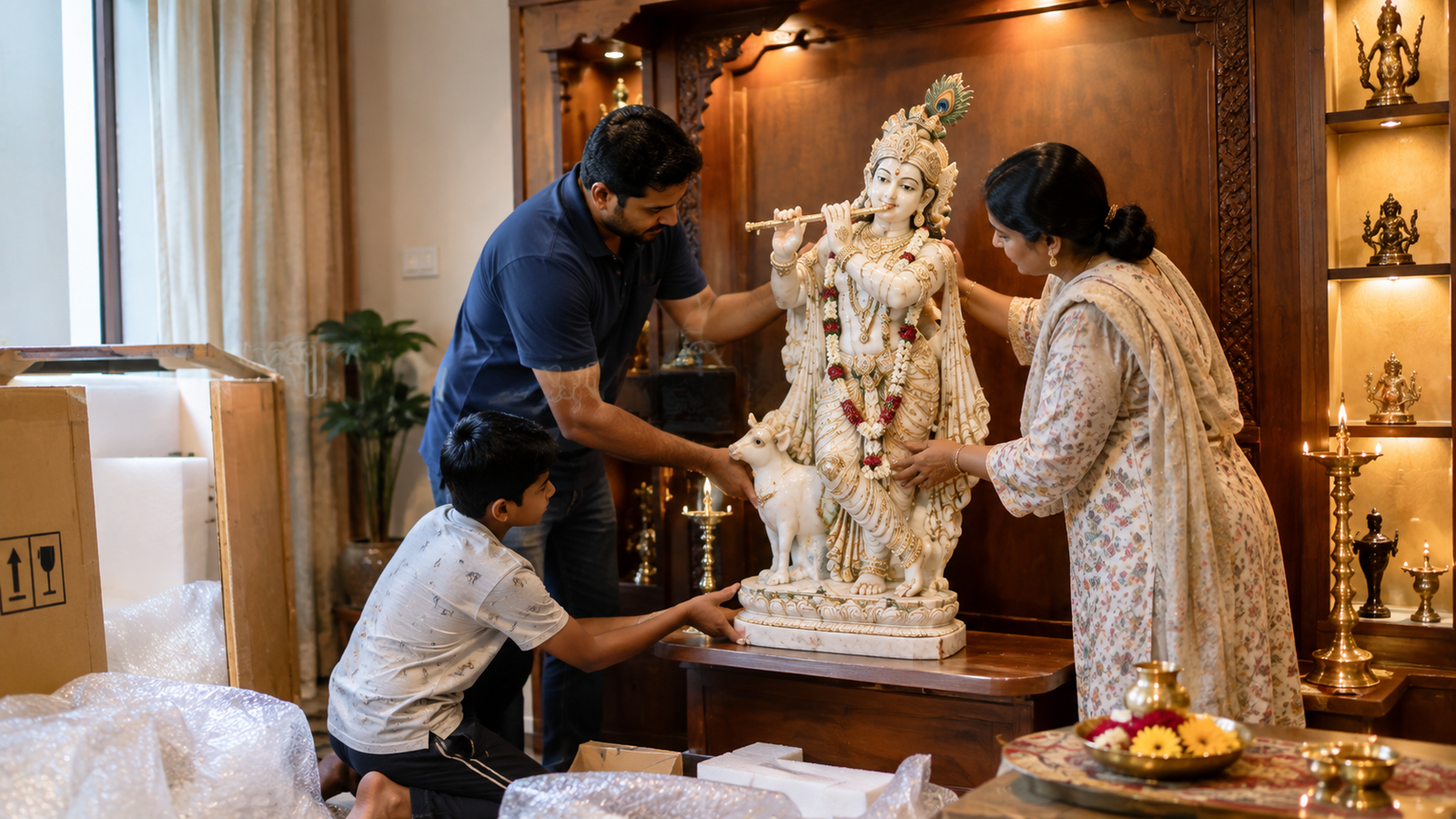
Once your temple space and platform are ready, the actual installation is fairly straightforward, though a few steps help ensure it goes smoothly. Unpack the statue carefully, checking it over for any transit damage before positioning it permanently, since this is much easier to address before the statue is placed and secured than after. Clean the platform surface thoroughly before placing the statue, and consider adding a simple cloth or decorative base covering beneath it, both for tradition and to protect the platform surface over time.
Position the statue in its final spot, checking that it sits level and stable, particularly important for larger or heavier statues where an uneven surface could pose a long term stability risk. Many households choose to perform a small dedicated prayer or ritual at the time of installation, following whatever tradition is meaningful to the family, though this is a personal and religious choice rather than something tied to the installation process itself.
Setting Up for Daily Worship
Once the statue is in place, think through the practical flow of daily worship. Keep frequently used items, a diya, matches, incense, and a small bowl for offerings, within easy reach of the temple space rather than stored elsewhere in the house, since this makes daily practice considerably easier to maintain consistently. If multiple family members use the space, make sure there is enough room for more than one person to stand or sit comfortably during shared prayer times, particularly during festivals when the whole household may gather together.
Common Placement Mistakes to Avoid
A few missteps come up repeatedly when households set up a home temple for the first time. Placing the statue too low, without any raised platform, is one of the more common ones, along with positioning the temple directly facing a bathroom door or beneath an overhead beam, both generally avoided in traditional guidance. Overcrowding the space with too many additional decorative items, rather than letting the statue remain the clear focal point, is another common issue that tends to develop gradually over time rather than happening all at once.
It also helps to avoid placing the statue somewhere it will receive minimal natural light or airflow, since a home temple traditionally benefits from feeling open and bright rather than tucked into a dim, closed off corner of the house.
Adapting These Principles for Apartments and Smaller Homes
Not every household has the space for a fully dedicated temple room, and that is genuinely fine. For smaller apartments, a well chosen shelf or corner, oriented as close to the traditional northeast or facing east or north as the layout reasonably allows, works well as a practical adaptation. The core principles, cleanliness, a slightly raised platform, adequate space for daily offerings, and a location treated with intentional respect, matter more than achieving a perfectly textbook layout in a space that was not originally designed with a temple room in mind.
Frequently Asked Questions
Is the northeast direction always required for a home temple?
It is the traditionally preferred direction in vastu guidance, but many households successfully adapt with a northeast facing corner within a larger room when a dedicated northeast room is not available.
How high should the platform be for a Krishna statue?
A common guideline places the statue at roughly chest height for someone seated in front of it, though this can be adjusted based on how your household typically prays, whether standing, sitting on the floor, or using a chair.
Can a home temple be set up in a bedroom?
It is generally advised against where possible, particularly facing the bed directly, though many households with limited space do maintain a small temple in a bedroom with thoughtful positioning.
Is a specific ritual required when installing a new statue?
Many families choose to perform a small dedicated prayer at installation, though this is a personal and religious choice that varies by tradition rather than a fixed requirement.
What is the most common placement mistake people make?
Placing the statue too low without a raised platform, and overcrowding the space with too many additional items over time, are among the most common issues that develop in home temple setups.
Creating a Home Temple You Will Cherish
A thoughtfully set up home temple becomes a genuine daily anchor for a household, and getting the placement and installation right from the start makes that daily practice feel natural rather than effortful. You can explore the range of marble Krishna statues at Kamal Moorti suited to different home temple sizes, or look at the handcrafted marble temple collection for a complete setup, including the Shree Radhe Krishna pair designs for a larger installation.
To discuss the right size and setup for your specific space, reach out through the contact page, learn more via the About Us page, or call +91-9829678999 for guidance on your home temple installation.



Pingback: Radha Krishna Marble Statue Manufacturing San Jose