Surat does Ganesh Chaturthi on a big scale. Neighbourhoods put up large pandals, processions wind through the streets, and on the last day thousands of idols are taken to the water for visarjan. It is a joyful, noisy and deeply felt festival, and it makes the city a good place to think about what a Ganesh idol is for.
The idols of the festival are made to be immersed. A marble Ganesh is the opposite. It is made to stay, in a shop, an office or a home temple, for years and often for decades. If you are searching for Ganesh marble moorti manufacturing in Surat, that is probably what you want. And like most buyers in Gujarat, you may find that the shops are many but the carving is done elsewhere, in Jaipur.
This guide explains why, what to look for in a hand carved Ganesh, and how to deal with the practical side of ordering one from Ganesh marble moorti manufacturing Surat.
A Different Idol for a Different Purpose
The idols made for Ganesh Chaturthi are shaped quickly, painted brightly and meant to dissolve back into the water. There is nothing wrong with that, it is part of the tradition. But it is a different object from a statue that is carved from stone and meant to be touched, dusted and worshipped every morning for years.
A permanent Ganesh needs different things. It needs solid material, a face that you can look at every day without tiring of it, a base that sits steady and a finish that lasts. Many families in Surat keep both: the festival idol for the ten days, and a marble Ganesh that is always there.
Why Marble Ganesh Idols Are Carved in Jaipur
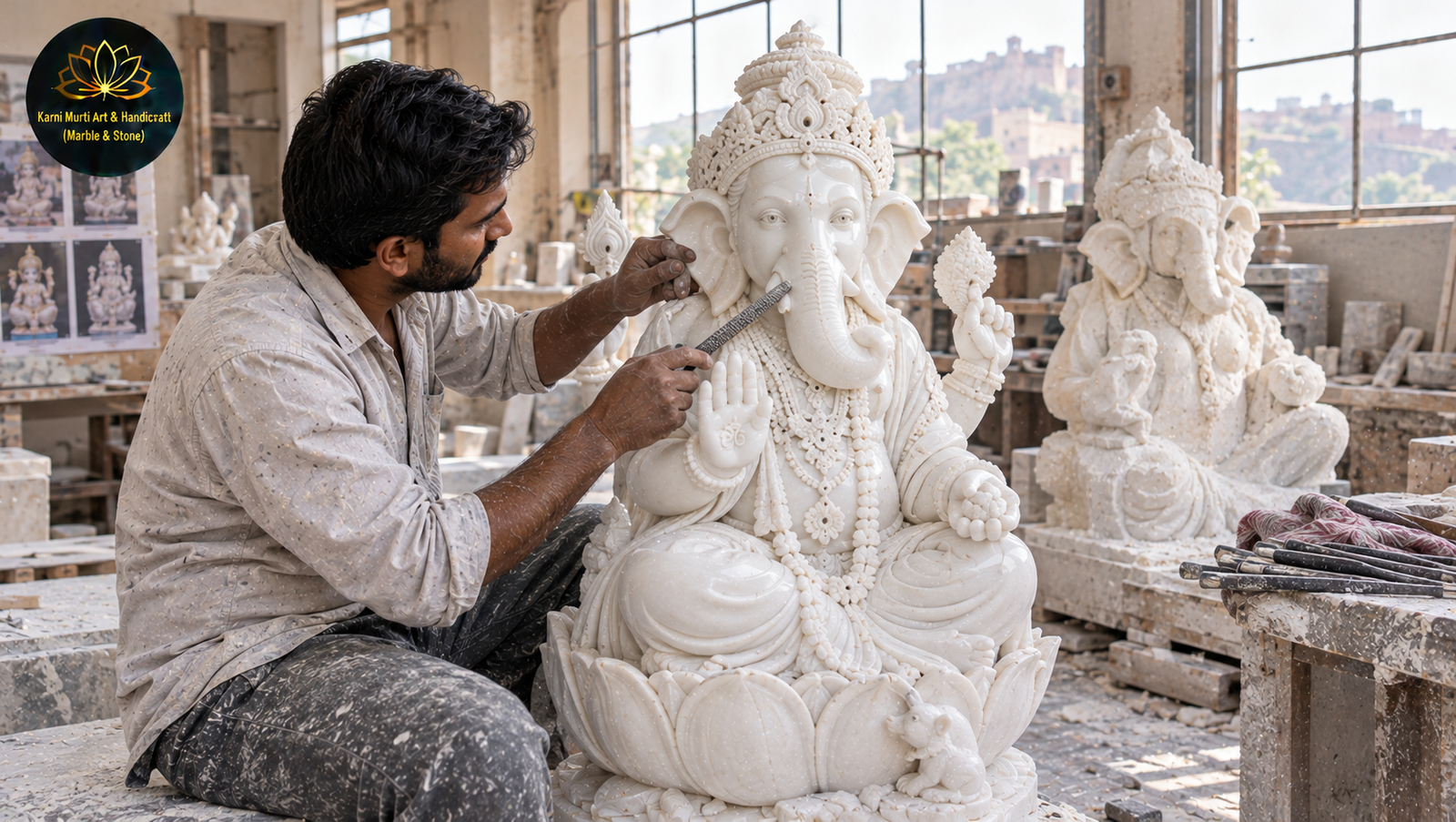
Surat is known worldwide for diamond cutting and polishing and is also a major textile centre. Those are crafts of fine precision, but they are not marble carving. Hand carved white marble idols belong to a trade that grew up around Jaipur, where the stone is sourced within reach and where the skill is passed down inside carving families. A young carver there learns by working beside an older one for years, moving from roughing out the block to faces, hands and fine ornament.
Ganesh is a good test of that training. The face is the whole statue. The trunk has to curve naturally, the eyes have to look calm and kind, and the large ears and round belly have to feel in proportion. An experienced carver gets these right almost by habit. A rushed one does not.
What a Surat Search Usually Turns Up
Look for a Ganesh moorti supplier in Gujarat and you will mostly meet two kinds of seller.
The first is a retail shop that buys finished statues from a distributor and sells them on. These shops are convenient, and seeing a statue before you pay counts for something. But they often cannot tell you who carved a piece, what the marble is, or whether a different size or pose can be made.
The second is a workshop that carves its own statues. At Kamal Moorti & Painting Kala Kendra in Jaipur, artisans work each piece by hand from a raw marble block to the final polish, and the painting is done in the same place. Hand carved Ganesh statues are a newer addition to the range, next to the established Krishna and Radha Krishna collections. Orders are shipped to Surat and across Gujarat.
What You Gain by Ordering From the Workshop
Dealing with the maker changes three things. You get straight answers, because the person who handled the block can tell you what it is and how it was finished. You get choices, since pose, size, base and the amount of painted detail can usually be discussed before carving begins. And you usually get a fairer price, because every seller between the workshop and your door adds a margin.
Why Surat’s Businesses Keep a Ganesh
Surat runs on trade. Textile markets, diamond units, embroidery workshops, transport firms and small family shops fill the city, and a very large number of them keep a Ganesh near the entrance or the owner’s seat. Ganesh is the one invoked at the start of anything new: a shop, a new financial year, a new machine, a new office.
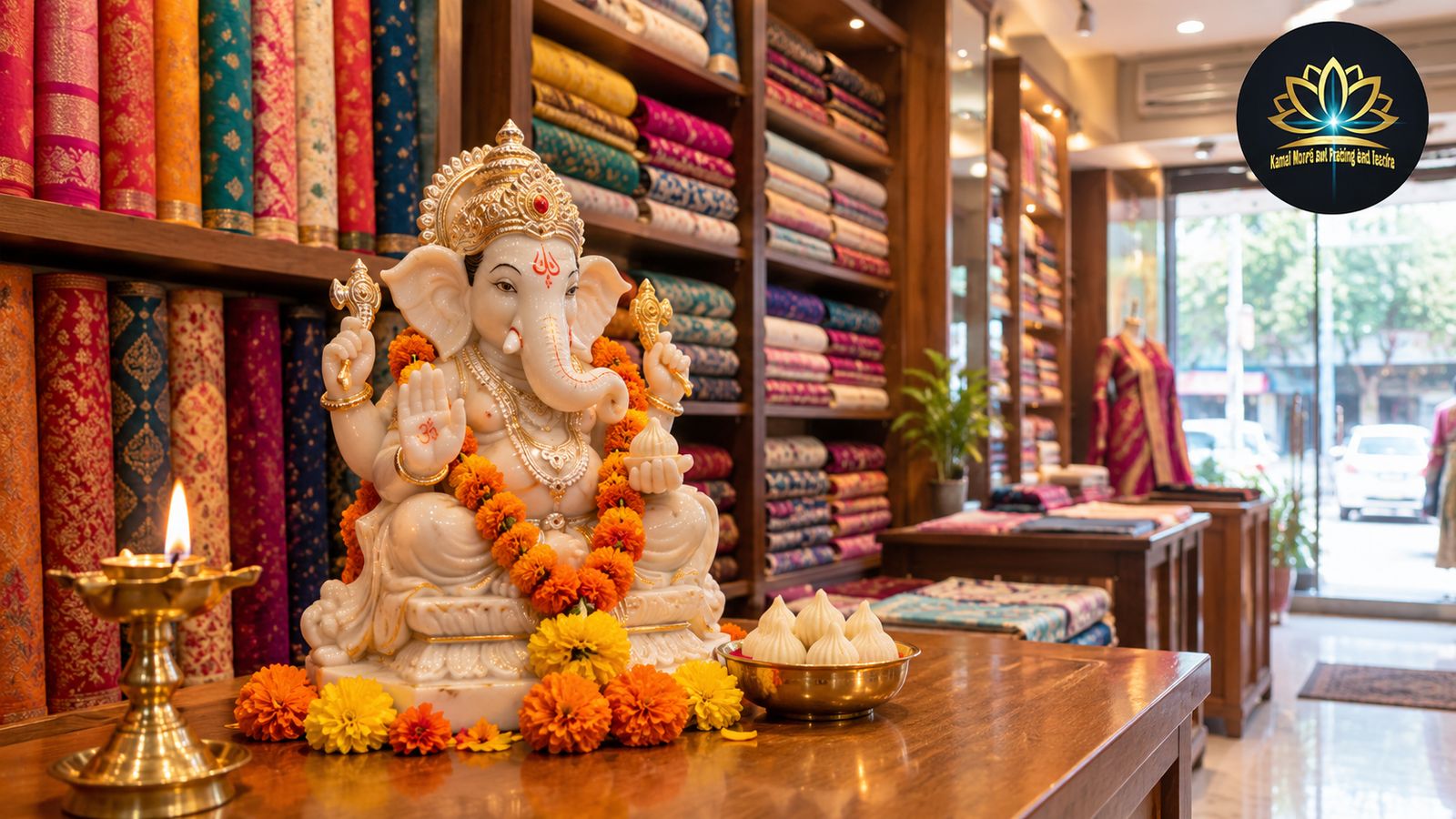
If you are buying for a business, think about where the statue will stand. Near the cash counter or the entrance is common. Choose a stable, level surface that customers and staff will not knock. A statue that sits in a busy shop for years should be solid and not easily chipped, so ask about the finish and the base.
Forms of Ganesh to Consider
Seated with a modak. The classic form, with the trunk curving gently toward the sweet. It has a settled, welcoming look and suits both homes and shops.
Standing or dancing Ganesh. More movement and energy. A good choice for an entrance or a living room.
Ganesh with Riddhi and Siddhi. A fuller composition, often chosen for a larger pooja room or a new business.
Ganesh with Lakshmi. A pairing that many traders choose for Diwali and for the new financial year.
For the trunk, many families prefer a left-turning trunk for home worship, while a right-turning one is often considered to need stricter rituals. Customs differ between households and traditions, so ask your family or priest, and tell the workshop what you need.
Finish: Plain White, Painted or Something in Between
A plain polished white marble Ganesh looks calm and clean, and suits a modern home or office. A fully painted statue, with colour on the dhoti and gold on the crown and jewellery, feels closer to a traditional temple image and stands out in a shop. A middle choice is white marble with gold only on the crown and the ornaments.
Painted details need gentler care over the years, particularly in a shop where there is more dust and handling, so think about how much upkeep you want.
Size, Weight and Placement
Marble is heavy, and a Ganesh statue gets heavy quickly as it grows. Before you decide, measure the shelf, counter or platform where the statue will stand, and check that the surface can carry the load. For a shop, think about whether the surface is level and whether customers or staff could knock it. For a flat, check the lift and the stair.
Our guide to marble statue weight goes into this in more detail, and our guide to Krishna statue placement by room size explains how to match a statue to a space, which applies equally to Ganesh.
Surat’s Humid Climate and Looking After Marble
Surat is a coastal city, and its air is humid for much of the year, with heavy monsoon rain. Marble copes well, but damp air can leave a film on a polished surface and can dull painted details over time. Wipe the statue regularly with a soft dry cloth, keep it away from windows that get rain and avoid chemical cleaners. In a shop with dust from fabric or street traffic, wipe it more often. Our guide to marble Krishna statue durability goes into weather and humidity in more detail.
Timing: Ganesh Chaturthi, Diwali and the New Financial Year
Demand rises before Ganesh Chaturthi, before Diwali and at the start of the new financial year, when many traders open new account books and install a fresh statue. If you want your Ganesh in place for a particular day, plan early. Hand carving cannot be rushed without it showing in the finish, and shipping takes extra days. Enquire several weeks ahead and ask the workshop for an honest estimate instead of assuming it can be done in a week.
How Ordering From Surat Works
You do not need to travel to Jaipur. A typical order starts with a conversation. You describe the form, the size that fits your space and the finish you prefer. Reference photos help a great deal. Since Ganesh is a newer line, it is worth asking the workshop to confirm the design is workable and to give you a rough timeline before you commit.
During carving, progress photos can usually be shared. When the statue is finished, it is packed and sent to Surat.
Packing and Delivery
The fragile points on a Ganesh statue are the trunk, the ears and the edge of the base. Ask how the statue will be padded and crated and whether those parts get extra protection. A statue that is properly packed makes the road trip from Jaipur without trouble. A poorly packed one is the usual reason for chips on arrival. When it arrives, unpack it in front of the delivery person so any transit damage can be recorded immediately.
Checking What You Are Buying
Not everything sold as a marble Ganesh is solid carved marble. Some pieces are cast from marble dust and resin, and some are plaster. A few simple checks help. Real marble feels heavy for its size, feels cool to the touch and has irregular natural veining. Ask directly what the statue is made of and who carved it. Our guide to identifying authentic marble statues covers these checks in more detail.
Questions to Ask Any Seller
Ask whether the workshop carves the statue itself or resells it. Ask what marble is used and where it comes from. Ask whether you can see work in progress. Ask what customisations are possible and how they affect the timeline. Ask how the statue will be packed and delivered. And ask for the quote in writing, so you know what is included.
Frequently Asked Questions
Is there marble Ganesh moorti manufacturing in Surat itself?
Surat is known for its festival idols and for diamonds and textiles. Hand carved marble idols mostly come from Jaipur, so buyers in Surat usually order from a workshop there.
How long does a Ganesh statue take to reach Surat?
It depends on the size and the amount of detail. Expect a few weeks for carving and finishing, plus shipping time. Confirm an estimate once your design is fixed, especially before Ganesh Chaturthi or Diwali.
Is a marble Ganesh suitable for a shop or office?
Yes. Many buyers place a marble Ganesh near the entrance or the cash counter. Choose a stable, level surface and a size that suits the space.
Can I choose the direction of the trunk?
Yes. Because each statue is carved individually, the trunk direction, pose, base and finish can be discussed before carving begins. Check your family’s custom first.
How should I look after a marble statue in Surat’s humid weather?
Wipe it regularly with a soft dry cloth, keep it away from rain-facing windows and avoid chemical cleaners. Painted areas need especially gentle care.
A Ganesh Made by Hand for Your Surat Home or Business
If you want a Ganesh moorti carved by hand from real marble, the simplest step is to talk directly to the people who make it. Kamal Moorti offers hand carved Ganesh statues as a newer addition alongside its established range of marble Krishna statues and Shree Radhe Krishna pair designs. If you are planning a full shrine, the marble temple collection is worth a look. Everything is made in the Jaipur workshop and shipped across India, including Surat and the rest of Gujarat.
To discuss your requirements, share reference images and get a quote and timeline for delivery to Surat, reach out through the contact page, read more on the About Us page, or call +91-9829678999 to place your order.