
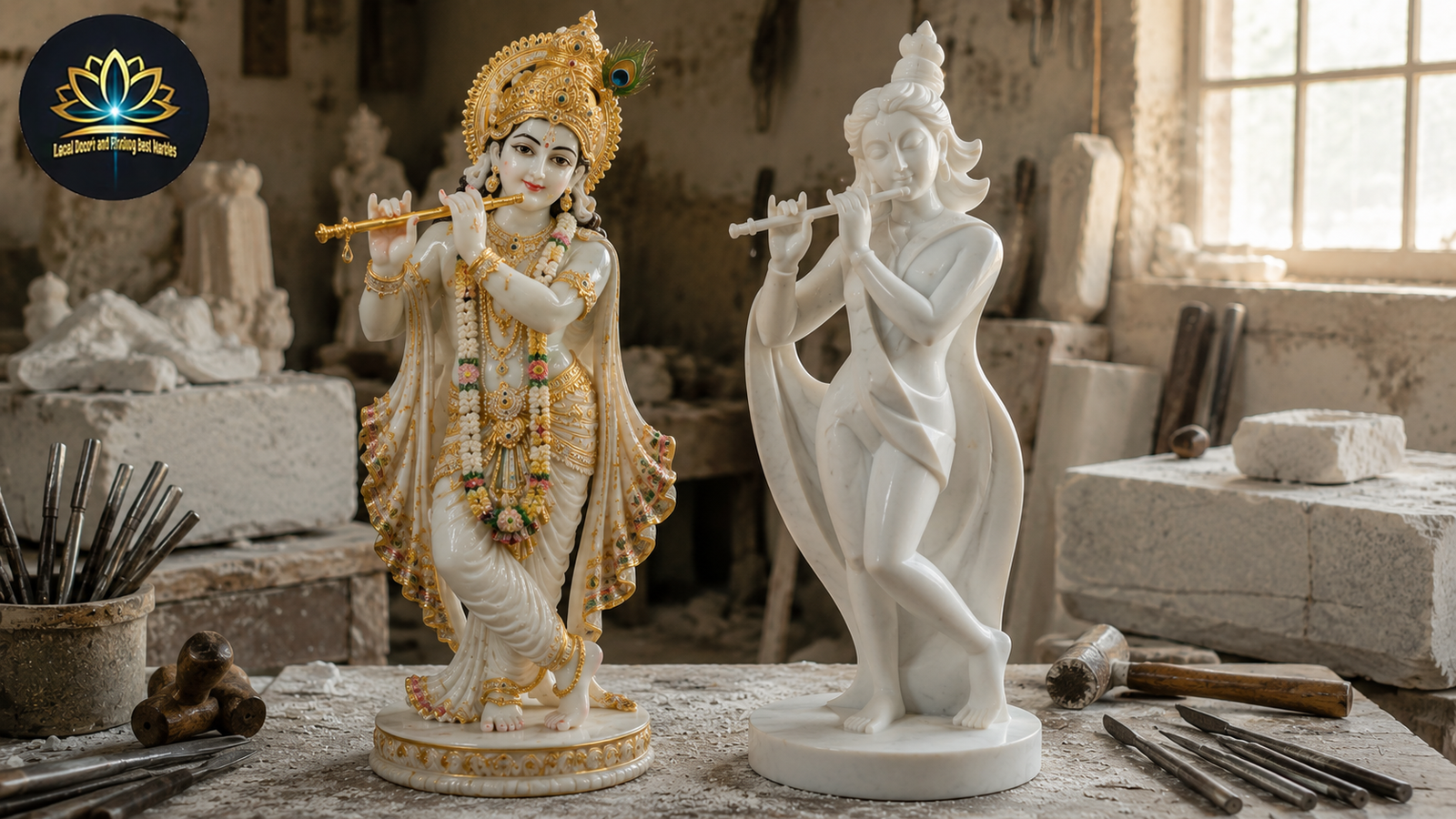
Ask ten individuals what a Krishna statuary need to appear like and you will most likely get 10 somewhat different solutions. Some photo the timeless photo right out of a calendar print, Krishna standing under a tree with his flute raised, peacock feather in his crown, painted in blues and golds. Others, specifically those enhancing more recent homes with cleaner interiors, want something quieter. A form that still states Krishna without shouting it.
Both stand, and neither is more “appropriate” than the various other. What has actually changed over the last decade or so is not dedication itself, however the range of options individuals currently really feel comfy making when it involves just how that devotion is shared in their homes. This piece takes a look at what divides a standard Krishna sculpture from a contemporary one, where both overlap, and just how to determine which direction fits your very own area.
What Makes a Krishna Statue “Traditional”
Standard marble Krishna statues comply with layout conventions that have been given via generations of artists, especially in Jaipur, where marble idol sculpting has actually been practiced as a household profession for a very long time. A couple of features often tend to specify this category.
The pose usually complies with timeless iconography. Krishna standing in tribhanga, the graceful 3 bend position, one leg crossed over the other, groove raised to his lips, is most likely one of the most well-known version. Variants include Murlidhar Krishna statue styles in an unwinded standing pose, or Govardhan Giridhari, where Krishna is revealed raising the Govardhan hillside on one finger, a scene linked to a particular story from scripture.
Color and describing play a big function also. Traditional sculptures are typically hand repainted after carving, with blue or deep tones utilized for Krishna’s skin, gold fallen leave put on the crown, armlets, and flute, and fine brushwork utilized to choose the folds of his dhoti or the pattern on a peacock plume. This paint step is not attractive thrive for its own benefit. It adheres to established iconographic rules regarding exactly how each divine being is meant to be represented, right down to the items positioned in the hands.
The overall feeling of a typical sculpture is just one of story. You are implied to recognize a details minute or form of Krishna just by checking out the pose and the things he is holding.
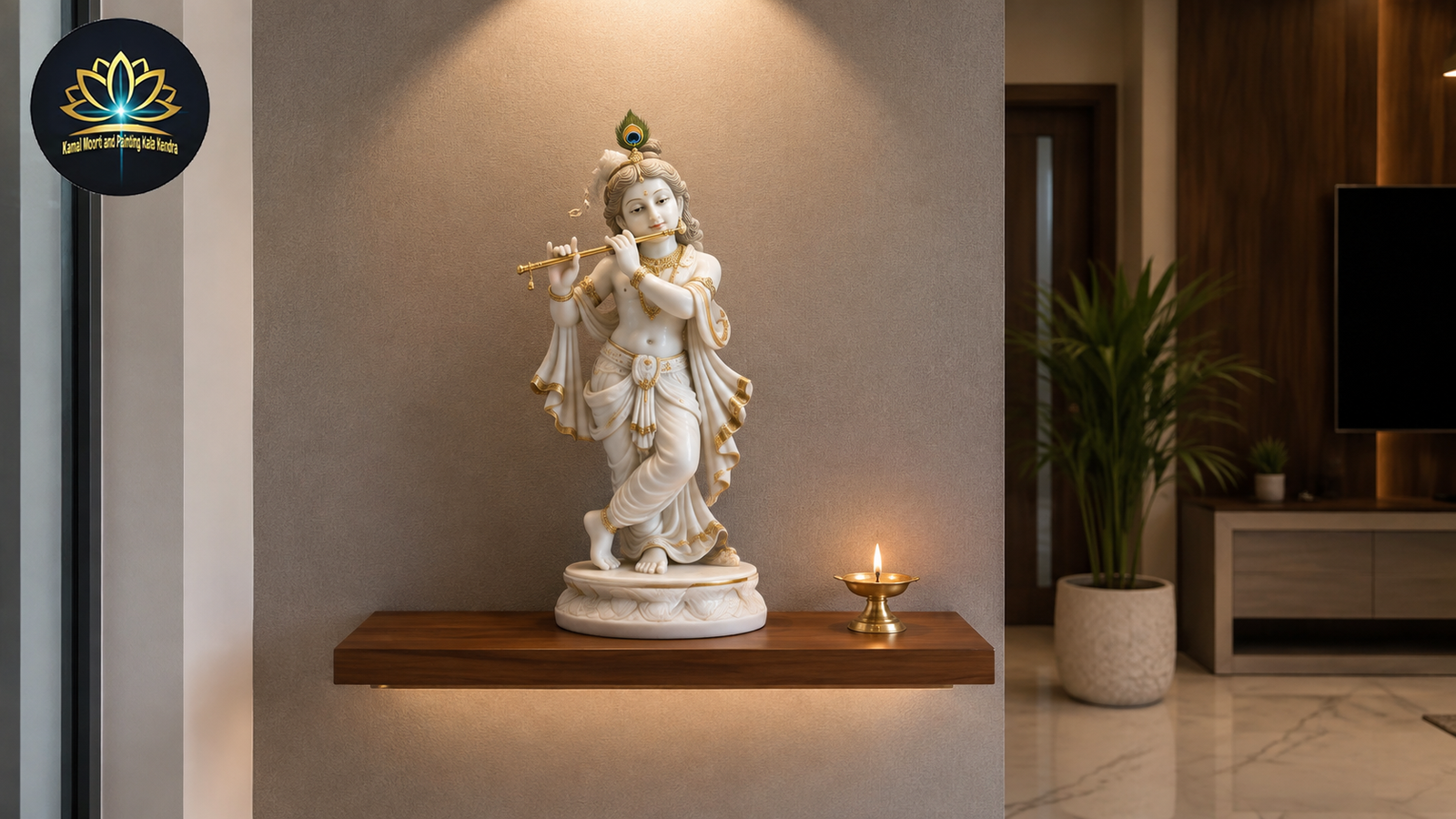
What Contemporary Krishna Statue Design Actually Looks Like
Contemporary analyses do not deny the typical types outright. Most of the times, they streamline them. The present might still reference tribhanga, but the embellishment is pared back. As opposed to split gold outlining across every surface area, a modern piece could utilize a solitary tone of marble left largely unpainted, letting the all-natural veining and polish of the stone do the visual job.
Lines tend to be cleaner in this design. Carvers focus a lot more on the silhouette and the circulation of the marble itself rather than thick surface information. Some contemporary Krishna pieces obtain more straight from abstract sculptural types, where the groove and the contour of the body are recommended through smooth, constant lines as opposed to sharply defined features.
This change mirrors something Kamal Moorti has actually seen take place extra broadly across marble sculpture requests. The workshop’s collection of modern abstract stone sculptures, built around fluid forms like spirals, waves, and rising contours, reflects the exact same interior design impulse that is now reaching religious pieces too. People furnishing more recent homes, specifically smaller urban homes, typically desire a piece that fits a minimal visual without losing its spiritual significance.
Where the Two Styles Actually Meet
It would be a blunder to deal with standard and contemporary as two entirely separate categories with absolutely nothing in between. In practice, a lot of what obtains purchased today rests someplace in the middle.
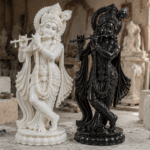
An usual demand, for example, is a Krishna sculpture carved in the classic tribhanga present yet finished in ordinary white marble with just light gold emphasizing on the crown, instead of full body painting. This maintains the well-known narrative pose while offering the piece a calmer, more contemporary presence in the room. Another variation involves keeping typical outlining but picking a darker stone, such as black marble, which alters the entire mood of the piece without modifying the underlying carving.
This middle ground exists since sculpture, unlike a printed photo, is integrated in layers. The position is determined first, after that the finishing selections, then the shade work. Each stage can be readjusted separately, which is specifically why personalized orders enable so much versatility in between both ends of the range.
Why This Choice Matters More Than People Expect
A Krishna statue is hardly ever an one time decorative purchase. It normally ends up in a spot that obtains everyday attention, whether that is a small rack altar or a specialized pooja space, and it stays there for many years. Due to that, the design decision deserves a lot more thought than picking a showpiece for a coffee table.
A conventional statue tends to fit homes where the rest of the decoration already leans toward classic Indian design, wooden furnishings, warm shades, sculpted detailing elsewhere in your house. In that setup, a vibrantly repainted, highly thorough Krishna moorti seems like an all-natural extension of the room instead of an outlier.
A contemporary item works better in homes with a much more controlled indoor scheme, subjected concrete, neutral tones, marginal decoration throughout. In those spaces, a heavily painted typical statue can sometimes clash visually, even if the person buying it has no issue with the traditional style itself. It is much less about spiritual choice and more concerning just how the object sits within the area around it.
Craftsmanship Behind Both Styles
It is worth cleaning up a typical assumption below. Contemporary Krishna statuaries are not less complex to make just because they bring much less surface area detail. Somehow, they require more technique from the sculptor, since there is nowhere for incomplete proportions to conceal behind paint or decoration. A conventional statuary can sometimes use describing to remedy minor disparities in the base carving. A modern item can not.
Both styles begin with the same foundation, an artist working the marble by hand making use of blades and polishing devices, shaping the block into the desired type before any type of paint or ending up starts. The genuine distinction takes place in the final stages, where the artisan determines how much of the raw rock to leave revealed versus how much to layer with color and gold job.
Choosing Marble Type for Each Style
Traditional statues are most often carved from white marble, since it takes paint and gold leaf application well and provides a clean base for detailed brushwork. Contemporary pieces, on the other hand, sometimes use the marble’s natural color and veining as part of the design itself, which means the choice of stone block matters more upfront, since flaws or uneven veining are harder to disguise once the piece is finished.
If you already know you want a contemporary, minimally finished statue, it helps to ask directly about seeing the marble block or photos of it before carving begins, so you have a sense of the natural pattern that will show through in the final piece.
A Quick Way to Decide
If you are still unsure which direction fits your home, a simple test helps. Picture the statue sitting exactly where you plan to place it, then picture the room as it looks right now, without imagining any changes to the existing decor. If the room already has warm, detailed, classic elements, a traditional Krishna statue will likely feel at home. If the room is closer to clean lines and quieter tones, a contemporary or lightly finished piece will probably sit better.
There is no wrong answer here, and it is worth remembering that the spiritual value of the statue does not change based on how it is painted or finished. The choice is really about how you want the piece to live in your space day to day.
Frequently Asked Questions
Can a traditional Krishna pose be made in a contemporary finish?
Yes. This is one of the most requested combinations at Kamal Moorti, where a classic pose such as tribhanga is kept intact but the coloring and detailing are simplified for a more modern look.
Is a contemporary Krishna statue considered less traditional in worship value?
No. The spiritual significance of a Krishna moorti comes from the form and intention behind it, not from how much surface detailing or paintwork it carries.
Which style is easier to maintain, traditional or contemporary?
Both require similar basic care, regular dusting with a soft dry cloth and avoiding chemical cleaners. Contemporary pieces with less painted detailing can sometimes be wiped a little more freely since there is less colored surface to protect.
Can I see the marble block before a contemporary statue is carved?
You can request this, especially for statues where the natural marble tone and veining will remain visible in the final piece, since it helps confirm the look before carving begins.
Do traditional and contemporary Krishna statues take the same amount of time to craft?
Timelines are similar overall, generally in the ten to twenty five day range depending on size, though heavily detailed traditional pieces with extensive painting can sometimes take a little longer than simpler contemporary finishes.
Finding the Right Krishna Statue for Your Home
Whether you are drawn to the richly painted classical form or a quieter, contemporary interpretation, the goal is the same, a statue that feels genuinely at home in your space rather than just placed there. You can browse the full range of hand carved marble Krishna statues for the traditional styles discussed here, or explore the modern abstract stone sculptures collection for a sense of the cleaner, contemporary direction Kamal Moorti also works in. If you are considering a paired Radha Krishna piece instead of a solo statue, the Shree Radhe Krishna collection is worth a look as well.
To talk through pose, finish, or a custom blend of both styles, you can learn more about the workshop on the About Us page or reach out directly through the contact page, or call +91-9829678999 to discuss what would work best for your home.

Pingback: Krishna Marble Statue Manufacturing Columbus | Kamal Moorti