Somewhere between picking a pose for your Krishna statue and finalizing the size and all marble types , most people run into a question they were not really expecting to think about: white marble or black marble. It sounds like a small decision, almost cosmetic, but it actually shapes how the statue looks in your home, how it ages over the years, and in some cases, what it costs to make.
This comparison walks through the real differences between the two, without the sales pitch. Both are legitimate, beautiful choices. The right one just depends on what you are looking for.
Why This Choice Comes Up At All
Marble idol making in Jaipur has actually generally leaned greatly toward white marble, and there is a great factor for that. White marble takes hand painting and gold fallen leave describing beautifully, which is why most timeless Krishna sculptures, the ones you see in holy places and older homes, are carved from it. Yet over the past numerous years, black marble has actually located its very own following, specifically amongst individuals who want a sculpture with a bolder, quieter visual visibility as opposed to a heavily repainted one.
At Kamal Moorti & Painting Kala Kendra, white marble remains the key material used across the Krishna sculpture collection, considering that it fits the hand repainted, gold comprehensive design the workshop is recognized for. That claimed, the workshop also works with modification demands that include rock type, dimension, and coating, so black marble pieces do show up as a request from customers who particularly want that look.
Appearance: What Actually Changes
One of the most obvious difference is aesthetic, but it deserves breaking down specifically what changes when you relocate from white to black.
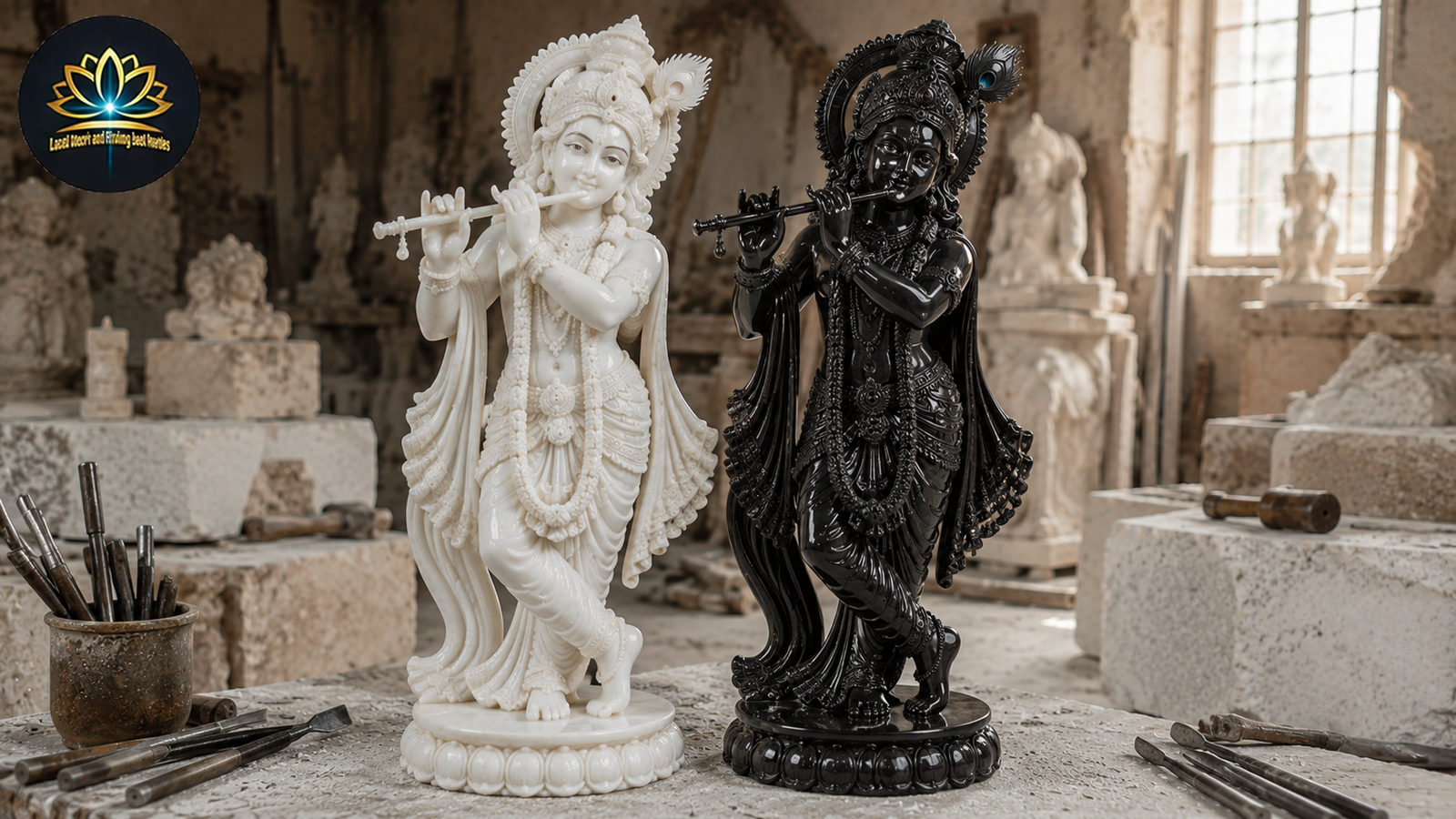
White marble has a soft, virtually luminescent quality. Under diya light or early morning sun, it tackles a gentle glow, and this becomes part of why it pairs so well with repainted outlining. Gold fallen leave on a crown, blue tones on Krishna’s skin, colored textile folds up, all of this sticks out clearly versus a pale background. A white marble Krishna sculpture often tends to feel warm and approachable in an area.
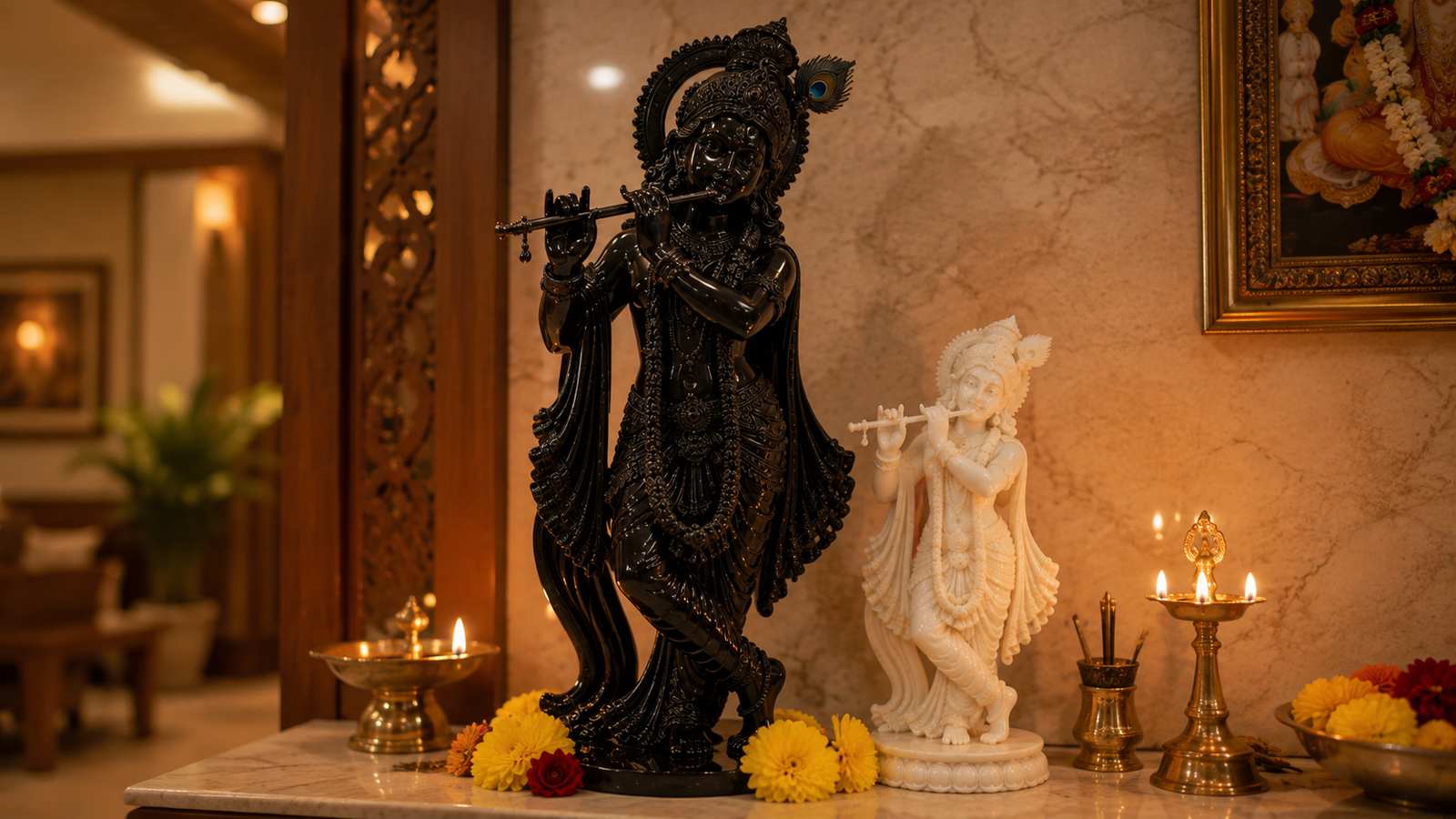
Black marble reads extremely in a different way. It has a denser, more remarkable presence, and the all-natural gloss highlights a deep reflective luster instead of a soft glow. Since the rock itself is dark, painting and gold job turn up in a completely various method, usually utilized much more moderately, simply an outline on the crown or groove as opposed to full body outlining. Some black marble Krishna statues are left virtually completely unpainted, allowing the refined stone speak for itself. This offers the item an extra contemporary, minimal feeling even when the pose is typical.
Neither look is objectively better. It really boils down to whether you want the statuary to really feel soft and devotional in a classic sense, or strong and striking in such a way that suits a much more modern interior.
Durability: Are They Actually Different?
This is where a lot of buyers think there must be a large gap, however the reality is both stones are genuinely sturdy when effectively cared for. Marble as a whole is a thick, long lasting material, and this holds true whether it is white or black.
That claimed, there are a couple of useful differences worth understanding. Black marble has a tendency to reveal dirt, water areas, and finger prints extra noticeably than white marble merely because of the comparison versus the dark surface. This does not suggest it is less long lasting, yet it does indicate it needs slightly extra frequent cleaning to keep it looking its finest, especially in damp climates or homes near a kitchen where airborne oil can decide on surfaces gradually.
White marble, on the other hand, can show yellowing or small staining over many years if it is routinely revealed to smoke from incense or oil lamps without occasional cleaning. This is a sluggish procedure and primarily aesthetic, but it is the flip side of the same coin, each stone has its own maintenance quirk as opposed to one being naturally stronger than the various other.
| Factor | White Marble | Black Marble |
| Visual character | Soft, luminous, pairs well with painted detail | Bold, reflective, striking even with minimal color |
| Maintenance quirk | Can show slight yellowing near smoke and incense over years | Shows dust and fingerprints more visibly, needs frequent wiping |
| Best suited for | Classical painted poses, traditional home temples | Minimal finishes, contemporary interiors, statement pieces |
| Detailing style | Full painting and gold leaf work | Sparse gold accenting, often left partly unpainted |
Cost Considerations Without the Guesswork
It would be easy to assume one stone is simply cheaper than the other, but the real cost factors are more nuanced than the base material alone. Size, the complexity of the carving, how much painting and gold leaf work goes into the piece, and how long the artisan spends on detailing all play a bigger role than whether the base stone is white or black.
What is fair to say is that black marble pieces, when left largely unpainted with a polished natural finish, sometimes involve less painting labor since the color work is minimal. But if a black marble statue includes intricate gold detailing to match a fully painted white marble piece, the labor involved can end up fairly similar. The best way to get an accurate sense of what a specific design will involve is to describe the pose, size, and finish you have in mind directly, since generic price comparisons between stone types rarely hold up once customization enters the picture.
Which One Fits Your Home
If your home holy place already leans standard, with wood furniture, cozy tones, and other timeless decoration components, a white marble Krishna statuary with complete painting and gold outlining will likely seem like a natural expansion of the space. It is likewise the much safer selection if you want the sculpture to carefully appear like the calendar art and temple imagery lots of people grew up seeing.
If your space is extra modern, with cleaner lines and a quieter shade scheme, a black marble Krishna sculpture can function as a striking centerpiece without clashing against the remainder of the room. It also fits individuals that especially want something aesthetically different from what many homes have, considering that black marble divine being statuaries are still much less common than white ones.
There is likewise a middle path worth discussing. Some clients select a black marble statue with a small amount of gold describing on the crown and groove, which maintains the standard iconography well-known while still giving the piece that darker, much more contemporary visibility.
Caring for Either Stone
Regardless of which you choose, the basic care routine is similar. Dust with a soft, dry cloth regularly, and avoid chemical cleaners or abrasive scrubbing, especially on painted or gold leaf areas. For black marble specifically, a slightly more frequent wipe down helps keep dust and water spots from becoming visible, since the dark surface shows them faster than white marble would. For white marble, keeping the statue a little further from direct incense smoke, or wiping it down occasionally if it sits close to a diya, helps preserve the surface tone over the years.
Frequently Asked Questions
Is black marble as durable as white marble for a Krishna statue?
Yes. Both are genuinely durable natural stones. The difference is mostly in how visible dust and water marks are on the surface, not in the underlying strength of the material.
Does painting work the same way on black marble as it does on white marble?
Not exactly. Painting on black marble is often used more sparingly, since the dark base already provides visual contrast. Many black marble Krishna statues use minimal gold accenting rather than full body painting.
Can I get a black marble Krishna statue in the same pose as a white marble one?
Yes, in most cases the same pose can be carved in either stone. It is best to describe the exact pose and detailing you want when placing your enquiry so the artisans can confirm feasibility.
Which stone is easier to maintain long term?
Both require similar basic care. White marble can show slight yellowing near smoke sources over many years, while black marble shows dust and fingerprints more visibly day to day. Neither is significantly harder to maintain than the other.
Is one stone type more expensive than the other?
Not inherently. Cost depends more on size, carving complexity, and the amount of painting or gold detailing involved than on whether the base stone is white or black.
Making the Right Choice for Your Space
Both white and black marble Krishna statues carry the same devotional meaning. The stone you choose is really about how you want the piece to sit in your home, whether that is a soft, classical presence or a bolder, more contemporary one. You can browse the full range of hand carved marble Krishna statues to see the traditional white marble styles Kamal Moorti is known for, and if you are drawn to a more minimal, contemporary finish, the modern abstract stone sculptures collection gives a good sense of how the workshop handles cleaner, less ornamented stone work.
For a custom pose, size, or a specific stone finish in mind, it helps to describe exactly what you are picturing. You can learn more about the workshop through the About Us page or get in touch directly through the contact page, or call +91-9829678999 to talk through your requirements before placing an order.