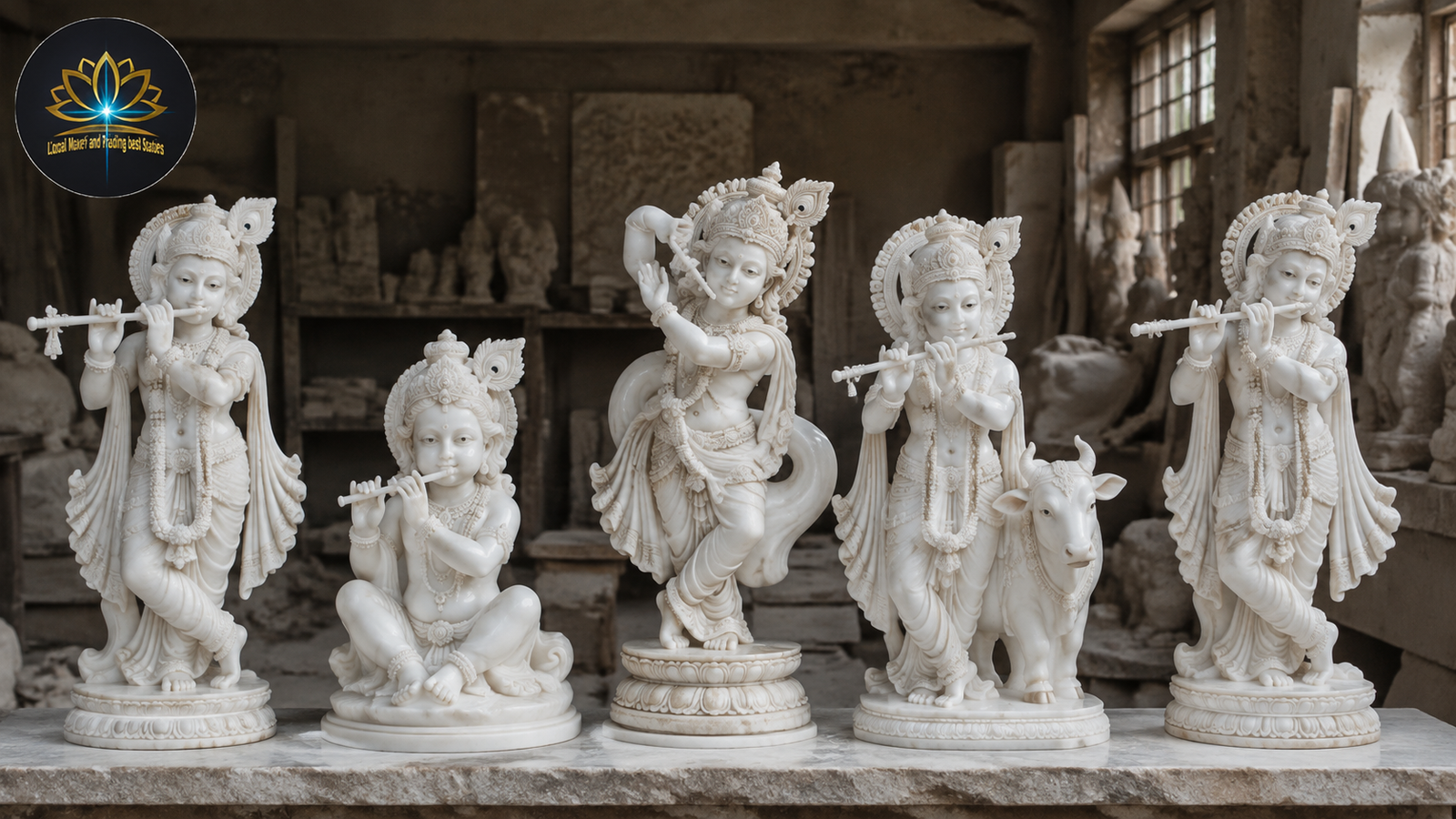
Most people shopping for a Krishna statue know roughly what they want it to feel like, warm, devotional, maybe a little playful. What they are often less sure about is which specific pose to choose, and why it matters. Krishna is depicted in more forms than almost any other deity in Hindu iconography, each one tied to a different story, mood, or stage of his life, and each one suited to slightly different kinds of spaces.
This guide walks through the most common Krishna statue poses, what each one represents, and some practical thoughts on where and how to place the finished piece at home.
Murlidhar: Krishna statue poses
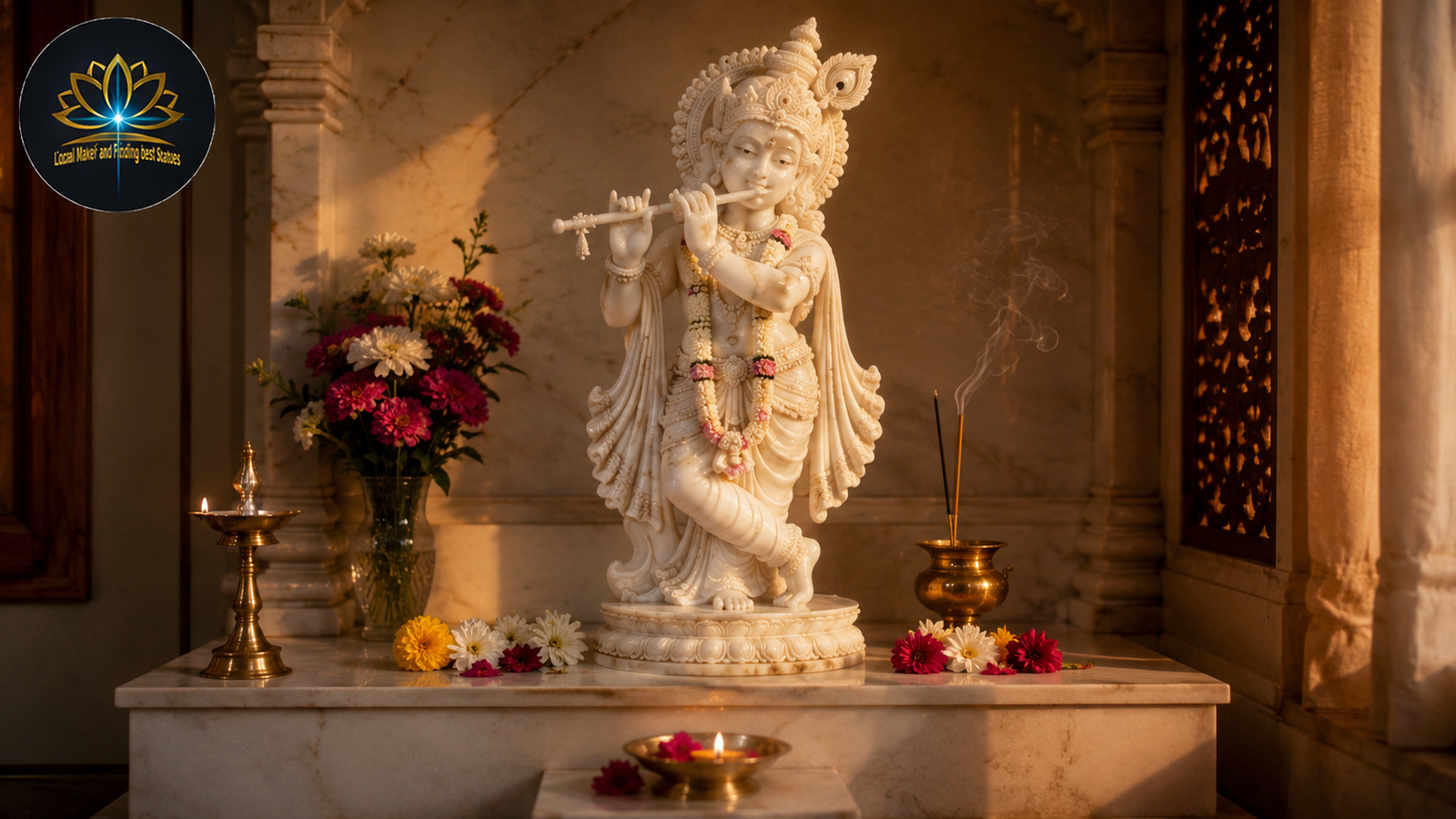
This is the pose most people picture first when they think of a Krishna statue. Krishna stands in the graceful tribhanga posture, body gently curved in three bends, one leg crossed loosely over the other, flute raised to his lips. The name Krishna moorti meanings literally means one who holds the murli, or flute.
This form represents Krishna’s role as an enchanter, the one whose music draws in every living being, from the cows and villagers of Vrindavan to the devotee standing in front of the statue today. It is widely considered the most versatile pose for a home temple, since it captures both the divine and the deeply personal, approachable side of Krishna at once.
Venugopal: Krishna With His Cows
Closely related to Murlidhar, the Venugopal form shows Krishna playing the flute while standing near or beside a cow, sometimes with the cow resting at his feet. This pose leans into Krishna’s identity as a cowherd during his years in Vrindavan, and it carries themes of nurturing, simplicity, and a close bond with nature.
Families who want a Krishna statue that feels a little more grounded and pastoral, rather than strictly formal, often gravitate toward this version. It also works well for those who want to include a secondary figure alongside Krishna without introducing another deity into the piece.
Govardhan Giridhari: Krishna Lifting the Mountain
This form depicts a specific and well known story, in which Krishna lifts the Govardhan hill on the tip of one finger to shelter the villagers of Vrindavan from a devastating storm. The pose typically shows marble Krishna statue placement with one arm raised overhead, palm upward, supporting the weight of the mountain.
Symbolically, this form represents protection and quiet strength, the idea that true power does not need to be loud or forceful to be effective. It is a popular choice for households that want a Krishna statue associated specifically with protection and shelter, rather than the more commonly chosen musical or playful forms.
Bal Krishna and Laddu Gopal: The Child Form
Few forms of Krishna are as widely loved as his depiction as a small child, often called Bal Krishna or Laddu Gopal statue. These statues usually show Krishna crawling, sitting, or reaching for a ball of butter, capturing the mischievous, endearing side of his early childhood in Vrindavan.
This form carries a very different emotional tone from the more formal standing poses. Many households treat a Laddu Gopal statue almost like a member of the family, involving daily rituals of feeding, dressing, and even rocking the idol to sleep. It tends to suit homes that want a warmer, more intimate style of daily worship rather than a purely formal devotional presence.
Kaliya Daman: Krishna Dancing on the Serpent
This dramatic pose shows young Krishna dancing on the hood of the serpent Kaliya, having subdued the venomous snake that once poisoned the waters of the Yamuna river. The statue typically captures a dynamic, mid motion stance, with Krishna’s foot pressed onto the serpent’s raised hood.
This form symbolizes the triumph of good over harmful forces, and it carries a more energetic, storytelling quality compared to the calmer standing poses. It is a striking choice for those who want a statue that feels like it is capturing a moment in motion rather than a static devotional image in Krishna statue for home temple.
Parthasarathi: Krishna as Charioteer
This form portrays Krishna in his role as charioteer and guide to Arjuna during the events of the Bhagavad Gita, often shown holding the reins of a chariot or in a teaching stance. It represents wisdom, guidance, and Krishna’s role as a spiritual counselor rather than purely a figure of childhood or romance.
This pose is less commonly requested for home shelf altars, since it works better as a larger, more formal piece, but it holds particular meaning for those drawn to the philosophical and teaching aspects of Krishna’s story rather than the pastoral or childhood forms.
A Quick Comparison of the Poses
| Pose | Represents | Best Suited For |
|---|---|---|
| Murlidhar | Divine music and universal appeal | Most home temples, general devotion |
| Venugopal | Nurturing simplicity, bond with nature | Homes wanting a pastoral, grounded feel |
| Govardhan Giridhari | Protection and quiet strength | Households focused on shelter and safety |
| Bal Krishna / Laddu Gopal | Innocence and daily intimate worship | Families practicing daily ritual care |
| Kaliya Daman | Triumph over harmful forces | Those wanting a dynamic, storytelling piece |
| Parthasarathi | Wisdom and spiritual guidance | Larger, formal spaces with a teaching focus |
Thinking Through Placement at Home
Once a pose is chosen, placement plays a real role in how the statue feels within the home. A Krishna statue is traditionally placed at eye level or slightly above, ideally on a clean, dedicated platform rather than tucked into a crowded shelf. This keeps the statue as a clear focal point rather than one item among many.
Facing direction is something many households pay attention to, and while practices vary by family tradition and region, a commonly followed guideline is to place the statue facing east or north within the home temple, allowing morning light to reach it naturally. Beyond formal placement rules, it also helps to leave enough surrounding space for daily offerings, a diya, fresh flowers, or a small bowl for prasad, so the statue does not feel boxed in.
For a Laddu Gopal or child form specifically, placement is often a little more flexible and personal, since many households keep this form closer to daily living spaces rather than strictly within a formal temple corner, reflecting the more intimate nature of how this form is typically worshipped.
Choosing Based on How You Actually Worship
Beyond symbolism, it is worth being honest about the kind of daily routine you actually want. A Krishna statue poses invites a more involved, ritual heavy relationship with the statue, dressing, feeding, and treating the idol almost like a child in the home. A Murlidhar or Venugopal pose suits a quieter, more contemplative daily practice, a few minutes of prayer or reflection rather than an ongoing caretaking routine. Neither approach is more devout than the other. It really comes down to what feels sustainable and genuine for your household.
Frequently Asked Questions
Which Krishna pose is most commonly chosen for a first home temple statue?
Murlidhar, the flute playing standing pose, tends to be the most commonly chosen, since it captures the most widely recognized and versatile representation of Krishna.
Is Laddu Gopal worshipped differently from other Krishna forms?
Yes, in many households it is treated with a more involved daily ritual, including dressing and feeding, reflecting its identity as the child form of Krishna.
Does the direction a Krishna statue faces really matter?
Many households follow the tradition of facing the statue east or north, though practices can vary by family and region. It is worth following whatever guidance feels meaningful to your own household’s tradition.
Can I request a custom Krishna pose that combines elements from different forms?
Yes, custom requests are possible, and it helps to describe the specific story or symbolism you want the piece to reflect before carving begins.
Which pose works best for a smaller apartment shelf altar?
Compact poses like Murlidhar or Bal Krishna generally suit smaller spaces better than larger, more dynamic poses like Kaliya Daman or Parthasarathi, which tend to need more surrounding space to look proportionate.
Finding the Right Pose for Your Home
Whether you are drawn to the calm devotion of Murlidhar, the intimacy of Laddu Gopal, or the storytelling energy of Kaliya Daman, the right pose is the one that genuinely fits how your household worships day to day. You can explore the full range of hand carved marble Krishna statues at Kamal Moorti, or look at the Shree Radhe Krishna pair designs if you are considering a Jugal Jodi rather than a solo Krishna form. For a complete home temple setup, it also helps to browse the handcrafted marble temple collection.
To discuss a specific pose or a custom design in mind, learn more through the About Us page or reach out via the contact page, or call +91-9829678999 to talk through what would suit your home best.