
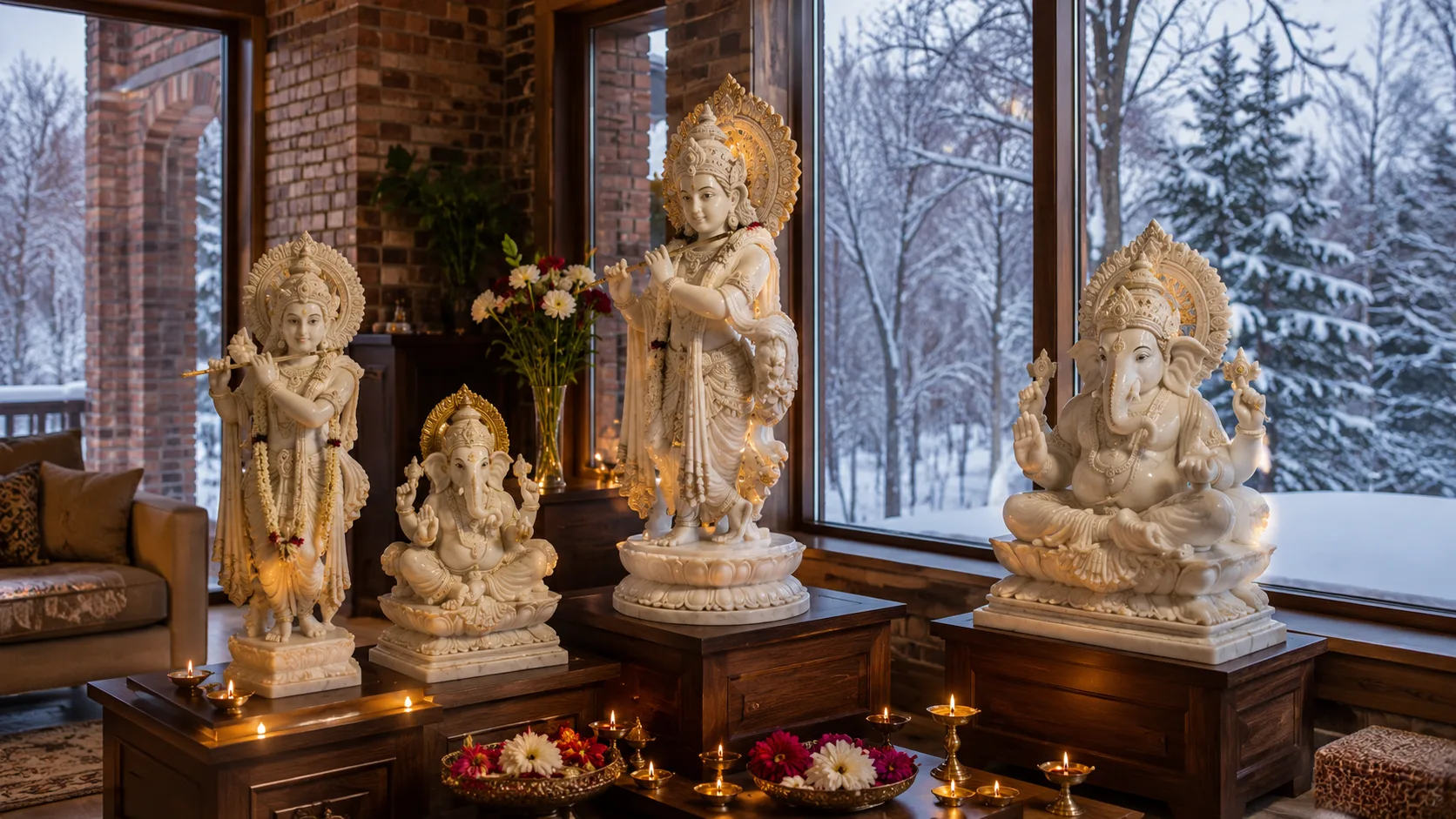
When you order a marble statue for your Canadian home, you’re not just buying decoration. You’re making an investment that should survive Canadian winters, temperature swings, and humidity changes. Quality matters because marble tested in Jaipur doesn’t automatically survive freeze-thaw cycles in Toronto, Montreal, or Calgary. That’s what this post covers.
At Kamal Moorti’s marble statue collection, we understand Canadian climate challenges differently than most suppliers. We’ve spent years figuring out which marble holds up, which artisan techniques matter most, and how Jaipur craftsmanship translates to actual durability in Canada’s harsh winters.
This isn’t marketing speak. This is practical knowledge from someone who ships marble statues to Canada regularly and hears how they perform through actual seasons.
What “Quality” Actually Means for Marble Statues in Canada
Quality doesn’t mean “looks pretty.” It means the piece survives Canadian climate without cracking, without weathering quickly, without losing carved detail after five years of freeze-thaw cycles.
Most marble statue sellers talk about quality in vague terms. “Premium marble.” “Master artisans.” “Handcrafted excellence.” These phrases don’t tell you whether the statue will hold up to Canadian winters.
Real quality for Canadian homes means:
The marble stone itself stays structurally sound through temperature swings from minus 20 Celsius winter nights to humid summers. Cracks don’t develop in carved details from freeze-thaw stress. The carving details remain sharp and defined for decades, not smooth and worn after three winters.
This matters because Canadian homeowners have already learned hard lessons buying statues that didn’t hold up. Resin breaks. Concrete cracks. Poorly selected marble develops stress fractures. Then you’ve got broken artwork and wasted money.
Hand-carved marble statues from authentic Jaipur artisans actually handle this. But only if sourced from the right place with the right processes.
The Freeze-Thaw Reality for Marble in Canada
Here’s the challenge nobody mentions upfront. Marble is porous. Water gets inside the stone. When temperature drops to freezing, that water expands. Expansion creates internal stress. Repeat this cycle daily through Canadian winters and even premium marble starts cracking from the inside out.
This is why marble statues in Indian temples stand perfectly fine in stable temperatures but struggle in Canada without proper handling.
Real freeze-thaw durability requires:
Proper marble selection. Not all marble is equal. Some marble types are naturally denser and more freeze-thaw resistant. Jaipur artisans know which stones work better. They’ve learned from centuries of marble work, but primarily in different climate conditions. Canadian-specific knowledge means testing marble in actual Canadian winters before committing to statues made from it.
Correct carving techniques. How the statue is carved affects durability. Thin carved sections in certain marble types become stress points in freeze-thaw cycles. Experienced artisans know how to carve details without creating vulnerable points.
Proper finishing. A sealed or properly finished marble surface resists water penetration better. This sounds basic but many marble statues arrive without adequate surface treatment.
We don’t just carve statues in Jaipur and hope they survive Canada. We specifically source marble tested for cold climate resistance. We carve with techniques that minimize stress points. We finish surfaces to resist moisture penetration.
Check our marble temple designs to see how we apply these same principles to larger installations.
Understanding Jaipur Craftsmanship in the Canadian Context
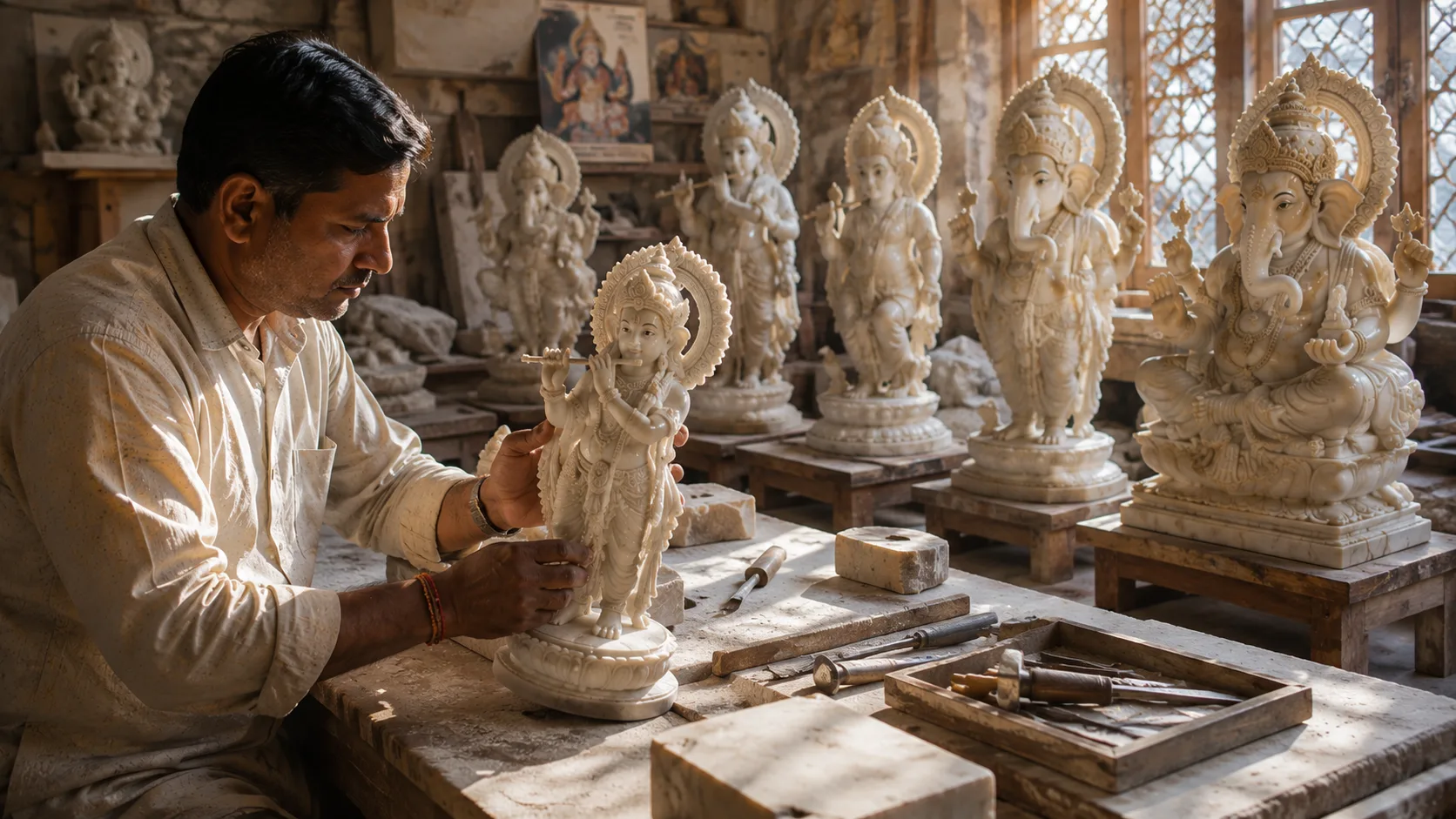
Jaipur marble carving has centuries of tradition. Master artisans there learn their craft growing up, not in training programs. A true Jaipur craftsman can carve details that take weeks, creating expressions and proportions that feel alive.
This skill matters. It matters a lot. But it needs Canadian context.
Jaipur artisans know how to create beauty. They understand marble intimately. They understand proportions, symbolism, spiritual representation. An authentic Jaipur master can carve a Krishna statue that makes you feel something when you look at it.
What Jaipur artisans didn’t traditionally understand is Canadian freeze-thaw cycles. They didn’t test their work in minus 20 temperatures. They didn’t stress-test carved sections in repeated freeze-thaw laboratory conditions.
Real quality for Canada means pairing Jaipur craftsmanship with Canadian climate testing. It means teaching master artisans which marble types resist freeze-thaw best. It means carving techniques optimized for temperature stress, not just artistic beauty.
The statues look just as beautiful. The craftsmanship is just as authentic. The difference is durability through Canadian seasons.
What Actually Happens During Canadian Winters
Let’s be specific about what your marble statue faces in a typical Canadian winter.
December through March, temperature swings are wild. It might be minus 15 overnight, then plus 5 during the day. Water on the statue’s surface freezes and thaws repeatedly. This cycle stresses the marble differently than steady cold.
If the statue is outdoors, this happens constantly. If it’s positioned where meltwater pools around it during spring thaw, water penetration stress compounds.
Indoor statues face different stress. Heating systems create temperature differentials. A statue near a heat vent might experience direct warmth fluctuations that stress the marble differently than consistent indoor temperature.
Humidity varies dramatically. Winter humidity is low (furnace heating dries air). Spring humidity spikes. Summer is humid. This moisture cycling, combined with temperature changes, creates stress patterns.
Over multiple seasons, these cycles break down lower-quality marble. Cracks develop in carved details. The surface weathering accelerates. The statue deteriorates noticeably.
Quality marble tested for Canadian conditions resists this. Not perfectly; nothing is perfect. But durability is measurable over decades, not just years.
Canadian Climate Testing: How We Verify Quality
This is where theory meets practice. We don’t just claim freeze-thaw resistance. We test it.
We source marble blocks and subject them to repeated freeze-thaw cycles in laboratory conditions that simulate Canadian winters. We measure expansion and contraction. We inspect for stress fractures. We see which marble types truly hold up.
We then carve test pieces in our Jaipur workshop using techniques optimized for cold climates. We test these finished pieces through the same freeze-thaw protocols. We observe how carved details respond to temperature stress.
This isn’t quick. This testing takes months. But it gives us actual data about which combinations work.
We learn which marble types resist freeze-thaw best. We learn which carving techniques minimize stress points. We learn proper surface finishing for moisture resistance.
Then we apply this knowledge when creating your custom marble statues for Canadian homes.
You’re not ordering based on hope or tradition. You’re ordering based on tested performance in Canadian climate conditions.
Explore our custom marble statue services to discuss marble selections and techniques for your specific Canadian location.
Artisan Quality Standards Beyond Appearance
When people talk about Jaipur craftsmanship, they usually mean visual quality. How sharp the carving is. How expressive the face. How proportionate the whole statue.
These things matter enormously. A master artisan creates work that looks alive. Visitor look at it and feel something. That’s real skill.
But quality for Canadian durability goes deeper.
Real artisan quality also means:
Understanding stone behavior under stress. A true master knows marble intimately. Knows where internal weaknesses might exist. Knows how to work around them.
Attention to structural integrity, not just surface beauty. Professional carvers reinforce thin sections that might be stress points. They think about the whole piece, not just the most visible angles.
Commitment to finish work. After carving completes, the statue requires proper finishing. Sealing, smoothing, surface treatment. Quality artisans don’t rush this stage because they know it affects longevity.
Quality control verification. Before shipping, the statue is inspected for structural integrity, not just aesthetics. Cracks are found and addressed. Weak points are reinforced. Only statues meeting durability standards ship to Canada.
This is what separates authentic Jaipur craftsmanship from mass-produced marble work. And it’s absolutely crucial for Canadian durability.
How to Evaluate Marble Statue Quality Before Ordering
You can’t see all quality factors in photographs. But you can ask the right questions.
Ask about marble type. What specific marble is being used? White marble, black marble, colored marble? Does the supplier know how that specific marble performs in freeze-thaw conditions?
Ask about artisan training. How long has this artisan been carving? Did they learn from family tradition or formal training? What’s their experience with cold-climate marble work?
Ask about testing. Has the marble been freeze-thaw tested? Can the supplier provide information about how their marble performs in Canadian winter conditions?
Ask about finishing. What surface treatment is applied after carving? Is the marble sealed? What products are used?
Ask about structural detail. How are thin carved sections reinforced? Are there stress-relief techniques applied during carving?
Ask about shipping protection. How is the statue packaged for the journey to Canada? Is moisture protection included?
These aren’t theoretical questions. Answers reveal whether a supplier understands Canadian climate requirements or is just selling marble.
Our team can answer all these questions. We know our marble types intimately. We can explain our artisan selection process. We have freeze-thaw test data. We know our finishing protocols.
Practical Quality Standards for Canadian Marble Statues
If you’re trying to judge quality independently, here are concrete standards:
Marble density. Higher density marble is better for freeze-thaw environments. Ask for density specifications or compare marble samples side by side. Heavier marble for the size usually indicates higher density.
Carving technique visibility. Look at thin details. Are they supported properly or do they look fragile? Hairline-thin carved sections are beautiful but vulnerable in Canadian winters. Quality work balances detail with structural integrity.
Surface finish. Run your hand over photos if possible. Does the surface look sealed and protected or raw and porous? Matte finish suggests proper sealing. Super shiny finish might indicate wax coating that won’t protect long-term.
Detail preservation. Examine facial features, jewelry details, folds in clothing. Sharp defined details suggest proper carving without stress points. Smooth worn-looking details suggest either old weathered marble or techniques that thin the stone dangerously.
Proportions. Does the statue look stable proportionally? A well-carved statue has weight distribution that looks natural, not precarious.
These visual cues aren’t perfect quality indicators. But they help distinguish authentic quality work from mass-produced alternatives.
Why Jaipur Sourcing Matters for Canadian Quality
You might wonder, why source from Jaipur at all? Why not buy locally?
Jaipur is the global center of authentic hand-carved marble work. Master artisans there have skills that take decades to develop. No other region matches the quality and level of craftsmanship.
Local marble sculpture options are usually smaller operations, factory-made pieces, or less experienced artisans. Some are good. Most don’t match authentic Jaipur quality.
But authentic Jaipur sourcing requires proper vetting. Not every Jaipur supplier understands Canadian climate requirements. Many craft for Indian conditions and hope pieces hold up elsewhere.
Working with Kamal Moorti and their Jaipur facility means accessing authentic craftsmanship with Canadian-specific quality testing and adaptation.
You get Jaipur artisan skill paired with climate-appropriate marble selection and Canadian durability standards.
Real-World Canadian Quality Performance
Theory is nice. Real performance matters more.
We’ve shipped hand-carved marble statues to Canadian homes for years. Customers report on how pieces hold up through multiple winters. This feedback guides our quality standards.
What we’ve learned: properly sourced marble from Jaipur, carved with freeze-thaw-aware techniques, finished with moisture-resistant sealing, holds up beautifully through Canadian winters. Cracks don’t develop. Details stay sharp. The statues genuinely improve with age, developing deeper character as patina builds.
Compare this to cheaper marble alternatives. Customers report cracking within first winter. Details wear quickly. Surface weathering accelerates. Investment wasted.
The difference isn’t subtle. It’s measurable. It matters for decade-long durability.
This is why quality standards matter for Canadian homes. You’re not paying premium prices for appearance. You’re paying for verified durability through Canadian climate cycles.
Installing Quality Marble Statues for Maximum Durability
Buying quality marble is half the battle. Installation affects durability equally.
Placement matters. Position outdoor statues where water drains naturally, not where meltwater pools. Elevate statues on bases that allow drainage. Avoid spots where standing water collects in spring thaw.
Shelter considerations. Covered placement extends marble statue life significantly. A statue under a covered porch or overhang faces fewer direct weather cycles than fully exposed placement.
Foundation stability. Proper leveling prevents stress cracks from settlement. Use stable bases on proper foundations. This isn’t just safety. It’s structural integrity.
Finishing touches. Consider protective sealing before harsh winter if installing in fall. This adds protection for the critical first winter.
These installation details matter as much as the marble quality itself. A perfect marble statue installed poorly deteriorates faster than good marble installed carefully.
Long-Term Value of Quality Marble Statues in Canada
Cheap marble might cost less initially. But cost per year of durability tells the real story.
A quality marble statue that lasts 50 years costs much less per year than a cheap statue that fails within five years.
Plus, there’s the emotional and spiritual value. A statue you live with for decades becomes part of your space. It develops character. It becomes an heirloom.
Cheap statues don’t become heirlooms. They become replacements.
Quality marble statues from Kamal Moorti become family treasures. They’re passed to children. They mark spiritual practice across decades. They develop meaning beyond initial purchase.
This is worth paying for quality upfront.
Final Thoughts on Marble Statue Quality for Canada
Quality matters because Canada’s climate demands it. Not every marble supplier understands this. Not every Jaipur artisan has Canadian climate experience.
Real quality means:
Marble tested for freeze-thaw resistance. Artisans trained in cold-climate carving techniques. Finishing protocols optimized for moisture protection. Quality control that verifies durability, not just aesthetics. Installation guidance specific to Canadian conditions.
This is what separates authentic quality from marketing claims.
When you order hand-carved marble statues for your Canadian home, you’re not just getting an object. You’re getting tested, verified durability. You’re getting Jaipur craftsmanship adapted for your climate. You’re getting something that will outlast you.
That’s what quality really means.

Pingback: Hanuman Marble Statue Manufacturing London | Kamal Moorti