
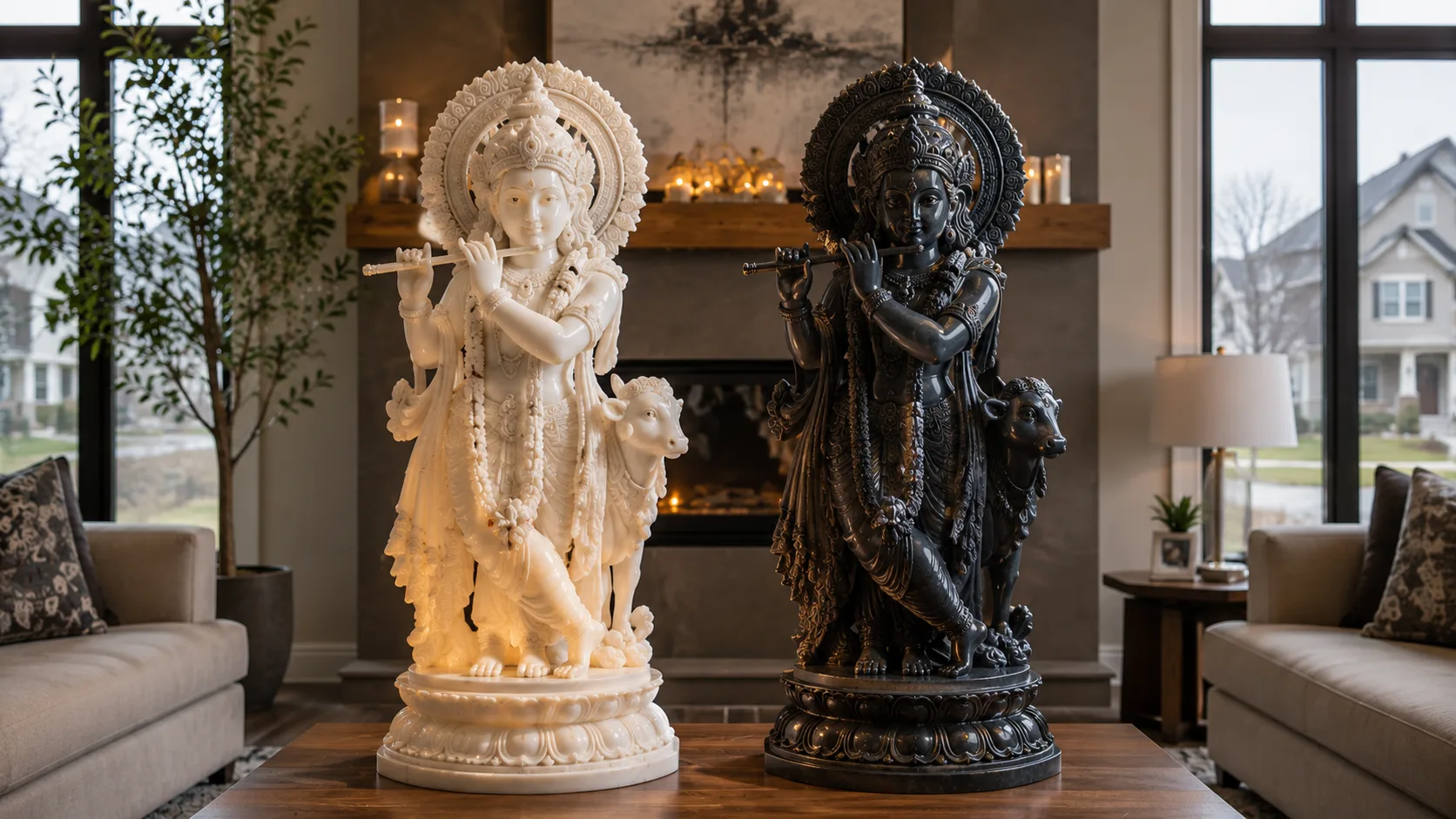
Walk into any marble showroom, and you’ll notice the same thing. White marble catches your eye first. It gleams. It looks pure and spiritual. Black marble sits beside it, looking dramatic and mysterious. Both are beautiful. Both are marble. But they’re completely different when it comes to actual performance in your American home.
This confusion costs people money. They fall in love with one color, order it, then discover maintenance requirements they didn’t expect. Or they discover durability issues after a few years. Or they find out their choice doesn’t actually fit their home’s aesthetic as they thought.
At Kamal Moorti’s USA marble statue collection, we work with both white and black marble constantly. We’ve learned which performs better in different American climates. We understand aesthetic implications most people miss. We know maintenance realities that salespeople gloss over.
This guide covers everything you need to choose correctly between white marble and black marble for your American home.
The Fundamental Difference Between White and Black Marble
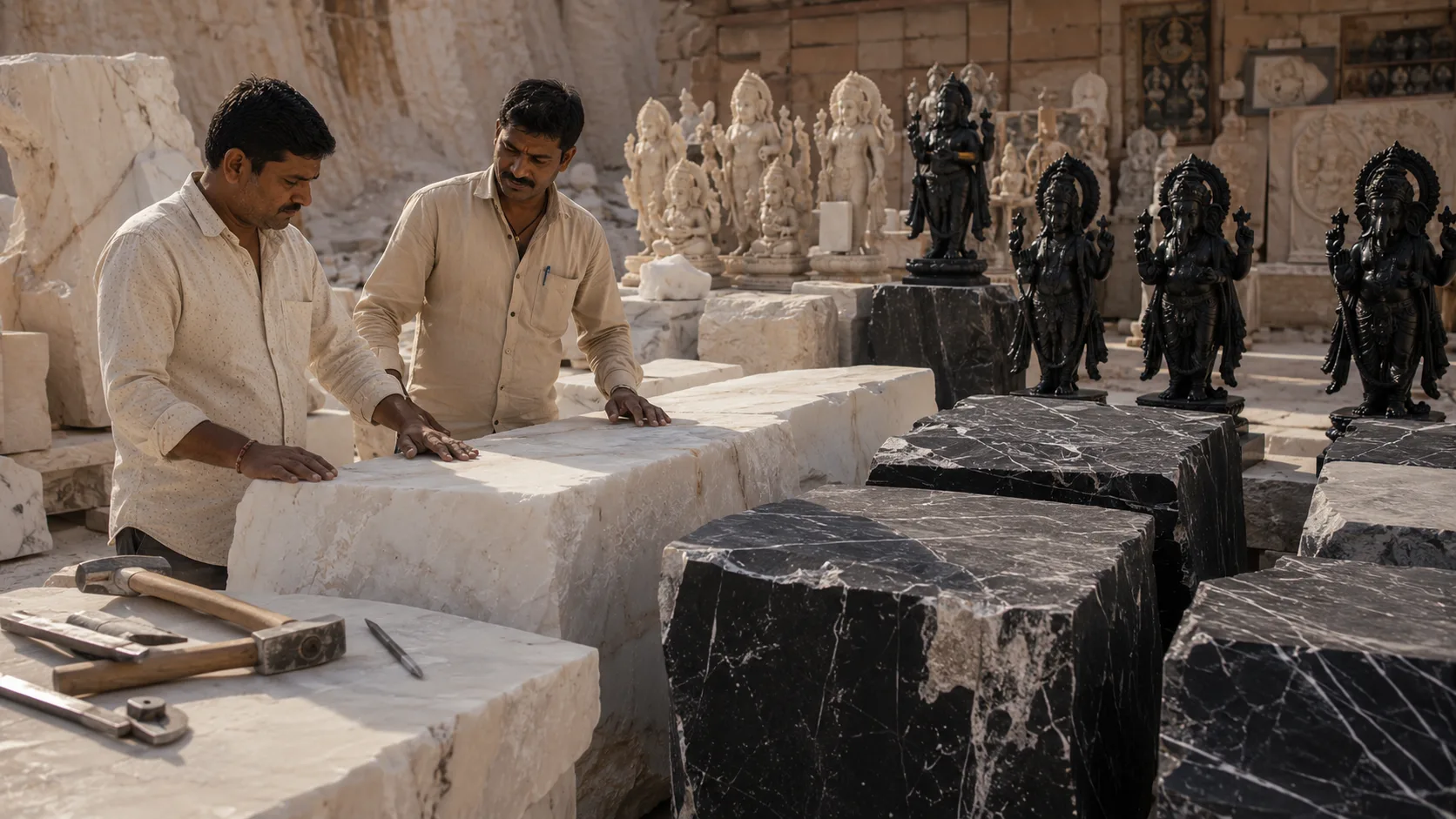
First, let’s clarify something that confuses most people. White marble and black marble aren’t just color variations of the same material. They’re fundamentally different stones with different properties.
White marble is calcium carbonate with minimal impurities. It’s relatively softer and more porous than black marble. It has a luminous quality that makes light travel through it slightly, creating that characteristic glow. It’s what you see in classical sculptures and temples worldwide. Michelangelo worked with white marble. It’s associated with purity and spirituality in most cultures.
Black marble is typically limestone or dolomite with high iron oxide content and other dark minerals. It’s denser than white marble. It’s harder and more weather-resistant. It doesn’t have that translucent quality. It absorbs light rather than reflecting it. It looks dramatic, sophisticated, and modern.
These aren’t just aesthetic differences. The material composition creates real differences in durability, maintenance, and how each stone behaves through American seasons.
Durability: How White and Black Marble Perform Over Time
Here’s where material differences become practical concerns.
White marble durability. White marble is a softer stone. This isn’t necessarily bad. Softness means it carves beautifully, holds fine detail, and responds to skilled artisan work in ways harder stone can’t. But softness also means it scratches more easily. It’s more vulnerable to acidic cleaners. Weather and temperature changes affect it more noticeably.
In American climates, white marble statues face challenges. Acid rain degrades the surface slowly. Temperature fluctuations stress softer stone more than hard stone. Outdoor white marble develops a weathered patina faster than outdoor black marble. Some people love this aged character. Others see it as deterioration.
For hand-carved marble Krishna statues and similar pieces, white marble needs more protective care. But that’s also why white marble develops such beautiful character with age when maintained properly.
Black marble durability. Black marble is harder, denser, and more weather-resistant. Acid rain affects it less noticeably. Temperature fluctuations stress it less. It resists scratching better than white marble. Outdoor black marble statues age more slowly visually, maintaining appearance longer.
This doesn’t mean black marble is indestructible. Nothing is. But black marble requires less intensive maintenance and holds up better to neglect.
For American outdoor installations, black marble simply performs better with minimal care. It’s more forgiving.
Climate Suitability Across American Regions
White marble and black marble perform differently depending on which American region you live in.
Northern and northeastern USA. Cold winters, freeze-thaw cycles, significant temperature swings. White marble, being softer and more porous, absorbs water and is more affected by freeze-thaw stress. Black marble’s density resists freeze-thaw damage better.
If you’re in Boston, Chicago, Minneapolis, or similar cold climates, black marble is the more durable choice for outdoor statues. White marble works fine indoors. Outdoors, you need black marble’s superior cold-weather resistance.
Southern and southwestern USA. Hot, intense sun exposure, moderate humidity, less freeze-thaw concern. White marble’s translucence makes it look brighter in intense sun. Black marble absorbs more heat and can get uncomfortably hot to touch in direct sun.
In these climates, white marble aesthetically makes more sense. And durability-wise, freeze-thaw isn’t the concern it is in northern regions. White marble performs adequately in southern outdoor installations if properly sealed.
Coastal regions. Salt air accelerates weathering on both marble types, but affects each differently. White marble develops a weathered look faster. Black marble shows salt damage less obviously but still degrades. Both need protective sealing in coastal climates.
Temperate climates (California coast, Pacific Northwest). Moderate temperatures, high humidity in some regions, moderate sun exposure. Both marble types perform reasonably well. Choice is more aesthetic than durability-driven. Custom marble statues in either material work, though black marble requires less maintenance.
Real answer for durability: white marble outdoors in cold climates requires protective measures and more maintenance. Black marble outdoors in cold climates requires less active care. If you’re in a warm or temperate region, both work, and choice is more aesthetic.
Aesthetic Impact: How White and Black Marble Actually Look
This is where personal preference matters most. But there are real visual differences worth understanding.
White marble aesthetics. White marble creates a luminous, spiritual quality. It catches light beautifully. In sunlight, white marble seems to glow. Indoors under warm lighting, white marble creates serene, peaceful atmosphere. It feels traditional and connected to spiritual practice.
White marble makes carved details very visible. Facial features, jewelry, symbolic elements all show clearly. This is why classical sculptors preferred white marble. Details just read better.
White marble also shows dirt, dust, and weathering very obviously. A white marble statue that’s not maintained looks noticeably weathered. This can be beautiful aged patina or obvious neglect depending on perspective. But it’s not invisible.
In American homes, white marble Krishna statues and similar pieces create a peaceful, traditional spiritual atmosphere. Many people prefer this aesthetic for meditation spaces.
Black marble aesthetics. Black marble creates drama, sophistication, visual impact. It’s bold. A black marble statue commands attention in ways white marble doesn’t. It feels modern, elegant, powerful.
Black marble makes some details harder to see depending on lighting. A black marble statue in dim light shows fewer details than the same statue in white marble. But dramatic lighting on black marble creates sophisticated shadows and depth. Under the right conditions, black marble looks absolutely stunning.
Black marble shows dust and scratches less obviously. A black marble statue can look maintained longer with minimal actual care. Dust on black marble is invisible. Dust on white marble is obvious.
In American homes, black marble creates a sophisticated, contemporary aesthetic. Modern minimalist interiors often feature black marble. It’s become trendy in upscale decorative settings.
The color question. White marble isn’t pure white. It’s usually off-white with subtle gray or beige tones depending on the specific marble type. Black marble isn’t pure black either. It usually has gray, brown, or even reddish undertones depending on mineral content.
These color variations matter for how each marble looks in your specific room. A statue in photographs can look different installed in your actual space with your actual lighting. This is worth considering when ordering.
Maintenance Reality: The Ongoing Cost
People focus on purchase price and forget about maintenance. Material choice determines maintenance requirements significantly.
White marble maintenance. White marble requires more frequent maintenance to look its best. Quarterly cleaning recommended. Annual protective sealing recommended for outdoor pieces. Acidic cleaners must be avoided entirely. Any spill should be cleaned immediately to prevent staining.
For outdoor white marble, protective sealing before harsh seasons is important. In cold climates, winter protective sealing helps. This costs money and time.
Over 10 years, maintaining white marble costs noticeably more than maintaining black marble. Not enormously more. But measurably more.
Black marble maintenance. Black marble is more forgiving. Basic dusting is sufficient for indoor pieces. Outdoor black marble benefits from annual sealing but doesn’t require it as urgently as white marble. Black marble resists staining better, so spills are less critical.
Basic mild cleaners work on black marble. No special precautions needed. Neglect hurts black marble less visibly than white marble.
Over 10 years, maintaining black marble costs less and requires less active effort.
Real maintenance cost difference. If you love white marble and maintain it properly, maintenance costs are manageable. Sealing runs 100 to 300 dollars for large outdoor pieces. Cleaning supplies cost minimal. Time investment is moderate.
But if you prefer minimal maintenance, black marble is objectively easier. You spend less money, less time, less effort keeping black marble looking good.
This isn’t about quality. Both are quality marble. It’s about lifestyle fit. Choose white marble if you’re willing to maintain it. Choose black marble if you prefer minimal maintenance.
Aesthetic Matching to American Homes
This matters more than most people think.
White marble aesthetic matching. White marble works in:
- Traditional homes with classical architecture
- Spiritual or meditation spaces
- Homes with warm lighting and neutral color schemes
- Spaces seeking serene, peaceful atmosphere
- Interiors celebrating cultural heritage
White marble clashes with:
- Ultra-modern minimalist spaces (though some people love the contrast)
- Industrial aesthetic homes
- Very dark interior color schemes
- Spaces designed for dramatic visual impact
Black marble aesthetic matching. Black marble works in:
- Modern contemporary homes
- Sophisticated upscale interiors
- Minimalist spaces
- Homes with dramatic lighting
- Spaces designed for visual statement
Black marble clashes with:
- Very traditional classical spaces (though some people love mixing aesthetics)
- Bright, cheerful colorful interiors
- Casual family-focused spaces
- Cottage or rustic aesthetic homes
Real answer: look at your actual room. Take a white marble photo and black marble photo. Imagine each in your space. Which feels right? That’s your answer.
Cost Comparison: White vs Black Marble
Many people assume white marble costs more because it’s traditionally more prestigious. Actually, costs are usually comparable.
White marble pricing. Hand-carved white marble statues typically run similar price to black marble. Rarity isn’t the price driver. Carving cost drives price. A complex white marble statue costs the same as equally complex black marble statue.
Large outdoor white marble pieces might cost slightly more because they require more protective coating during shipping to America. But difference is minimal.
Black marble pricing. Black marble often costs the same or sometimes slightly less than white marble depending on specific type. Some black marble is readily available and therefore affordable.
Real cost difference. Purchase price is usually equivalent. Long-term maintenance cost favors black marble (lower maintenance expenses). But that’s about maintenance, not purchase price.
Don’t assume white marble is more expensive. Price is usually determined by size, complexity, and artisan skill, not material type.
Which Should You Choose?
Here’s honest guidance based on all these factors:
Choose white marble if:
- You want traditional spiritual aesthetic
- You prefer maintenance and care as part of ritual
- You live in temperate or warm climates
- You’re installing indoors or in protected outdoor spaces
- You love the luminous, peaceful quality white marble creates
- You want details and fine carving to be highly visible
Choose black marble if:
- You want a sophisticated modern aesthetic
- You prefer a minimal maintenance approach
- You live in northern climates with freeze-thaw concerns
- You’re installing outdoor, fully exposed spaces
- You want dramatic visual impact
- You prefer low-maintenance materials that forgive neglect
The honest answer: If you love white marble, get white marble. The maintenance isn’t overwhelming. It’s manageable. A white marble statue you love and maintain properly becomes beautiful with age.
If you prefer practicality and minimal fuss, black marble requires less active care while still being beautiful.
There’s no objectively correct choice. It’s your home, your space, your preference.
Real-World Performance: What Customers Report
We’ve shipped white and black marble statues to American homes for years. Customer feedback reveals practical reality beyond specifications.
White marble customers report:
They’re happy with appearance and spiritual quality. Maintenance isn’t burdensome if done regularly. Outdoor white marble in northern climates does develop weathering, but many enjoy the aged character. Cost of maintenance is modest.
Black marble customers report:
They appreciate not needing intensive maintenance. Statues look great year after year with minimal effort. Outdoor black marble in harsh climates holds up noticeably better. No regrets about choosing durability over traditional aesthetics.
Nobody reports regretting either choice once properly informed. Regrets come from people who chose one material without understanding maintenance requirements or climate suitability. That’s avoidable.
Making Your Final Decision
Before ordering your hand-carved marble statue, ask yourself:
What’s my climate? If freeze-thaw cycles are real, black marble is more practical. If mild climate, both work fine.
What’s my space? Indoor protected spaces can be white marble. Outdoor exposed spaces work better with black marble.
What aesthetic fits? White for traditional and spiritual. Black for modern and sophisticated.
How much maintenance am I willing to do? White requires more. Black requires less.
What’s my budget for long-term care? White costs more to maintain. Black costs less.
Answer these honestly and your choice becomes clear.
Our consultation team can discuss your specific situation. What works in Minnesota differs from what works in California. What fits a modern apartment differs from a traditional home. We help you choose based on your actual circumstances, not generic recommendations.
Final Thoughts on White vs Black Marble
Both are genuine quality materials. Both can be absolutely beautiful in the right setting with proper care. The choice between white and black marble is less about quality and more about fit.
Fit to your climate. Fit to your space. Fit to your aesthetic. Fit to your lifestyle.
Choose correctly and you’ll have a stunning marble statue that improves your home for decades. Choose without thinking and you might end up with something that requires more maintenance than you expected or doesn’t quite fit your space.
The good news: there’s no wrong choice. White marble and black marble are both excellent. You just need to choose consciously rather than accidentally.
Make the decision based on all these factors. Then enjoy the beautiful marble statue you’ve chosen for your American home.