
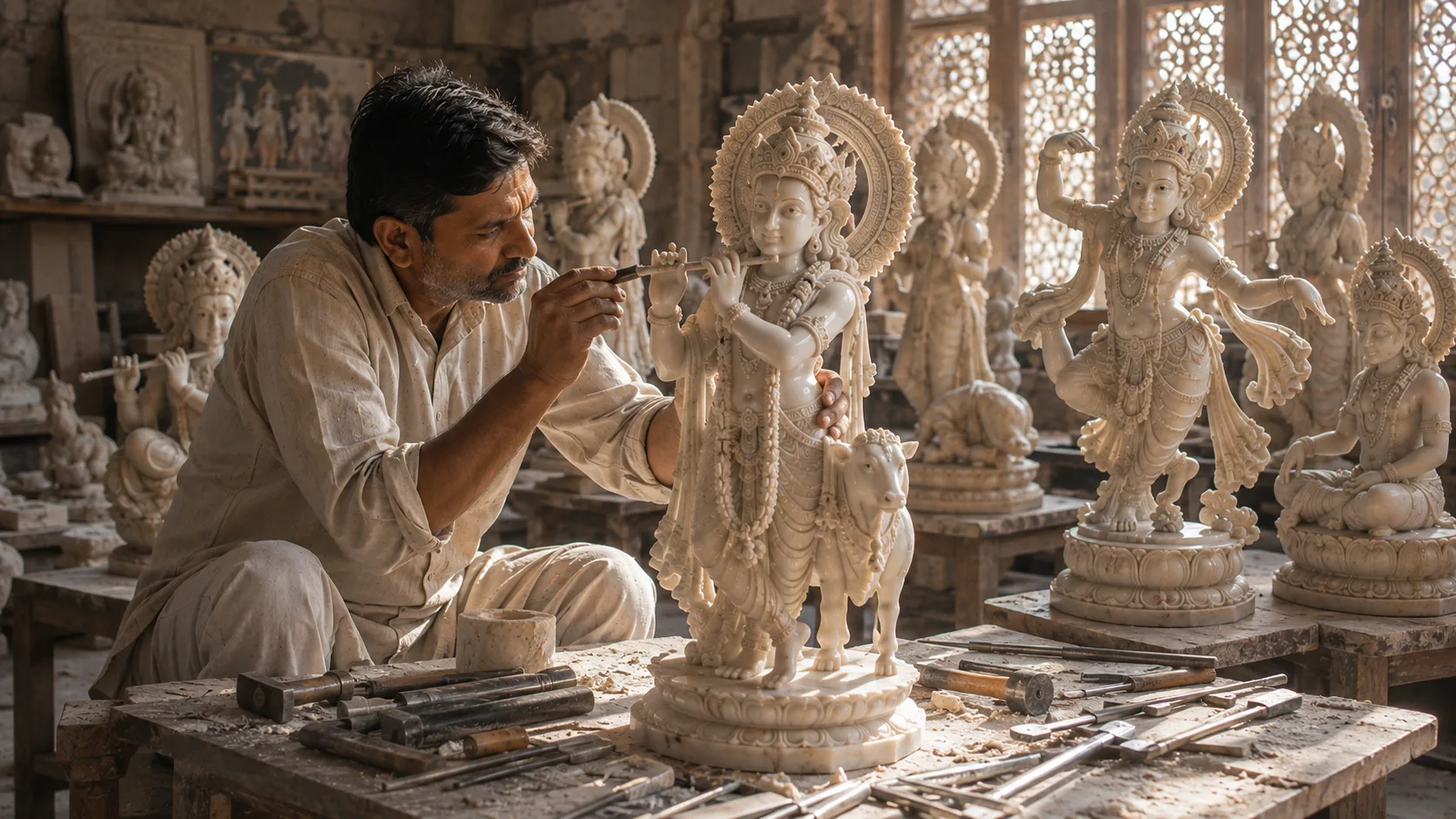
Krishna arrives in your Canadian home in many forms. Standing with a flute. Seated in meditation. Dancing in celestial joy. Each pose tells a different story. Each connects to Krishna differently. And each requires different space, lighting, and placement considerations in your Canadian home.
Most people think about Krishna statues in spiritual terms only. They choose based on which image speaks to their heart. That’s important. But practical reality matters equally. A dancing Krishna statue needs different space than a sitting Krishna. A standing Krishna with a flute requires different placement than a reclining meditation form.
At Kamal Moorti’s Canada marble statue collection, we work with Krishna statues constantly. We carve them in Jaipur. We ship them to Canadian homes. We watch how they perform through Canadian seasons. We understand which poses work best in different Canadian spaces.
This guide covers the major Krishna statue poses, what each represents spiritually, and how to integrate them into your Canadian home successfully.
The Major Krishna Poses in Hand-Carved Marble
Krishna appears in five main poses across the hand-carved marble tradition. Each has distinct spiritual meaning. Each requires specific space considerations.
Standing Krishna with Flute
This is probably the most recognizable Krishna pose. He stands upright, usually with one hand holding a flute at his lips and the other in a blessing gesture. His posture is relaxed, almost casual. He’s gazing downward or to the side, as if playing music to the universe.
Spiritually, this pose represents Krishna the musician, Krishna the divine entertainer. The flute symbolizes his enchanting call, his ability to draw souls toward spiritual awakening. It’s Krishna inviting you into a relationship with the divine through music and beauty.
In Canadian homes, standing Krishna works beautifully as a primary temple focus. The upright posture fits naturally on shelves and altar platforms. The pose displays carving details clearly. Facial features and flute details show beautifully. This is why standing Krishna is so common.
Standing Krishna typically requires 18 to 24 inches of vertical space. Horizontal viewing space of at least 12 inches. Proper lighting from the front or side for optimal detail visibility. In winter, position away from direct heating vents. The statue’s vertical orientation actually makes it easier to protect during Canadian temperature fluctuations.
Seated Krishna in Meditation
This pose shows Krishna seated, often cross-legged or in a relaxed sitting posture. His expression is serene and meditative. Sometimes he holds a flute. Sometimes his hands rest in peaceful gestures. This is Krishna the yogi, the spiritual teacher, the one who understands inner peace.
Spiritually, this pose invokes meditation and introspection. It suggests Krishna as the inner guru, the teacher within consciousness. Many devotees report deeper meditative experience in the presence of seated Krishna statues. The pose itself invites quietness.
In Canadian homes, seated Krishna works well in meditation rooms or personal shrine spaces. The sitting posture takes up less vertical space than standing Krishna but requires more horizontal shelf space. A seated Krishna typically needs 12 to 18 inches in height and 10 to 14 inches in depth.
Seated Krishna positions beautifully at eye level when you’re sitting. This creates an intimate viewing angle. Lighting should illuminate the face clearly for spiritual connection. In Canadian homes, seated Krishna handles winter well, remaining stable and requiring minimal protective positioning.
Dancing Krishna (Natraj Form)
This is the most dynamic Krishna pose. His body curves. One leg might be raised. Arms are positioned as if mid-movement. His expression shows joy, playfulness, and ecstatic divine dance. This is Krishna celebrating existence, expressing the cosmic dance that creates and sustains reality.
Spiritually, dancing Krishna represents divine joy, the playful nature of creation, and Krishna’s capacity to make spirituality fun rather than solemn. Many people find this pose liberating. It shows Krishna not as a distant cosmic force but as an intimate presence celebrating life.
In Canadian homes, dancing Krishna is dramatic and attention-demanding. It becomes an instant focal point. The dynamic pose requires more surrounding space to display properly. You need clear viewing angles from multiple directions because the pose looks different from different perspectives.
Dancing Krishna requires careful placement. The dynamic balance means it needs stable, level ground. Canadian temperature fluctuations don’t harm the statue itself, but the pose’s sense of movement is lost if the statue feels precarious or unstable. Installation needs to be precise.
Dancing Krishna typically needs 20 to 28 inches in height depending on pose intensity. It requires 12 to 16 inches of depth. The dramatic nature means it commands attention, so placement should be thoughtful. Avoid placing it hidden in a corner. Standing Krishna especially works well as a family temple focus.
Reclining Krishna
This pose shows Krishna lying down, often with his head resting on his hand in a relaxed posture. Sometimes he’s reclining with attendants. This represents Krishna in repose, Krishna as the cosmic Vishnu form, Krishna beyond action, Krishna as ultimate reality.
Spiritually, reclining Krishna invokes peace, trust, and surrender. It represents Krishna as the eternal rest, the foundation underneath everything. Some traditions connect this pose to Krishna’s cosmic sleep, the moment between creation cycles.
In Canadian homes, reclining Krishna requires significant horizontal display space. A reclining statue needs 24 to 36 inches of length. It typically requires only 6 to 12 inches in height but takes up extensive horizontal surface. You need a table, platform, or dedicated shelf space.
Reclining Krishna works beautifully in dedicated meditation rooms or in larger temples. It’s less common in standard home settings because most homes lack the horizontal display space. But if you have room, reclining Krishna creates an extraordinary peaceful atmosphere.
Krishna with Cow
Sometimes Krishna is carved with a cow, representing his childhood connection to cowherds and pastoral life. He might be shown with one hand on the cow or playing flute while the cow listens. This represents Krishna’s intimacy with nature, his simple pastoral origins, and his connection to all living beings.
Spiritually, Krishna with a cow represents divine compassion, connection to the earth, and simplicity paired with divinity. It’s Krishna showing that spirituality isn’t separate from nature. The cow is sacred, and Krishna tends it with love.
In Canadian homes, Krishna with cow requires more space and thoughtful positioning. The additional form means more viewing angles matter. The piece is more complex visually, so proper lighting becomes more important.
Spiritual Meaning of Different Poses
Beyond the physical representation, each pose connects you to Krishna differently spiritually.
Standing Krishna invites relationship. The upright posture, the direct gaze, the flute all suggest Krishna actively reaching toward you. Meditating on standing Krishna, many people report feeling Krishna’s invitation into spiritual practice. It’s relational. It’s personal. It’s Krishna calling.
Seated Krishna invites interiority. The meditative posture suggests looking inward. Meditating on seated Krishna, many people report accessing deeper quietness. It’s introspective. It’s about the inner guru. It’s Krishna already inside, waiting for you to notice.
Dancing Krishna invites celebration. The joyful movement, the dynamic posture suggest Krishna showing you that spirituality is joyful. Meditating on dancing Krishna, many people report feeling permission to experience spirituality as play, not a burden. It’s liberating. It’s Krishna showing you divine joy.
Reclining Krishna invites surrender. The resting posture, the peaceful expression suggest letting go. Meditating on reclining Krishna, many people report releasing tension and accessing deep trust. It’s surrendering control. It’s Krishna as ultimate rest.
These differences are real. People connect differently with different Krishna poses based on their spiritual needs at different times. Some people feel drawn to standing Krishna’s active invitation. Others need seated Krishna’s meditative depth. Still others need dancing Krishna’s joyful liberation.
Your choice of pose matters spiritually, not just practically.
Integrating Krishna Statues into Canadian Homes
Here’s where spiritual meaning meets the practical reality of Canadian living.
Temperature Considerations
All marble handles Canadian winters, but different poses have different practical needs.
Standing Krishna remains stable through temperature fluctuations. The vertical center of gravity makes it resistant to thermal stress. No special positioning needed.
Seated Krishna is equally stable. Horizontal positioning doesn’t create additional thermal vulnerability.
Dancing Krishna requires attention. The dynamic pose means stability is more critical. Make sure the statue is positioned on a perfectly level surface. Ensure no thermal stress causes shifting. In harsh Canadian winters, consider protective shelter even indoors if the statue is near heating vents.
Reclining Krishna needs careful foundation. The horizontal orientation means any settling or shifting becomes obvious. Use a stable platform. Ensure level ground. This isn’t about marble durability. It’s about the pose looking right and feeling stable.
Seasonal Placement
As Canadian seasons change, adjust placement thoughtfully.
Summer offers freedom. Any pose works well anywhere in your Canadian home.
Fall, prepare for winter. Position statues away from heating vents. Ensure drainage around outdoor pieces if water might pool. Consider protective covering for outdoor statues if harsh winter approaches.
Winter, minimize exposure. Indoor statues are fine. Outdoor statues need thought. Temperature swings stress all marble, but proper positioning minimizes impact.
Spring, check for winter damage. Inspect for cracks or weathering. Clean statues gently after the winter protection period.
Lighting and Display
Different Krishna poses photograph and display differently depending on lighting.
Standing Krishna shines with front lighting. Direct light from the front illuminates the face and flute beautifully. Side lighting shows body contours. Avoid backlighting, which obscures details. In Canadian homes, position near a window for natural front light, or install a front-facing spotlight for evening illumination.
Seated Krishna benefits from eye-level lighting. Position light at the statue’s face level for intimate illumination. This creates a personal connection when viewing seated Krishna. Gentle side lighting shows meditative expression beautifully.
Dancing Krishna needs multi-directional lighting. The dynamic pose reveals different elements from different angles. Ideally, position it where natural light hits from multiple directions. If using artificial light, consider multiple spotlights highlighting different aspects of the dynamic form.
Reclining Krishna works beautifully with overhead lighting, creating shadows that emphasize peaceful rest. Position the overhead light source if possible. The statue lies down, so lighting from above follows natural reclining orientation.
Choosing Krishna Poses for Canadian Space Constraints
Most Canadian homes have space limitations that matter.
Small Apartments
Limited space demands efficiency. Standing Krishna works best. Upright, minimal horizontal footprint, displays beautifully on small shelves. Seated Krishna also works if you have a dedicated shelf. Avoid dancing and reclining Krishna in small spaces. They need room to breathe.
Medium Canadian Homes
More typical space allows flexibility. Any Krishna pose works. Choose based on spiritual preference rather than space necessity. All poses are available in our Canada collection. You have room for your spiritual preference.
Larger Canadian Homes with Dedicated Temple Space
Here you have genuine flexibility. Any pose works. You might even commission multiple Krishna statues in different poses, creating a Krishna collection. This isn’t unusual. Serious practitioners often have several statues representing different aspects of Krishna.
Placement Locations in Canadian Homes
Bedroom Placement
Seated or reclining Krishna works beautifully in bedrooms. The meditative or restful poses create a peaceful sleep atmosphere. Avoid standing or dancing Krishna if you prefer tranquil bedroom energy. Position the Krishna statue where it’s the first thing you see upon waking if your spiritual practice includes morning meditation.
Living Room Placement
Standing or dancing Krishna works well in living rooms. The active poses suit communal space. Position it where it’s visible to all occupants, creating spiritual presence in household gathering space. Avoid placing it hidden in a corner. Standing Krishna especially works well as family temple focus.
Meditation Room Placement
Any pose works beautifully. Choose what supports your specific meditation practice. Seated Krishna for introverted meditation. Dancing Krishna for joyful celebration. Standing Krishna for relational practice. Reclining Krishna for surrender work.
Temple Space Placement
In dedicated temple rooms, consider multiple Krishna statues in different poses. The primary statue can be standing Krishna as the focal point. Secondary statues in other poses support deeper practice. This creates a rich spiritual environment without overcrowding.
Outdoor Garden Placement
Standing Krishna works well outdoors. The upright posture integrates naturally into garden landscapes. Ensure proper drainage and weatherproofing. Dancing Krishna also works outdoors, creating a dynamic garden focal point. Seated Krishna can work if protected under an overhang. Avoid reclining Krishna outdoors where weather exposure is significant.
Canadian Climate-Specific Krishna Placement
Winter considerations specific to Krishna statues in Canadian homes.
Protecting Standing Krishna in Winter
A standing statue has good thermal stability. Position away from heating vents to minimize temperature swings. Ensure proper foundation so winter ground shifting doesn’t affect stability. Outdoor standing Krishna benefits from protective covering during harsh winter months. Indoor standing Krishna needs no special protection.
Protecting Seated Krishna in Winter
The seated posture is stable through Canadian winter. Position on a level surface secured against shifting. Horizontal positioning requires less protection than vertical. Indoor seated Krishna requires standard care only.
Protecting Dancing Krishna in Winter
Dynamic pose requires most attention. Ensure an absolutely level foundation. Verify stability before harsh winter arrives. Any shifting becomes visually apparent in a dynamic pose. Outdoor dancing Krishna should be considered carefully in harsh Canadian winters. Indoor placement is safer if you’re concerned about thermal stress.
Protecting Reclining Krishna in Winter
A reclining statue needs a secure horizontal base. Ensure the platform is perfectly level. Winter settling should not create tilting. Temperature swings affect reclining pose less than standing, but platform stability is critical. Outdoor reclining Krishna faces challenges. Indoor placement is preferred in Canadian climate.
Spiritual Practice with Different Krishna Poses
How you engage spiritually with Krishna statues depends partly on pose.
Standing Krishna Practice
Meditate facing standing Krishna. The frontal orientation invites eye contact. Gaze at Krishna’s face. Imagine Krishna gazing back at you. This creates relational connection. Standing Krishna invites dialogue with Krishna. Chanting to standing Krishna often feels natural because the upright posture seems active and responsive.
Seated Krishna Practice
Meditate sitting at eye level with seated Krishna. The horizontal alignment creates equality. You’re not looking up. Krishna isn’t above. You’re together in quietness. This supports deeper meditation. Seated Krishna supports silent meditation better than active chanting. It’s inward.
Dancing Krishna Practice
Meditate on joy and play. Dancing Krishna invites celebration. Some traditions use dancing Krishna as a focus for ecstatic practice or devotional dancing. The dynamic pose supports movement, joy, and celebration more than quiet sitting.
Reclining Krishna Practice
Meditate on surrender and rest. Reclining Krishna supports letting go. This pose is powerful for release work. If you’re carrying tension or trying to surrender control, reclining Krishna supports that practice beautifully.
Commissioning Custom Krishna Poses
If none of the traditional five poses resonate, custom options exist.
We can carve Krishna in specific poses you envision. Describe what you’re imagining. Our Jaipur artisans create custom pieces matching your vision. This takes longer and costs more, but results in a Krishna statue perfectly aligned with your spiritual practice.
Contact our Canada consultation team to discuss a custom Krishna commission. Describe your vision. Our artisans can create it.
Caring for Krishna Statues Through Canadian Seasons
All Krishna poses require similar basic care through Canadian winters.
Regular cleaning. Quarterly dusting maintains appearance. Soft cloth, gentle pressure. No harsh chemicals.
Seasonal protection. Before harsh Canadian winter, consider protective sealing for outdoor statues. This isn’t mandatory but extends lifespan and appearance.
Temperature management. Position statues away from heating vents creating direct temperature swings. Maintain stable positioning through winter settling.
Spring inspection. After a harsh winter, inspect for cracks or weathering. Address issues early.
Proper care keeps Krishna statues beautiful for decades through Canadian seasons.
Choosing Your Krishna Pose for Your Canadian Home
Here’s practical guidance:
Choose standing Krishna if you want a traditional focal point. Easy to display. Works in most Canadian spaces. Displays carving details beautifully.
Choose seated Krishna if you’re building a meditation practice. The pose invites quietness. Works well in smaller spaces. Supports deeper contemplative engagement.
Choose dancing Krishna if you want to celebrate joy in spirituality. The pose liberates. Requires adequate space. Creates dramatic spiritual presence.
Choose reclining Krishna if you’re working with surrender or deep rest. The pose invites letting go. Requires horizontal display space. Creates a peaceful atmosphere.
Choose Krishna with cow if pastoral spirituality resonates. The pose represents connection to nature and simplicity. Requires thoughtful placement but rewards with unique beauty.
Your spiritual intuition matters here. Which Krishna pose calls to you? Which image makes your heart respond? That’s often your answer. Then verify the practical fit for your Canadian space, and you’re ready.
Moving Forward with Your Krishna Statue Selection
Browse our complete Canada marble Krishna collection to see all pose options available. Look at photographs. Imagine each in your space. Feel which one resonates.
If you need guidance specific to your Canadian situation, our Canada team can help. They understand Canadian homes. They know which poses work best in different situations. They can recommend poses that fit your space and spiritual practice.
Your perfect Krishna statue is waiting. It’s already carved in Jaipur. It’s ready to come to your Canadian home. It’s ready to support your spiritual practice for decades.
Choose the pose that speaks to your heart. Choose based on your Canadian space. Choose based on your spiritual needs. Then welcome Krishna into your home in the form that will support you most deeply.

Pingback: Krishna Marble Statue Manufacturing Quebec: Kamal Moorti