
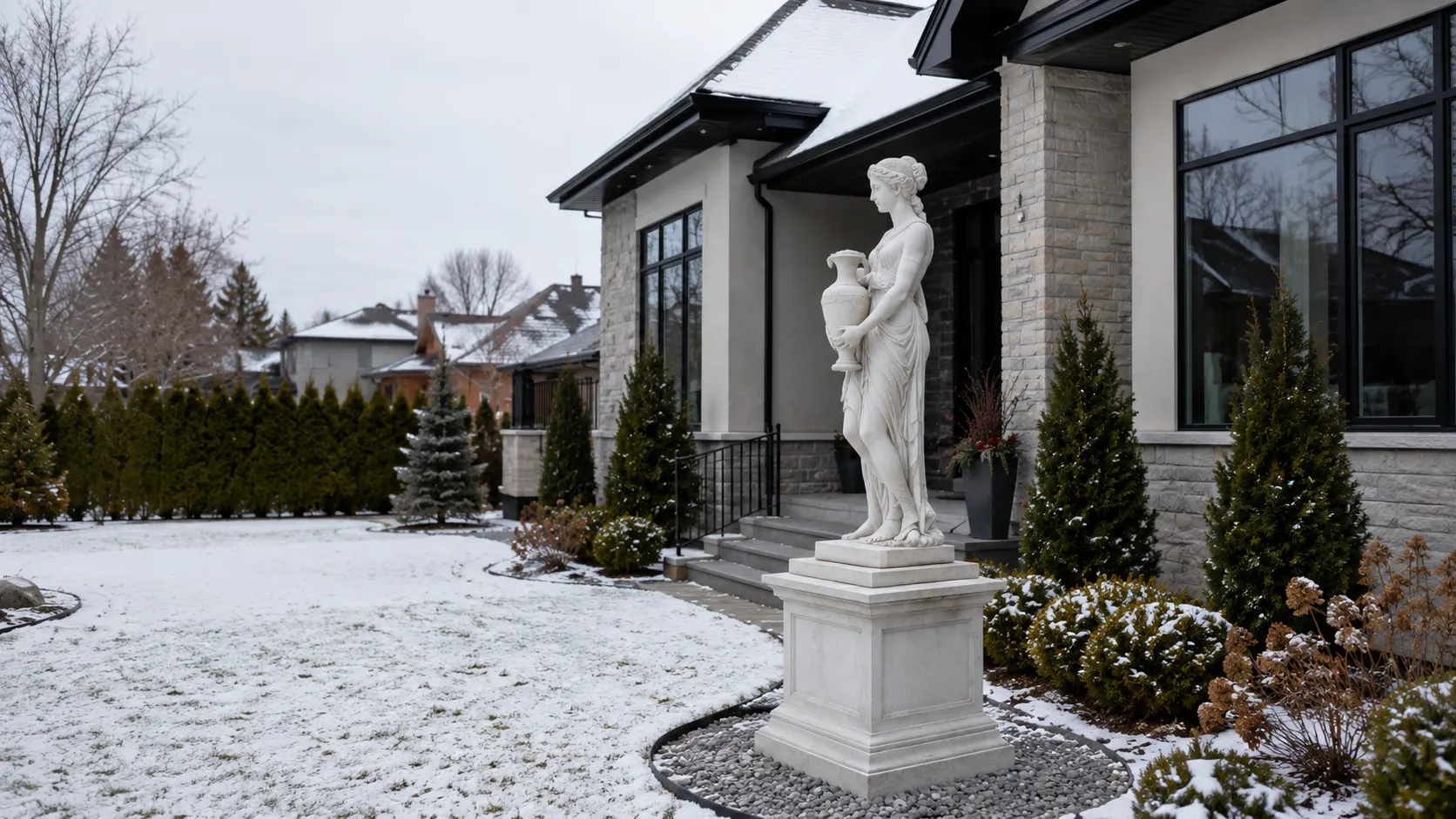
Choosing custom marble work in Canada for a home is about more than selecting a subject or deciding on a height. A made-to-order marble statue should fit the architecture, the available space, the way the household uses that space, and, for exterior installations, the realities of the local climate.
A custom sculpture can be designed around a particular entryway, garden axis, fireplace surround, niche, staircase landing, patio, or memorial setting. That flexibility is one of the main advantages of commissioning rather than choosing only from ready-made designs. It also makes planning important. The more closely a sculpture relates to its setting, the more successful the finished installation is likely to feel.
For Canadian homeowners, outdoor planning deserves special attention. Canada’s climate varies widely by region, but many areas experience seasonal temperature changes and periods where water can freeze and thaw. The Canadian Conservation Institute notes that seasonal extremes and rapid freeze-thaw cycling place outdoor materials under stress. Water that enters cracks, seams, hollows, or other vulnerable areas can freeze and expand, contributing to damage over time.
This guide explains how to plan custom marble statues for Canadian interiors and landscapes, how to communicate your requirements clearly, and how to make site decisions that support long-term care.
Begin With the Place, Not the Design
A custom marble statue should be planned around a real setting. It is tempting to start with a favourite subject, pose, or reference image, but the practical questions should come first.
Before discussing a commission, identify:
- Whether the sculpture will be indoors, outdoors, or in a sheltered exterior space.
- The exact room, garden area, entryway, or architectural feature where it will be displayed.
- The intended height, width, depth, and base footprint.
- The main direction from which people will see it.
- The surrounding furniture, planting, walls, windows, paths, or architectural details.
- The level of exposure to rain, snow, irrigation, wind, and direct sun if it will be outdoors.
- The route required to deliver and install the finished sculpture.
These details help turn a broad idea into a practical brief. A statue designed for a double-height foyer may need a different silhouette from one intended for a narrow hallway. A garden sculpture beside a patio may need a different base and drainage approach than a statue placed as the focal point at the end of a long lawn.
For homeowners exploring Marble Statues Canada, the first useful step is often to collect measurements, photographs, and a simple sketch of the site. This gives the maker a more accurate picture of the project and helps avoid a design that looks right in isolation but feels out of scale after installation.
What Can Be Customized
Custom marble statues can vary in more ways than subject matter. The commissioning conversation can include the sculpture’s pose, finish, base, scale, surrounding setting, and the degree of detail that will be appropriate at the intended viewing distance.
Subject and Style
The subject may be classical, religious, figurative, animal-inspired, memorial, architectural, or decorative. The right choice depends on the homeowner’s preferences and the character of the property.
A formal stone façade, for example, may suit a traditional figure, urn, lion, or architectural sculpture. A contemporary home may call for a simpler form, a stylized bust, or a clean-lined abstract design. The goal is not to force a particular style into every property. It is to select a visual language that belongs in the setting.
Reference images can help communicate direction, but they should be treated as a starting point. The final sculpture should be planned as an original work for the project, with proportions and details that suit the selected space.
Size and Scale
Size should be considered in three dimensions:
- Height determines how the statue relates to walls, windows, furniture, and planting.
- Width affects how much visual presence it has across the space.
- Depth determines whether it intrudes into walkways, furniture clearance, or garden paths.
A 24-inch standing figure, for example, may have a much smaller footprint than a 24-inch seated figure with flowing drapery. A bust can be compact at the base but become visually prominent when raised on a pedestal. Always evaluate the complete dimensions of the sculpture and its support together.
For an indoor statue, the combined height of the sculpture and pedestal is often more important than the height of the carving alone. A 30-inch marble figure on a 20-inch plinth becomes a 50-inch display. That may feel balanced in a foyer, but it can be too dominant near a low sofa or beneath a standard-height ceiling.
Base and Pedestal Design
The base is not an afterthought. It affects stability, total height, visual weight, installation, and drainage.
For interior displays, the base should suit the floor finish and furniture scale. A white marble statue on a dark stone or wood-toned pedestal may create contrast, while a matching marble base can produce a more traditional, unified look.
For exterior displays, the base needs practical planning as well as visual consideration. The Canadian Conservation Institute recommends providing an appropriate base or plinth to prevent contact with the ground and ensuring that water does not pool around outdoor objects.
A raised plinth can help define the sculpture as a focal point while keeping the marble away from soil, standing water, lawn irrigation, and ordinary ground maintenance. The foundation, anchoring approach, and final installation method should be assessed for the specific sculpture and site.
Finish and Surface Detail
A highly detailed marble sculpture can be striking when viewed up close. A large garden sculpture viewed from 30 or 40 feet away may benefit from stronger forms and clearer outlines rather than extremely fine surface carving that will not be visible from its main viewing point.
Think about the usual viewing distance:
- A sculpture near an entryway may be examined closely by guests.
- A living-room piece may be viewed from a sofa across the room.
- A garden statue may be seen from a patio, window, driveway, or pathway.
- A focal sculpture at the far end of a property needs a silhouette that reads from a distance.
Fine details can be meaningful, but they should be placed where they can be appreciated. Planning the sculpture around how it will actually be seen makes customization more useful.
Designing for Canadian Interiors
Canadian homes range from downtown condos and townhouses to lake properties, suburban detached homes, heritage houses, and rural estates. The right custom marble statue should respond to the home’s scale rather than follow a one-size-fits-all formula.
Condos and Compact Homes
In a smaller residence, a compact custom statue can make a strong impression without reducing daily living space. Consider a wall niche, bookshelf, entry console, sideboard, substantial window ledge, or a dedicated corner pedestal.
A smaller sculpture benefits from open space around it. Instead of filling every shelf with decor, allow the marble to be the primary element. A clean background, focused lighting, and a stable display surface can make a compact piece look intentional.
Avoid placing a heavy marble statue on a floating shelf, narrow side table, or furniture piece unless its capacity and stability have been confirmed. Marble can be heavier than it appears, especially when the sculpture includes a thick base or compact, solid form.
Family Homes
A larger home may offer more display options, but circulation still matters. Foyers, stair landings, formal living rooms, sunrooms, libraries, and dining-room sideboards can all accommodate marble sculpture when the location is planned carefully.
In a busy household, avoid placing a floor-standing sculpture where children, pets, bags, furniture, or vacuum equipment frequently pass. A statue can become a focal point without being positioned in the middle of traffic.
A recessed area, protected corner, landing, or pedestal near a wall often works better than an exposed central location. Consider door swings, drawer clearance, chair movement, and the usual paths between rooms.
Heritage and Traditional Homes
A custom marble statue can complement traditional millwork, fireplaces, columns, stone staircases, formal gardens, and high ceilings. Classical subjects and architectural forms may feel natural in these spaces, but scale remains important.
A traditional room can still be overwhelmed by a sculpture that is too large or a pedestal that is too tall. Let the room’s most permanent features guide the decision. Fireplace proportions, doorway heights, crown moulding, window placement, and existing artwork can all provide useful reference points.
Contemporary Homes
Contemporary interiors often benefit from simpler composition. A single custom marble piece, displayed with enough negative space, can become an architectural feature rather than another decorative object.
A clean-lined pedestal, restrained palette, textured plaster wall, or natural wood backdrop can provide contrast for the marble. Instead of adding many accessories around the statue, let the material and form carry the visual interest.
For inspiration on display concepts and available styles, begin with the Statues World and use the site’s current product information when discussing a project with the business.
Outdoor Marble Statues in Canadian Climates
Outdoor marble statues can become meaningful parts of a landscape, but exterior display requires a site-specific plan. The statue, plinth, drainage, nearby planting, irrigation, winter maintenance, and exposure all matter.
The Canadian Conservation Institute advises that outdoor objects should be assessed for environmental conditions including water, light, pollutants, wind, accessibility, and the risks associated with site maintenance. It also notes that installation and maintenance planning should begin during the design and commissioning stage.
This is especially relevant to custom marble work because the sculpture can be designed with its actual setting in mind.
Plan Drainage Before Installation
Water management is one of the most important factors in an outdoor installation. The Canadian Conservation Institute recommends selecting a well-drained site, preventing water from pooling around outdoor objects, and using a base or plinth to keep an object off the ground.
For a marble statue, that may mean:
- Installing the sculpture on a properly designed, level plinth.
- Creating drainage around the base rather than allowing water to collect against it.
- Avoiding a low point in the landscape where rain and snowmelt gather.
- Keeping lawn irrigation directed away from the sculpture.
- Planning nearby grading so surface water moves away from the installation.
- Discussing the foundation with an experienced installer for substantial pieces.
A statue placed directly on soil or in a damp planting bed can face persistent moisture exposure. A raised, stable display base makes maintenance easier and helps the sculpture read clearly within the landscape.
Account for Freeze-Thaw Conditions
When moisture enters vulnerable areas and temperatures fall below freezing, the water can freeze and expand. The Canadian Conservation Institute describes this as freeze-thaw damage and explains that cracks and gaps can allow more water to enter, increasing the potential for further damage in later freezing periods.
This does not mean every outdoor marble statue should be avoided in Canada. It means the design, site, protection, and maintenance plan should be considered honestly before installation.
For a custom project, ask practical questions:
- Will the sculpture be fully exposed, covered, or located beneath an overhang?
- Does the design create horizontal areas where snowmelt can sit?
- Are there deep recesses, seams, or features likely to retain water?
- Can the sculpture dry between rain and snow events?
- Is a seasonal protective cover or sheltered winter arrangement appropriate?
- Is there access to inspect the statue safely in spring and fall?
The Canadian Conservation Institute notes that semi-annual inspections, generally in fall and spring, can help identify instability or hazardous conditions before they become more serious.
Keep De-Icing Salts Away
Outdoor sculpture near walkways, driveways, or front entrances may be exposed to salt used for winter ice control. The Canadian Conservation Institute identifies salts as a concern for outdoor objects and advises limiting the use of de-icing salts near them. It specifically identifies carbonate stones, including marble, as susceptible to damage from pollutants and salts.
When planning an outdoor marble statue, locate it away from high-salt splash zones when possible. This includes the edges of driveways, busy front walks, and areas where snow clearing equipment piles slush or snow treated with salt.
If the sculpture must be near an entrance, discuss alternative ice-management practices with the property owner or landscape professional. The safest plan depends on the site, local winter conditions, pedestrian safety needs, and the materials present around the sculpture.
Consider Snow Removal and Landscape Work
A well-designed sculpture can still be damaged by ordinary property maintenance if its location is not considered carefully. The Canadian Conservation Institute advises assessing whether a site is exposed to hazards from snowplowing, lawn maintenance, and other equipment, and recommends keeping heavy equipment away from outdoor objects
Place a marble sculpture where it will not be struck by:
- Snowplows or snow blowers.
- Lawn mowers and trimmers.
- Vehicles using a driveway or parking area.
- Wheelbarrows and garden carts.
- Falling branches or roof snow.
- Balls, sports equipment, or active play areas.
A protected location with clear sightlines can make the statue easier to appreciate and easier to maintain. It also reduces the chance that a small maintenance error becomes costly damage.
How the Custom Design Process Can Work
Every maker may use a different process, but homeowners can prepare for a custom marble sculpture project by organizing the information that affects design and installation.
Share the Site Information
Provide clear, current photographs of the proposed location. Include wide shots showing the full room or garden, along with close-up images of the wall, floor, plinth location, or planting area.
Include dimensions for:
- Available width and depth.
- Ceiling height or open sky clearance.
- Existing pedestal or proposed foundation.
- Doorways, hallways, stairs, and turns on the delivery route.
- Nearby paths, landscaping, and architectural elements.
If the statue will be outside, document drainage patterns after rain if possible. Images of snow accumulation and where snow is stored during winter can also be valuable for a Canadian project.
Describe How You Want the Space to Feel
A productive commission brief explains the atmosphere as well as the subject. You might describe the goal as formal, quiet, spiritual, playful, classical, understated, welcoming, or commemorative.
This gives the designer useful direction without forcing an exact copy of an image. It also helps determine whether the sculpture should be a central statement piece or a smaller detail that rewards closer viewing.
Agree on Dimensions Before Carving
Before work begins, confirm the overall height, width, depth, base measurements, and intended orientation. Ask how the sculpture will be displayed and whether the base is included in the stated dimensions.
For outdoor projects, confirm the site preparation requirements and who is responsible for each stage. A custom sculpture project may involve the artist or supplier, homeowner, contractor, landscape designer, delivery team, and installer. Clear roles help reduce misunderstandings.
Plan Delivery and Installation Early
A marble sculpture can require careful handling. Measure the delivery path from the arrival point to the final location. Include driveway access, gates, thresholds, internal door widths, hallway turns, stair landings, elevators, and floor transitions.
For larger statues, the installation should be planned before the sculpture arrives. The Canadian Conservation Institute notes that outdoor fabrication, installation, and maintenance can involve artists or fabricators, structural engineers, installation professionals, and other partners depending on the project
A homeowner does not need to assume every custom statue requires an engineer or specialist team. The appropriate level of planning depends on the scale, weight, site, foundation, and complexity of the installation. But it is always better to discuss these practical issues early.
Care Considerations for Custom Marble
Marble care should be matched to the sculpture’s location and condition. Indoor pieces generally need less environmental management than exterior pieces, but both benefit from thoughtful handling and routine observation.
Indoor Marble Statue Care
For an indoor marble statue:
- Keep the display surface stable and clean.
- Avoid placing it where it may be bumped by doors, drawers, chairs, or everyday traffic.
- Use gentle cleaning methods appropriate for stone.
- Avoid harsh or abrasive products.
- Address spills promptly rather than allowing them to sit on the surface.
- Seek professional advice for stains, cracks, loose elements, or unusual surface changes.
A custom marble statue should be handled as little as possible. When it does need to be moved, support it from the strongest, most stable part of the base rather than lifting it by projecting details.
Outdoor Marble Statue Care
Outdoor care requires more frequent attention because the sculpture is exposed to water, temperature changes, debris, biological growth, and pollutants.
The Canadian Conservation Institute recommends regular maintenance and periodic inspection for outdoor objects. It also notes that aggressive or inappropriate cleaning can worsen deterioration by removing original surfaces or protective finishes.
For an outdoor marble statue, a practical routine can include:
- Inspecting the surface in spring and fall.
- Checking for fresh cracks, chips, loose details, staining, or biological growth.
- Looking for standing water around the plinth after rain or snowmelt.
- Keeping sprinklers from repeatedly wetting the sculpture.
- Removing leaves and debris that keep surfaces damp.
- Keeping de-icing salts and salt-laden runoff away from the installation.
- Asking a qualified stone or conservation professional for advice before attempting major cleaning or repair.
Cliveden Conservation advises that regular checks can identify cracks and changes before they become more serious, and it cautions that moisture entering weak points can accelerate damage to stonework.
If the sculpture has delicate details, a history of cracking, or a fully exposed site in a severe winter area, discuss seasonal protection with a qualified professional. Any cover should be selected and used carefully so that it protects the work without trapping moisture against the stone.
Questions to Ask Before Ordering
A custom commission works best when expectations are clear. Before moving forward, ask:
- What marble options are available for this design?
- What are the final height, width, depth, and base dimensions?
- What will the finished sculpture weigh?
- Is the base included, and what support does it require?
- Is the proposed sculpture suitable for indoor, covered outdoor, or fully exposed outdoor placement?
- What foundation, plinth, or anchoring preparation is recommended?
- What delivery access is required?
- Who will handle installation?
- What regular care is recommended for the selected setting?
- What site features should be avoided, such as standing water, sprinklers, or de-icing salt exposure?
For buyers comparing options, reviewing the current marble statue collection can help clarify the styles, subjects, and scales that best fit a particular idea. Confirm availability, customization options, dimensions, delivery, and installation details directly with the seller before making a final decision.
Frequently Asked Questions
Can marble statues stay outdoors in Canada?
Outdoor display requires planning for the specific site and climate. Canadian conservation guidance notes that seasonal temperature extremes, water exposure, and freeze-thaw cycles can stress outdoor materials. A well-drained site, appropriate base, regular inspection, and a realistic maintenance plan are important considerations.
What is the best location for an outdoor marble statue?
Choose a stable, well-drained location where water does not pool around the base. Keep the statue away from snow-clearing routes, lawn equipment, sprinklers, falling ice, and areas with regular de-icing salt exposure.
Can I commission a marble statue for a small Canadian home?
Yes. Custom work can be especially useful for smaller homes because dimensions can be planned around a specific shelf, console, niche, pedestal, or corner. Measure the available width, depth, height, and circulation space before finalizing the design.
Should a custom marble statue include a pedestal?
A pedestal may improve stability and presentation, but it changes the total height and footprint. For outdoor installations, a raised base can also help keep the sculpture away from soil and standing water.
How often should I inspect an outdoor marble sculpture?
The Canadian Conservation Institute recommends semi-annual inspections, generally in fall and spring, to identify instability or potentially hazardous conditions before they become more significant.
Plan the Sculpture and Setting Together
A custom marble statue should feel connected to the home or landscape where it will live. The most successful commissions begin with practical decisions about location, dimensions, base design, access, viewing distance, and long-term care.
For Canadian homes, the exterior environment should be part of the design conversation from the beginning. Drainage, winter exposure, snow management, site maintenance, and seasonal inspections are not secondary details. They help determine whether an outdoor placement is practical and how the sculpture should be installed.
For help exploring a made-to-order sculpture, sharing reference ideas, or discussing a custom project for a Canadian home, visit Statues World and contact the team through the website to confirm current customization, delivery, and installation options.

Pingback: Durga Statue Manufacturing Victoria BC: Kamal Moorti
Pingback: Saraswati Marble Statue Manufacturing Windsor: Kamal Moorti