
When someone asks why one marble Krishna statue pricing factors more than another that looks fairly similar in a photo, the honest answer usually has less to do with the finished piece and more to do with everything that happened before it was finished. A hand carved statue passes through several distinct stages before it ever reaches a home temple, and cost builds up gradually across each one, not as a single lump sum decided upfront.
Rather than looking at price through the lens of budget versus premium categories, it helps to walk through the actual production journey and see where the time, skill, and material investment genuinely go. That is what this piece sets out to do.
Stage One: Sourcing the Raw Marble
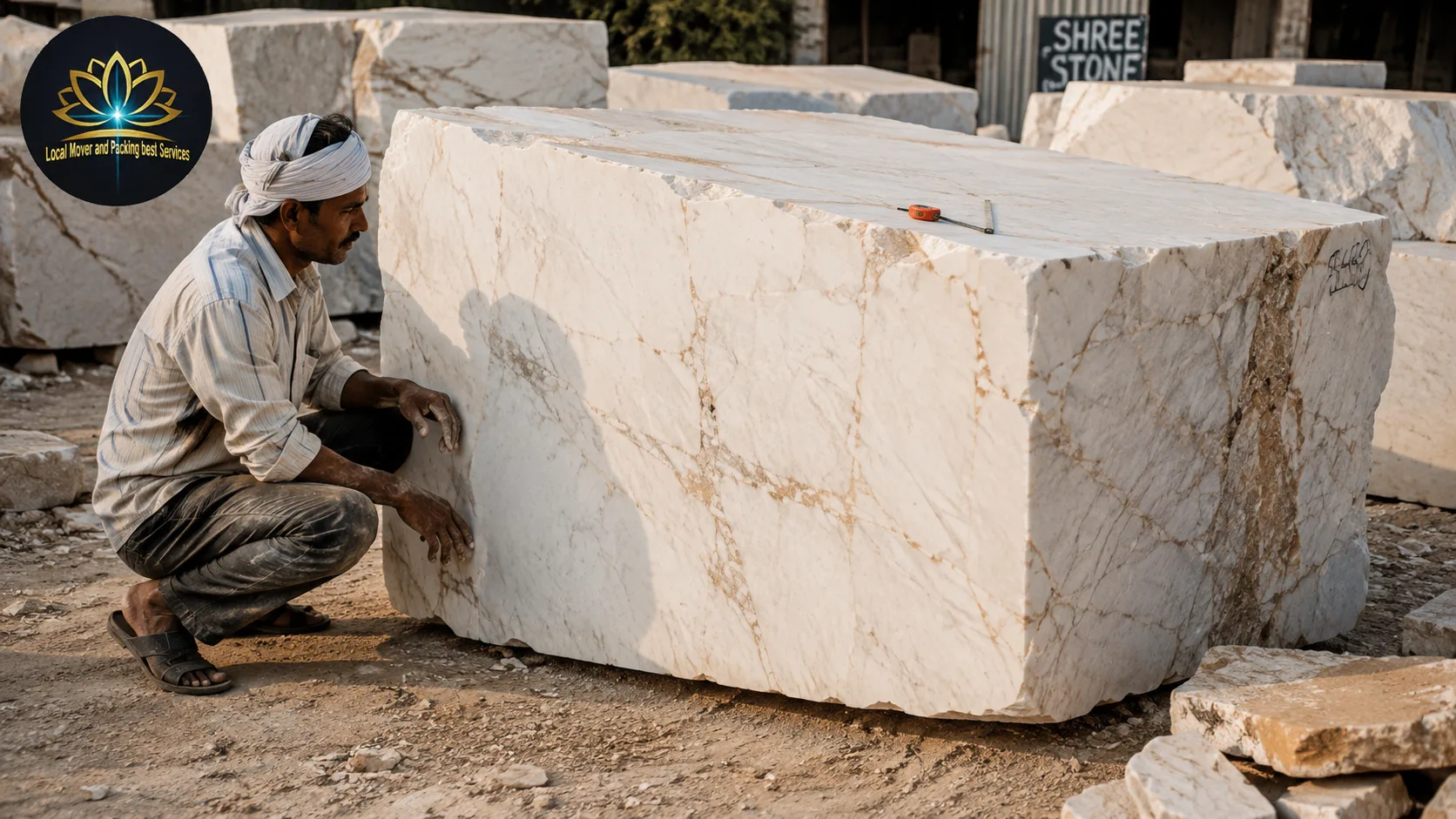
Every statue starts as a block of raw marble, and this first decision already sets the tone for everything that follows. Not all marble blocks are equal. Some come from sources known for tighter grain and fewer natural fissures, which makes them more suitable for fine detailed carving, particularly around delicate areas like fingers, flutes, or facial features. Blocks with visible flaws or inconsistent texture are either avoided for detailed devotional work or reserved for simpler, less intricate pieces.
Selecting the right block for a specific statue involves inspecting it closely, checking for internal weaknesses, and judging whether its size and shape suit the intended pose without excessive waste. This selection process itself takes time and expertise, and it directly affects how smoothly the later carving stages will go.
Stage Two: Rough Shaping
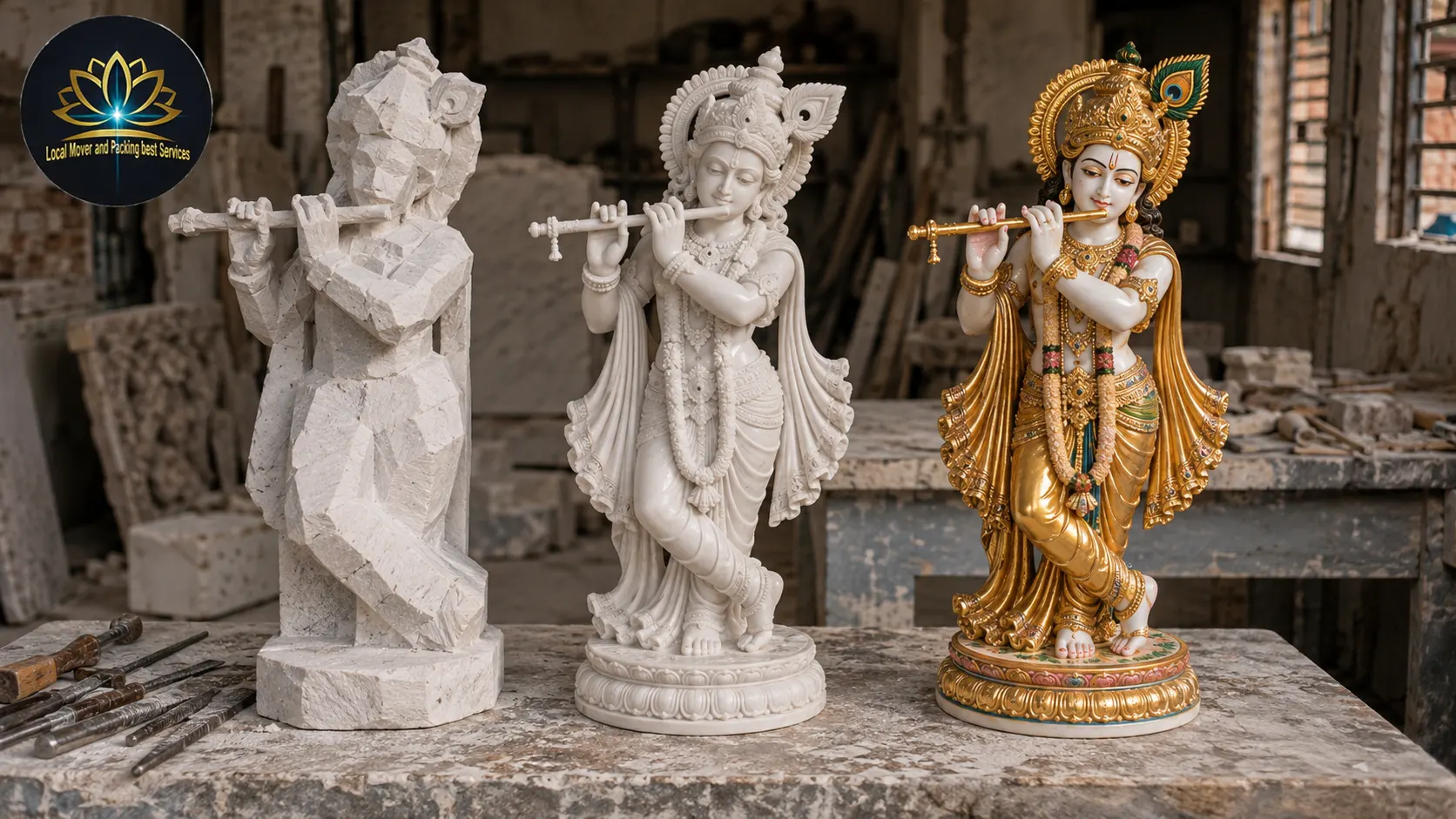
Once a block is chosen, the next stage involves roughly shaping the stone into the basic outline of the statue, removing large sections of excess marble to reveal the general form. This stage is physically demanding and requires a good understanding of proportion from the very start, since mistakes made here are difficult to correct later.
This is also where the base structural integrity of the piece is established. Getting the initial proportions right, particularly around areas that will later become thin or delicate, like an outstretched arm or a raised flute, sets up the entire rest of the carving process to succeed or struggle.
Stage Three: Detailed Hand Carving
This is typically the most time and skill intensive stage of the entire process, and it is where the statue truly starts to take on its identity. Facial features, the folds of clothing, jewelry detailing, and the specific posture of the pose are all refined here, often using progressively finer tools as the work moves from broad shaping to precise detailing.
The complexity of the chosen pose has a direct impact on how long this stage takes. A straightforward standing pose with minimal additional elements moves through this stage more efficiently than a dynamic pose involving multiple figures, flowing drapery, or intricate ornamental carving. This is one of the biggest reasons pose choice, discussed in our guide to Krishna statue poses and meanings, has such a meaningful effect on the overall cost of a piece.
Stage Four: Sanding and Surface Preparation
Before any painting or final polishing begins, the carved statue goes through a careful sanding process to smooth the surface and remove any tool marks left from carving. This stage matters more than it might seem, since an uneven or rough surface underneath will show through even the best painting or polishing work applied afterward.
This preparation stage tends to take longer on statues with more intricate detailing, since sanding around fine carved elements like jewelry or drapery folds requires a more careful, controlled hand than smoothing broad, simple surfaces.
Stage Five: Painting and Gold Leaf Detailing
For statues receiving hand painted detailing, this stage adds a significant layer of both time and skilled labor. Applying color accurately to a three dimensional carved surface, keeping lines clean around small details, and layering gold leaf onto crowns, ornaments, or the flute requires a different skill set from the carving itself, often handled by artisans who specialize specifically in this finishing work.
The amount of detailing requested here has one of the largest effects on total production time. A statue left in natural polished marble skips this stage almost entirely, while a fully painted piece with extensive gold leaf work can add a considerable amount of additional time before the statue is ready to move to final finishing.
Stage Six: Final Polishing
The last major stage before packaging involves polishing the statue to bring out its final shine and smooth finish. This step affects both the visual depth of the piece and its overall tactile quality, the smooth, cool surface people expect when they run a hand over a finished marble statue.
Polishing quality is not something that can be rushed without it showing. A carefully finished piece has an even shine across the entire surface, while a hurried polish can leave subtle inconsistencies, particularly around detailed areas that are harder to reach evenly.
Stage Seven: Quality Check
Before a statue is considered complete, it typically goes through a final visual and structural check, looking for any inconsistencies in proportion, surface finish, or detailing that may have been missed during the earlier stages. This is a smaller stage in terms of time compared to carving or painting, but it plays an important role in making sure the finished piece actually meets the standard it is meant to.
Stage Eight: Packaging and Shipping Preparation
The final stage, and one that is easy to overlook when thinking about cost, is preparing the statue for safe transport. For local delivery, this involves careful padding and secure handling. For international orders, particularly to the USA, UK, Canada, or Australia, this stage becomes considerably more involved, requiring sturdy wooden crating, internal bracing to prevent movement during transit, and packaging suited specifically to the size and weight of the piece.
Larger and heavier statues, discussed in more detail in our guide to marble statue weight, require more robust crating, which adds to this final stage of cost, separate from the carving and finishing work that came before it.
Why This Process View Matters for Buyers
Understanding these stages helps explain something that can otherwise feel confusing when comparing quotes or products, why two statues of similar size can end up priced quite differently. The difference usually is not arbitrary. It reflects real variation in how much time and skilled labor went into carving, detailing, and finishing that specific piece.
It also means that if you are trying to manage cost thoughtfully, the most effective way to do so is by understanding which stage matters most to you. Someone who values the raw carving and natural marble presence over heavy ornamentation can often get a beautifully proportioned statue while keeping painting and gold leaf work minimal. Someone who wants the full traditional painted look should expect that stage to add meaningfully to both time and cost, and that is a reasonable trade off for the visual richness it brings.
Frequently Asked Questions
Which production stage typically takes the longest?
Detailed hand carving is usually the most time intensive stage, particularly for poses with intricate detailing, flowing drapery, or multiple figures.
Does skipping the painting stage significantly reduce cost?
It can meaningfully reduce production time and cost, since hand painting and gold leaf detailing require a separate, skilled process on top of the carving itself.
Why does raw marble sourcing matter for the final cost?
Higher grade blocks with tighter grain and fewer flaws are better suited to detailed carving and generally cost more as raw material than lower grade stone.
Is the final polishing stage really that important to the overall look?
Yes. An even, well executed polish brings out the depth and shine of the marble and is often the difference between a piece that looks finished and one that looks rushed.
Does international shipping add meaningfully to the overall cost?
Yes, particularly for larger and heavier statues, since export crating and international freight require more robust packaging than local delivery.
Understanding the Journey Behind Every Statue
Every marble Krishna statue represents a series of deliberate stages, from selecting the right block of stone to the final polish before it leaves the workshop. Knowing what happens at each step makes it much easier to understand where your investment is actually going. You can explore the full range of hand carved marble Krishna statues at Kamal Moorti, or look at the Shree Radhe Krishna pair designs to see this same process reflected in a paired statue.
To discuss which stages matter most for your specific vision and get a personalized quote, reach out through the contact page, learn more via the About Us page, or call +91-9829678999 to talk through your requirements.



Pingback: Krishna Marble Statue Manufacturing Quebec: Kamal Moorti
Pingback: Krishna Marble Statue Manufacturing Surrey | Kamal Moorti