Carving a painted Krishna statue gets the form right. Painting it gives that form its personality. Anyone who has stood in front of a beautifully hand painted marble statue knows there is a real difference between admiring the carved shape of a figure and feeling like you are looking at a living, expressive presence, and a huge part of that difference comes down to the painting stage, a craft that gets far less attention than carving but arguably requires just as much skill.
This piece looks at how that painting process actually works, why specific colors are chosen the way they are, and what goes into the gold leaf detailing that gives so many Krishna statues their distinctive richness.
Why Painting Is Its Own Distinct Craft
It is a common misconception that painting a marble statue is a simple final step tacked onto the carving process. In reality, it is a specialized skill of its own, often handled by artisans who focus specifically on this stage rather than carving. Painting a three dimensional carved surface is fundamentally different from painting on a flat canvas. The artist has to account for how light will fall across curves and folds, how color needs to be layered to look consistent from multiple angles, and how fine detailing has to follow the contours the carver already established, rather than fighting against them.
This is part of why a well painted statue and a poorly painted one can look dramatically different even when carved from the exact same mold or design.
Why Krishna Is Traditionally Painted Blue
The blue skin tone associated with Krishna is one of the most recognizable elements of his iconography, and it carries genuine symbolic weight rather than being an arbitrary artistic choice. Blue is traditionally associated with the vastness and depth of the sky and ocean, reflecting Krishna’s identity as an infinite, all encompassing divine presence, something too vast to be captured by an ordinary human skin tone. It is meant to visually signal that this is not simply a mortal figure being depicted, but a divine one.
Artisans typically work with deeper, richer blue tones for a devotional statue, avoiding overly bright or flat shades, since the depth and subtlety of the blue used genuinely affects how serene and dignified the final piece feels.
The Symbolism Behind Other Common Colors
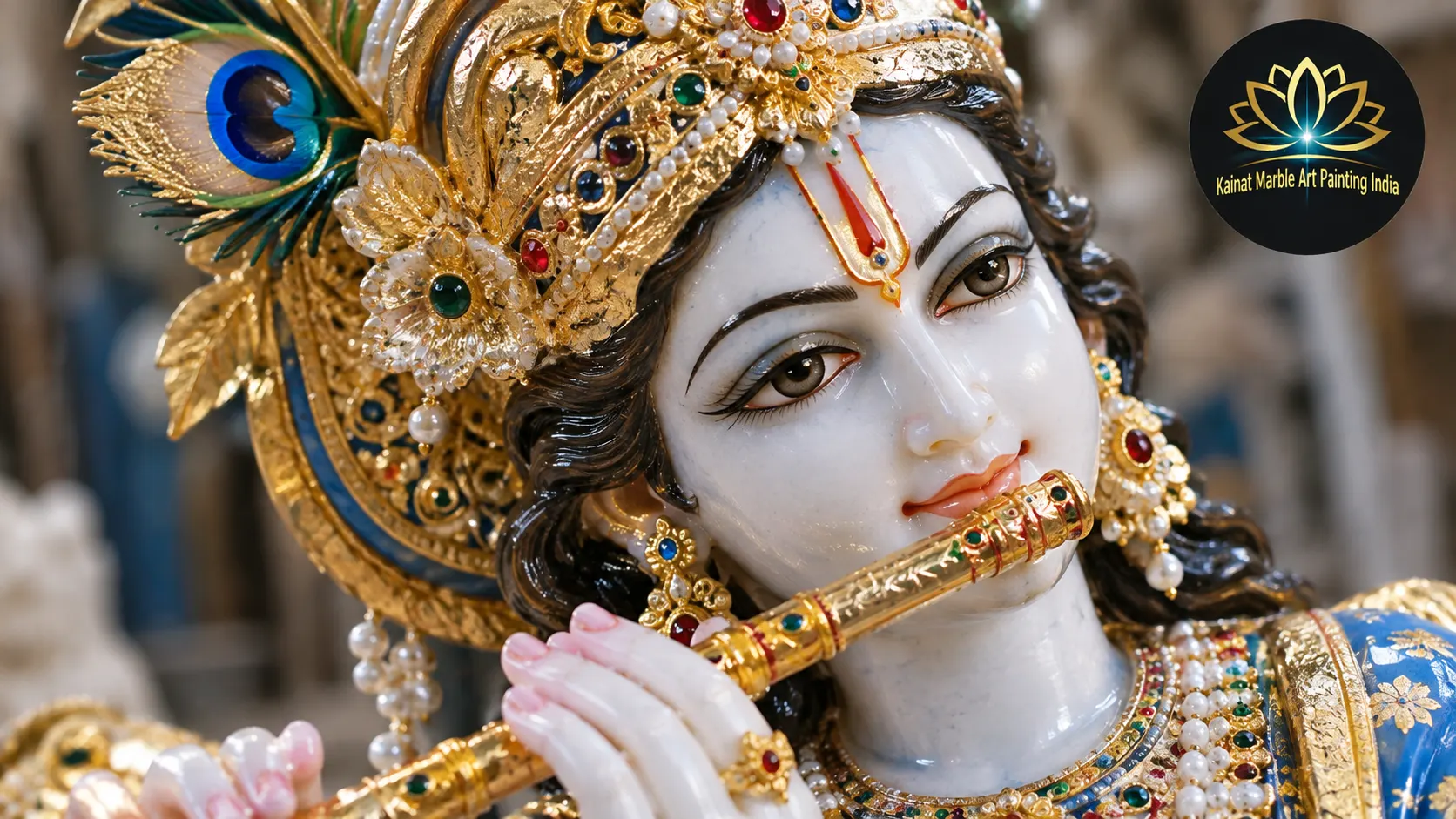
Beyond blue, several other color choices follow long established traditions. Yellow, often used for Krishna’s dhoti or lower garment, represents joy, earthiness, and the material world, sometimes referred to in tradition as the peetambar. Gold, used extensively in crown and jewelry detailing, represents divine radiance, wealth, and auspiciousness, and its use is not purely decorative but tied to the visual language of representing a figure of spiritual significance.
For Radha Krishna pair statues, Radha’s attire is often painted in shades of red or pink, symbolizing love, devotion, and passion, creating a deliberate visual and symbolic contrast with Krishna’s blue that reinforces the dynamic between the two figures.
How the Painting Process Actually Works
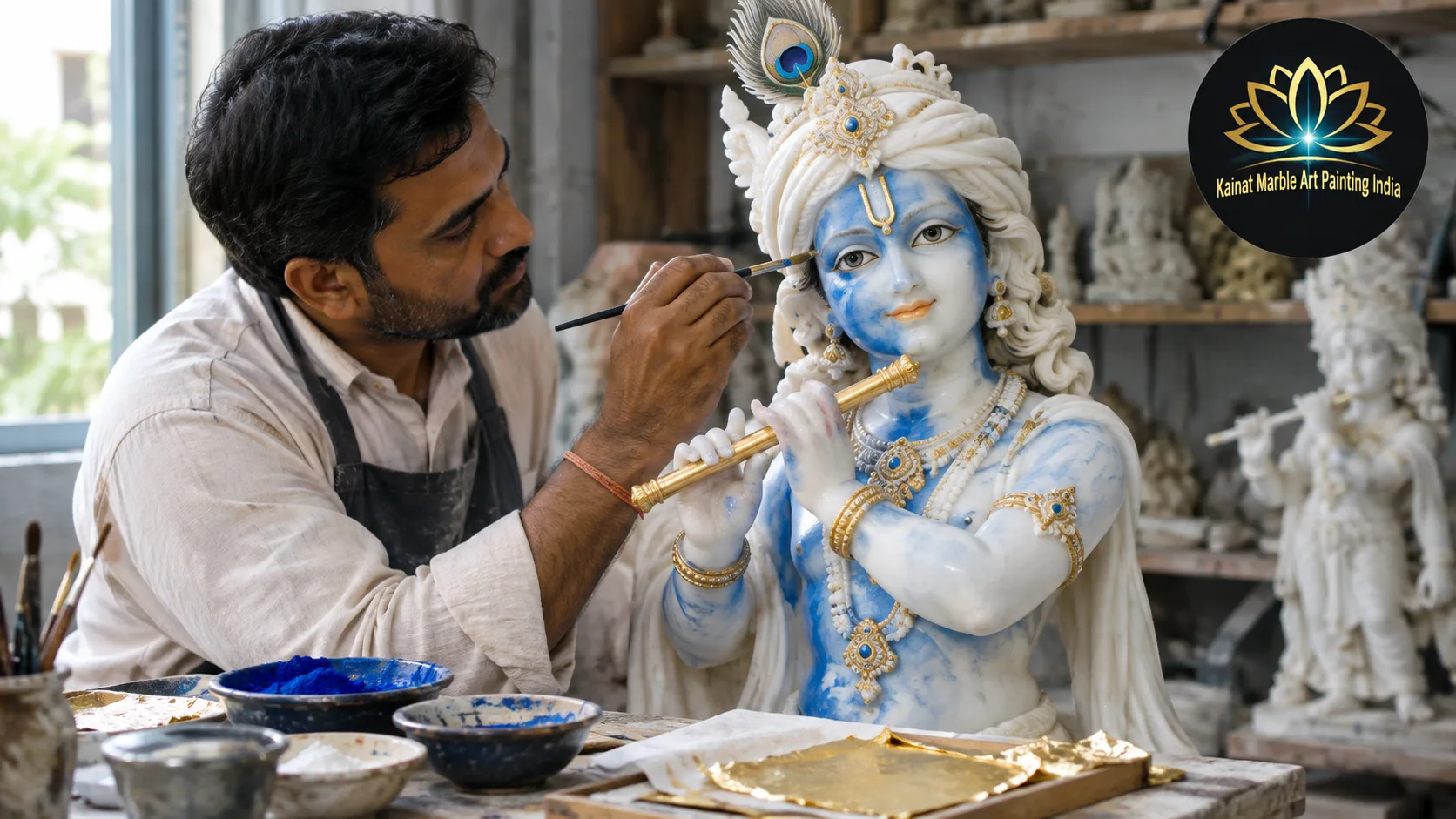
The process generally begins after the statue has been fully carved, sanded, and prepared with a smooth, clean surface. A base layer of paint is applied first, establishing the primary skin tone and setting the foundation for all the detailing that follows. This base coat needs to be even and carefully controlled, since any inconsistency here will show through in every layer applied afterward.
From there, the artist moves to progressively finer detailing, defining facial features, the folds and patterns of clothing, and any decorative elements like jewelry or a peacock feather in the crown. This stage relies heavily on a steady hand and a genuinely close, patient attention to small areas, since fine lines around the eyes or the edge of a garment fold can make or break how expressive the final piece feels.
Gold Leaf Application: A Craft Within a Craft
Gold leaf detailing deserves its own explanation, since it is applied quite differently from regular paint. Real gold leaf comes in extremely thin sheets, and applying it requires a specific adhesive base layer, followed by careful, precise placement of the delicate gold sheet onto crowns, jewelry, flute detailing, and garment borders. Because the material itself is so thin and delicate, this stage demands a controlled, steady environment and considerable patience, since even small drafts or unsteady handling can cause the fragile gold leaf to tear or shift out of place.
Once applied, the gold leaf is gently smoothed and, in some cases, lightly burnished to enhance its shine, giving the finished detailing that distinctive warm, reflective quality that catches diya light so beautifully during daily worship.
Choosing a Color Palette for Your Statue
While traditional color symbolism provides a strong foundation, there is genuine room for personal preference within that framework, particularly around garment colors and the extent of gold detailing used. Some families prefer richer, more saturated tones throughout, while others prefer a softer, more muted palette that feels calmer within their specific home temple setting.
It also helps to think about how the statue’s coloring will interact with its surroundings. A richly colored statue can become the clear visual anchor of a temple corner, while a more subtly painted piece tends to blend more harmoniously into a space with a lot of existing color and detail already present.
Painted vs Unpainted: A Different Kind of Beauty
It is worth acknowledging that an unpainted or minimally painted statue, discussed in more detail in our comparison of traditional and contemporary Krishna statue designs, offers its own distinct beauty, letting the natural marble carry the visual weight rather than color. Neither approach is inherently superior. A fully painted statue offers narrative richness and traditional symbolic depth, while an unpainted piece offers quiet, contemporary elegance. The right choice really depends on what feeling you want the statue to bring into your space.
Caring for a Hand Painted Finish
Painted and gold leaf detailing does require a bit more thoughtful care than plain polished marble. Regular dry dusting with a soft cloth is generally sufficient for day to day maintenance. It is best to avoid direct, prolonged exposure to incense smoke where possible, since this can gradually dull painted surfaces over many years, and to avoid any damp cleaning directly over gold leaf areas, since moisture can affect the delicate gold application over time. If deeper cleaning is ever needed, it is worth consulting the workshop directly rather than risking damage to detailed painted work through general household cleaning methods.
Frequently Asked Questions
Why is Krishna almost always depicted with blue skin?
Blue traditionally symbolizes the infinite, all encompassing nature of the divine, reflecting the vastness of the sky and ocean, and it visually distinguishes Krishna as a divine figure rather than an ordinary human form.
Is real gold used in gold leaf detailing?
Genuine gold leaf work uses extremely thin sheets of real gold, applied with a specialized adhesive base and careful, precise placement by a skilled artisan.
Can I choose different colors than the traditional blue and yellow palette?
Yes, personal customization within the color palette is possible, particularly for garment colors, while core symbolic elements like Krishna’s blue skin tone are typically kept traditional.
How long does the painting stage usually take?
It varies based on the level of detailing requested, but full body painting with extensive gold leaf work generally takes considerably longer than a statue with only selective accenting.
Does hand painted detailing require special long term care?
Yes, painted and gold leaf areas benefit from gentle dry dusting and being kept away from prolonged incense smoke exposure and direct moisture to preserve their appearance over the years.
Bringing Color and Character to Your Statue
The painting stage is where a carved statue truly becomes a living, expressive presence, carrying centuries of symbolic tradition in every brushstroke and layer of gold. You can explore the range of hand painted marble Krishna statues at Kamal Moorti, or look at the Shree Radhe Krishna pair designs to see how color and detailing work together across a paired composition.
To discuss a specific color palette or level of gold detailing for your statue, reach out through the contact page, learn more via the About Us page, or call +91-9829678999 to talk through your vision.