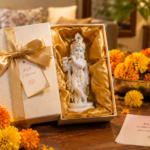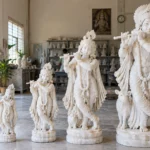
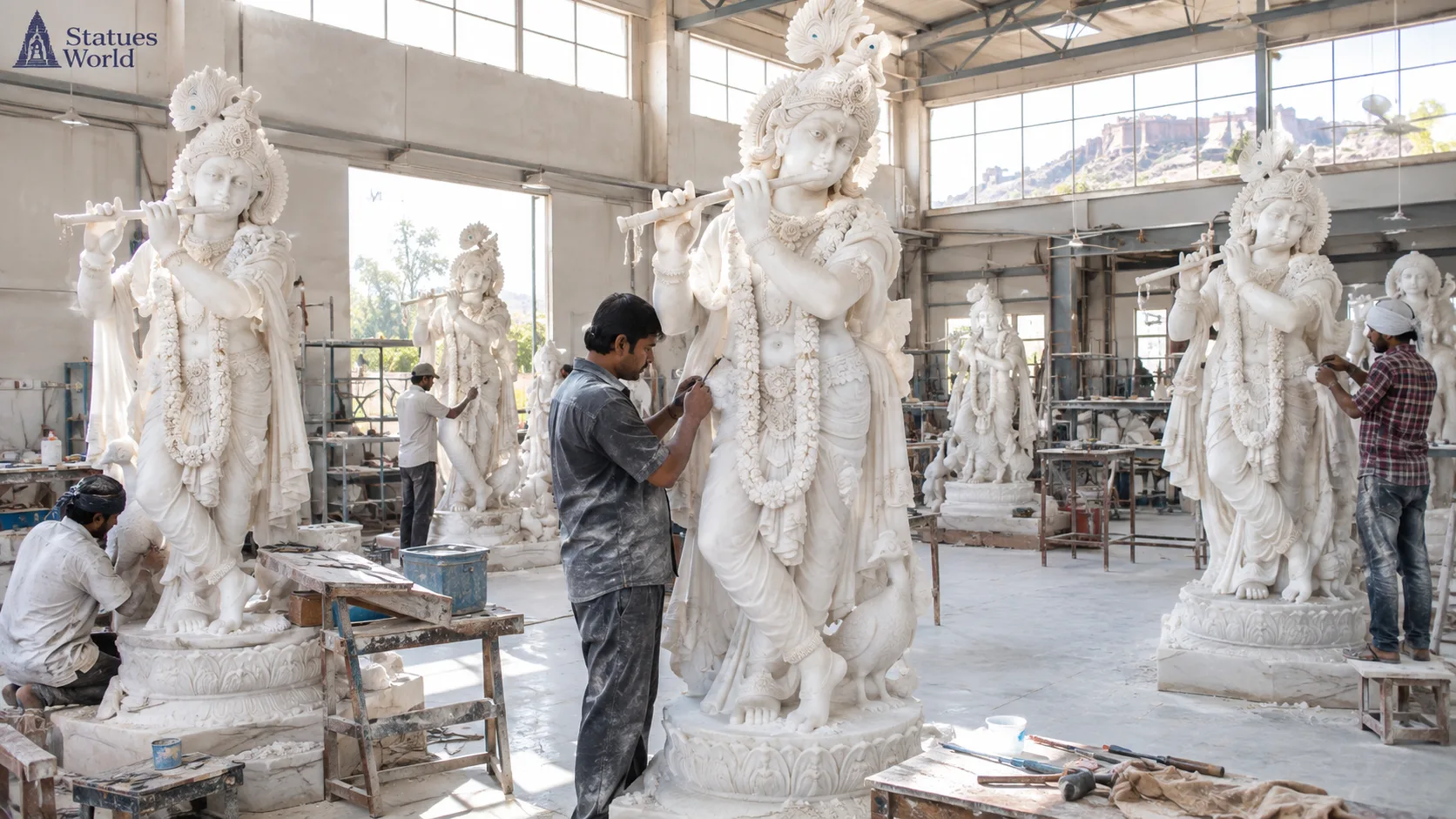
A statue meant for a home shelf and a professional Krishna statue meant for a temple sanctum are not held to the same standard, even when they start from the exact same pose and design. A home temple piece needs to hold up to daily handling by one family. A temple statue needs to hold up to years of continuous public worship, hundreds of visitors passing by, daily rituals performed by priests, and often, far more demanding structural and durability requirements than most private buyers ever need to think about.
This piece looks at what actually defines temple-grade quality in a marble Krishna statue, and what temple committees and trustees should be thinking about when commissioning a piece meant for public worship rather than a private home.
Why Temple Statues Face a Different Standard Entirely
The difference starts with exposure. A home statue is handled carefully by a small number of people who understand and respect its significance. A temple statue is viewed, approached, and sometimes touched by hundreds or thousands of devotees over the years, and it needs to remain structurally sound and visually dignified under that level of ongoing use. Daily rituals, including abhishekam or other forms of ceremonial bathing practiced in many traditions, also place different physical demands on the statue compared to the light dusting routine typical of a home setting.
This is why temple commissions require a different level of planning from the very start, not just a larger version of a standard home piece.
Marble Selection for Institutional Use
For a temple statue, marble selection becomes an even more critical first step than it is for a home piece. Blocks are chosen with particular attention to structural consistency throughout, since flaws that might be acceptable in a smaller decorative piece become genuinely risky in a large scale statue meant to stand for generations under continuous public use. Density and grain consistency, discussed in more detail in our guide to marble statue durability, matter enormously here, since a temple installation is not something that gets replaced or adjusted easily once it is in place.
Scale Considerations for Temple Installations
Temple statues are frequently larger than typical home pieces, sometimes significantly so, to suit the scale of a sanctum and to remain visible and commanding from a respectful worship distance. Larger scale carving introduces its own structural challenges, particularly around delicate elements like an extended flute or raised arm, which need to be proportioned with even greater care at scale than they would in a smaller home statue.
Working with an experienced workshop that has handled large scale institutional commissions before matters considerably here, since scaling up a design is not simply a matter of carving the same proportions bigger. It requires genuine structural judgment about how weight distribution and load bearing change as a statue grows in size.
Durability Standards for Continuous Public Worship
A temple statue needs to withstand daily ritual practices over many years without showing premature wear. This includes resilience to regular contact during ceremonies, exposure to substances used in specific rituals depending on tradition, and, in many cases, placement in spaces with heavier incense and oil lamp use than a typical home temple would see.
Temple grade work accounts for this from the design stage, considering how detailing and finishing will hold up under this more intensive, sustained use compared to a home setting, and advising on finishing choices that will age well under these specific conditions.
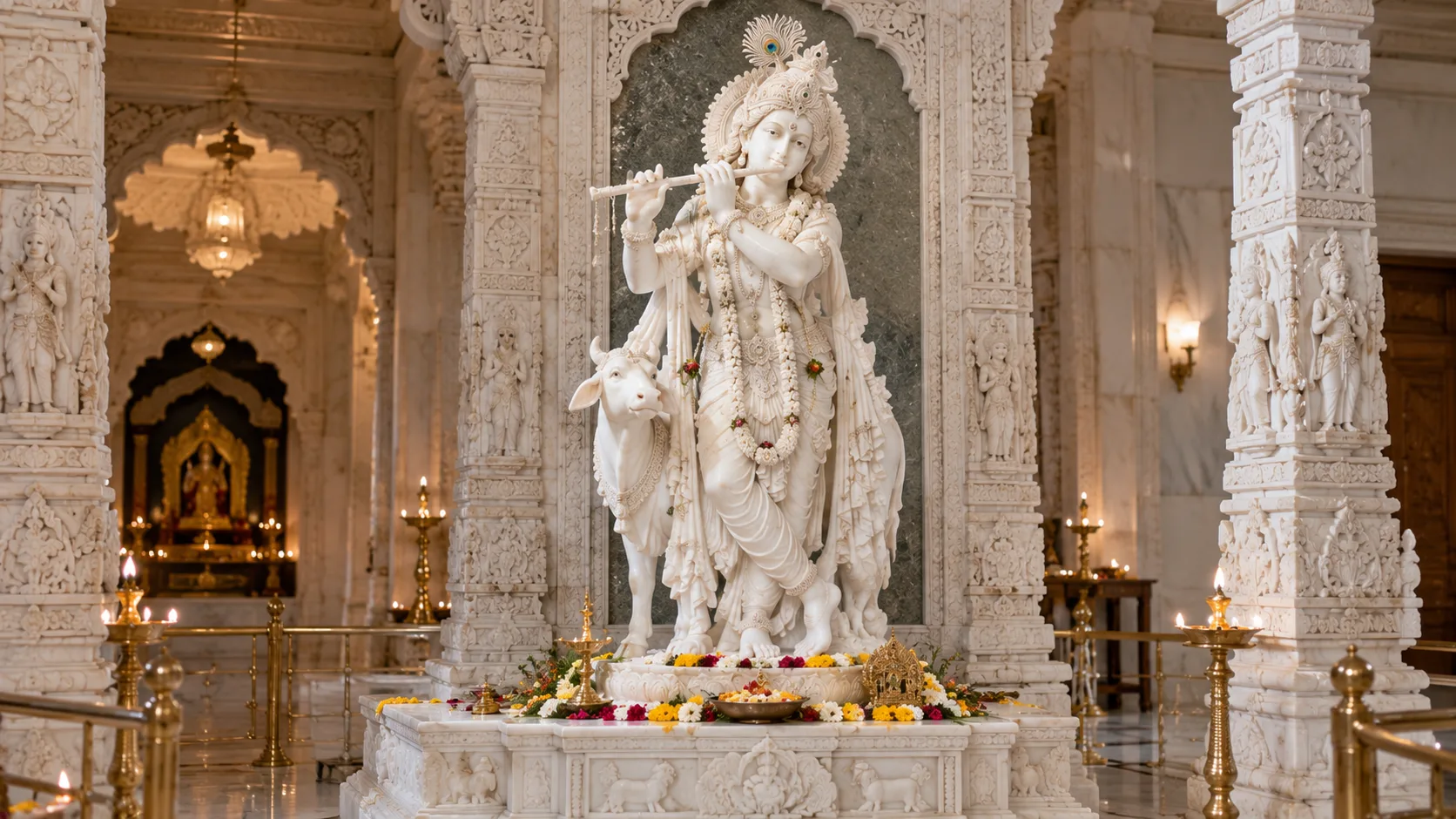
Craftsmanship Standards for Public Devotional Art
Because a temple statue is viewed by a large number of devotees, often from multiple angles and distances, craftsmanship consistency across the entire piece matters more than it might for a statue primarily viewed up close in a private home. Facial expression, proportion, and detailing need to read clearly and with appropriate dignity from a respectful worship distance, not just under close inspection.
This is typically work entrusted to a workshop’s most senior artisans, given both the scale of the commission and the public, lasting significance of the finished piece within a community’s spiritual life.
Working With Temple Committees and Trustees
Commissioning a temple statue is generally a more involved process than a personal home order, often requiring coordination with a temple committee or board of trustees rather than a single decision maker. This typically means a more structured process, involving detailed initial consultations to understand the specific tradition, iconographic requirements, and scale needs of the particular temple, followed by design approval stages before carving begins, given the scale of investment and the lasting nature of the commission.
Clear, documented communication throughout the process, including progress updates and, where distance makes in-person visits difficult, photo or video documentation at key stages, helps keep a committee informed and confident throughout what is often a multi-month commissioning process.
Bulk and Multi-Statue Temple Orders
Some temple commissions involve more than a single statue, such as a full deity arrangement including a central Krishna murti alongside companion figures, or multiple statues for different areas of a larger temple complex. Coordinating a bulk order like this requires careful planning to ensure visual and proportional consistency across all pieces, particularly when they will be displayed together or viewed as part of a single arrangement.
Workshops experienced in institutional commissions typically manage this kind of coordinated production more smoothly than one-off custom requests, since it draws on established processes for managing scale, consistency, and timeline across multiple pieces simultaneously.
Timeline Planning for Temple Commissions
Given the scale, detailing, and committee coordination typically involved, temple statue commissions generally require considerably more lead time than a personal home order. It is common for temple committees to begin the process many months ahead of an intended installation or consecration date, allowing adequate time for design approval, carving, finishing, and, for temples outside India, international shipping and customs clearance as well.
Shipping and Installation for Overseas Temples
For temples and religious institutions in the USA, UK, Canada, or Australia commissioning statues from Jaipur, international logistics add a significant layer of planning beyond the carving itself. This includes appropriately robust crating for large scale, heavy pieces, coordination around customs and import requirements specific to religious statuary, and, in many cases, discussion of installation support or guidance once the piece arrives at its destination.
What Temple Committees Should Ask Before Commissioning
A few questions help ensure a temple commission proceeds smoothly from the start. It is worth asking about the workshop’s prior experience with institutional or temple scale commissions specifically, requesting to see examples of previous large scale work where possible, and clarifying expectations around progress documentation throughout the carving process. Discussing shipping and installation logistics early, particularly for overseas temples, also helps avoid timeline surprises later in the process.
Frequently Asked Questions
How is a temple-grade statue different from a premium home statue?
Temple-grade work accounts for continuous public use, larger scale, and structural demands specific to institutional worship, while premium home pieces focus more on exceptional detailing within a private household context.
How long does a temple statue commission typically take?
Temple commissions generally require significantly more lead time than home orders, often several months, due to scale, committee coordination, and detailed finishing work involved.
Can a workshop coordinate multiple statues for a single temple complex?
Yes, experienced institutional workshops can manage multi-statue commissions, ensuring visual and proportional consistency across an entire arrangement.
What should a temple committee ask before commissioning a statue?
It helps to ask about the workshop’s prior institutional experience, request examples of past large scale work, and clarify how progress will be documented and communicated throughout the process.
Is international shipping different for temple scale statues compared to home orders?
Yes, larger and heavier temple statues require more robust crating and careful coordination around customs and import requirements, particularly for religious statuary shipped internationally.
Commissioning a Statue Built for Generations of Worship
A temple statue carries a different weight of responsibility than a home piece, one meant to serve an entire community’s spiritual life for generations. You can explore the craftsmanship behind the marble Krishna statues collection at Kamal Moorti, or look at the handcrafted marble temple collection for a sense of the workshop’s approach to larger scale devotional architecture.
To discuss a temple or institutional commission, including scale, timeline, and international shipping requirements, reach out through the contact page, learn more via the About Us page, or call +91-9829678999 to begin a conversation with the team.