
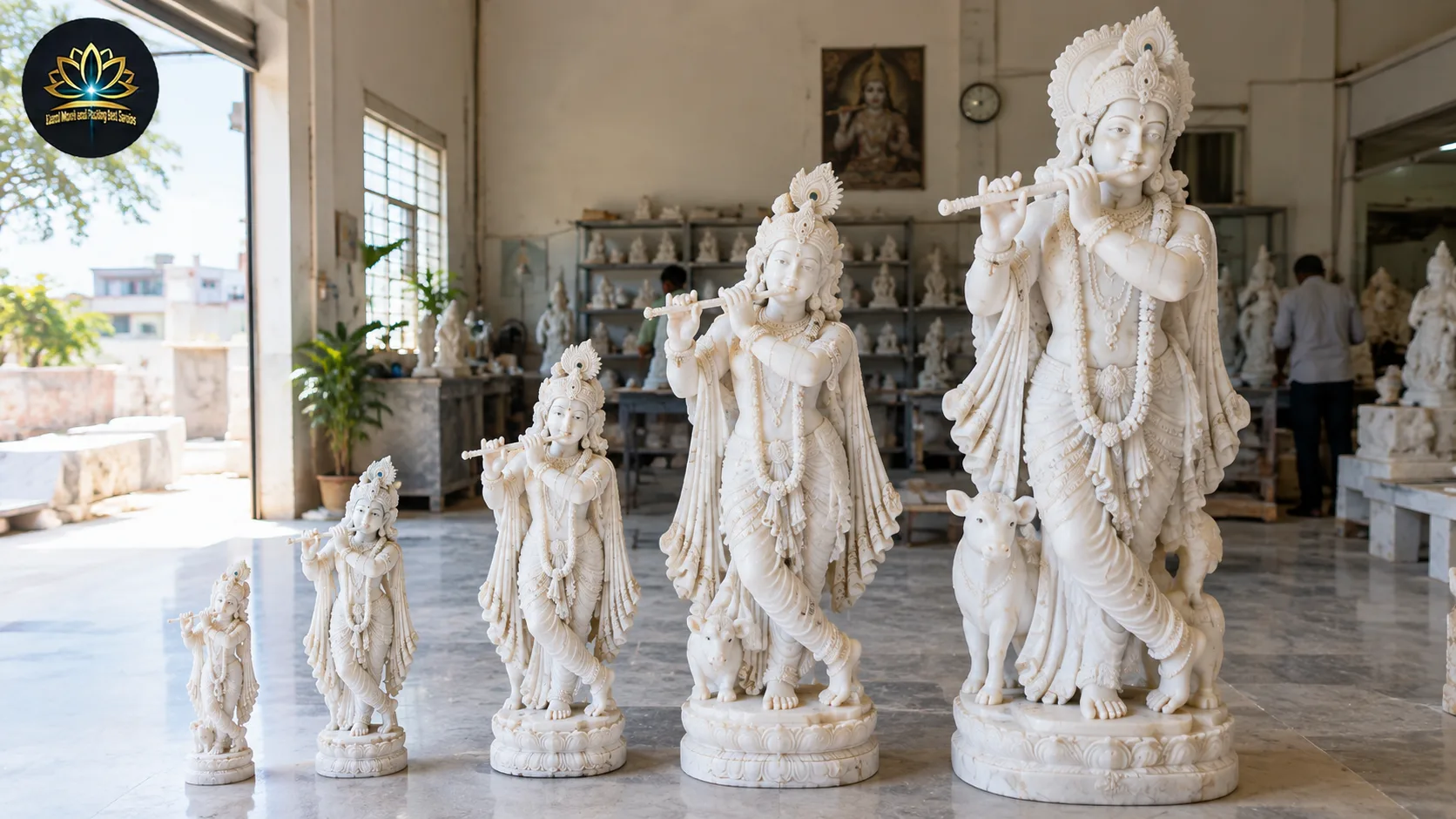
Size is one of those decisions that feels simple until you are actually standing in front of your temple shelf trying to picture how a statue will look there. Photos rarely give an accurate sense of scale, and it is easy to either underestimate how much presence a larger statue size guide will have in a small room, or order something too modest for a space that genuinely calls for more.
Rather than offering fixed numbers that may not reflect what is currently available, this guide focuses on how to think through sizing properly, the general categories most marble Krishna statues fall into, and the practical steps that lead to a size you will actually be happy with once it arrives.
Why Size Deserves More Thought Than It Usually Gets
A marble Krishna statue is not something you casually swap out if the scale turns out wrong. It is a piece meant to sit in one spot for years, so getting the proportions right relative to your actual space matters far more than it might for a purely decorative object. Two considerations drive this, how the statue will look in relation to its surroundings, and whether your specific placement, shelf, platform, or floor space, can physically and structurally accommodate it.
General Size Categories in Marble Statue Making
Across the marble idol industry broadly, statues are generally grouped into a few loose categories, though exact measurements and availability vary by workshop and by the specific pose being carved. Understanding these categories helps frame the conversation when you reach out for an accurate quote.
Small or tabletop statues are typically compact enough to sit comfortably on a shelf altar or small console table, suited to apartments, single shelves, or a modest personal worship corner. Medium statues generally suit a dedicated pooja corner or a slightly larger platform, offering more visual presence without requiring a fully separate temple room. Large statues are usually intended for a dedicated temple room or a prominent corner of a larger living space, serving as a clear centerpiece rather than one item among several. Very large or temple-scale statues are generally reserved for institutional commissions, larger dedicated temple rooms, or public worship spaces, discussed in more detail in our guide to temple-grade marble statues.
| General Category | Typical Setting | Best Suited For |
|---|---|---|
| Small / tabletop | Shelf altar, small console | Apartments, compact spaces, first home temple |
| Medium | Dedicated pooja corner | Moderate sized rooms, established home temples |
| Large | Full temple room, prominent living space corner | Households wanting a clear devotional centerpiece |
| Very large / temple scale | Institutional or large dedicated temple rooms | Temples, community spaces, major installations |
These categories are meant as general planning language rather than a fixed catalogue. Since exact available sizes can vary by pose, marble type, and current production capacity, the most reliable way to get precise dimensions is to ask the workshop directly once you have a general size category and space in mind.
How to Measure Your Space Before Ordering
Before reaching out for a quote, it helps to have a few basic measurements ready. Measure the width and depth of the shelf, platform, or floor area where the statue will sit, along with the height available above it, particularly if the space has a shelf, arch, or overhang that could limit how tall a statue can comfortably fit. If you are placing the statue within a temple structure, such as a marble mandir, measure the interior opening specifically, since this is often narrower than the overall structure’s outer dimensions.
It also helps to think about viewing distance. A statue viewed up close during daily prayer can be smaller and still feel present, while one viewed from across a larger room generally needs more scale to hold the same visual weight, a point covered in more depth in our guide to Krishna statue placement by room size.
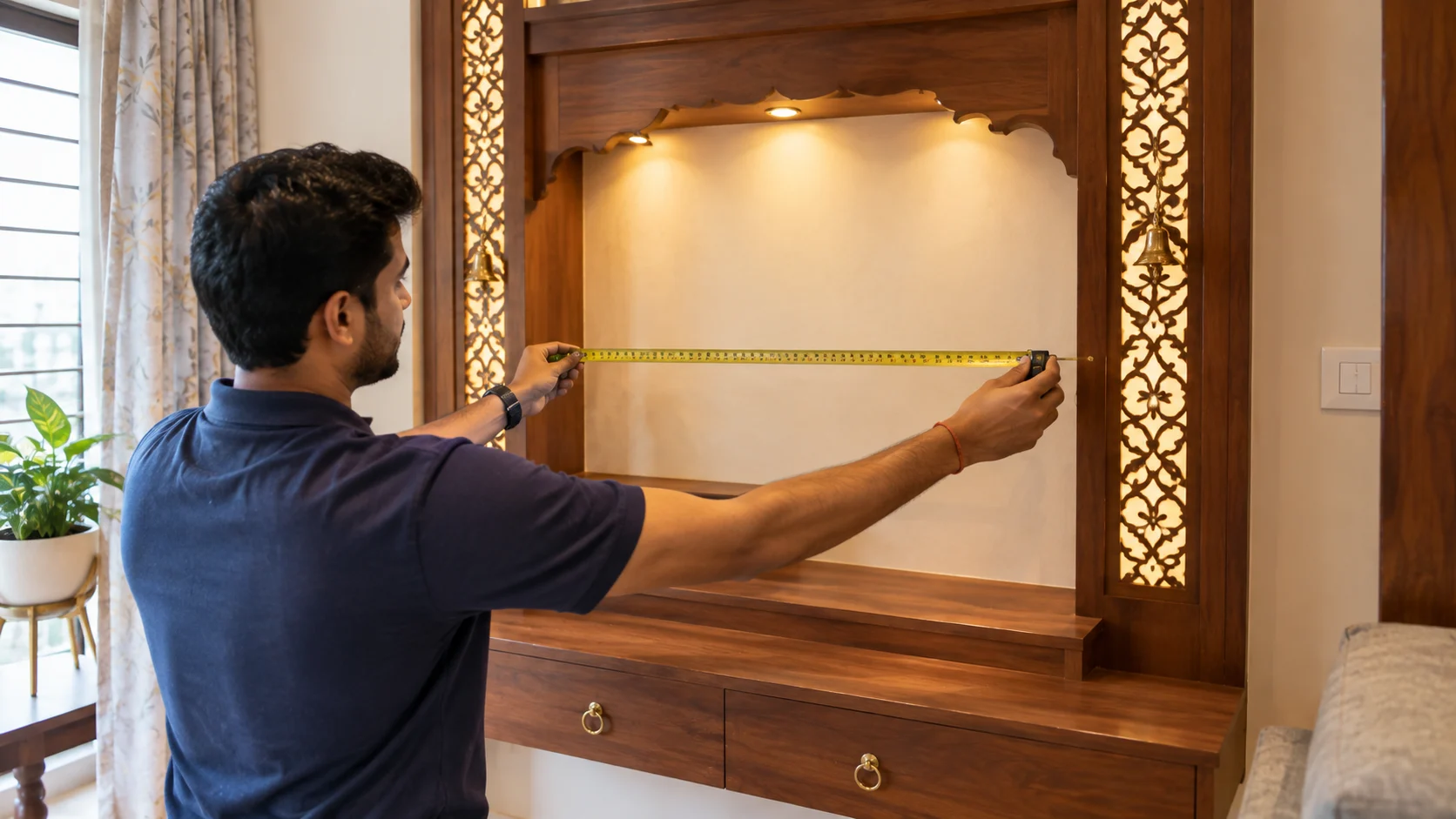
Proportion Considerations Beyond Height
Height is usually the first number people think about, but width and base proportion matter just as much for how a statue actually sits in a space. A tall, narrow statue and a shorter, broader one at a similar height can occupy very different amounts of shelf or platform space, so it is worth asking about full dimensions, not just height, once you are discussing specific options.
Base design also affects footprint. A statue with an elaborate carved lotus base will need more surface area than the same figure on a simple flat platform, which is worth factoring in in for a tighter space.
How Pose Affects Available Size Range
Not every pose scales the same way across every size category. A simple standing Murlidhar pose tends to be carved comfortably across a wide range of sizes, from small tabletop pieces to large temple installations. More dynamic or multi-figure poses, such as Kaliya Daman or a seated Radha Krishna pair with additional elements, generally work better starting from a medium size upward, since very small versions can struggle to render fine detailing clearly at a compact scale. This is worth mentioning when discussing size with the workshop, since your preferred pose may influence which size range is genuinely practical.
Size and Weight: What to Expect as Scale Increases
As statues grow larger, weight increases significantly, which affects everything from shelf strength to how the piece is moved into your home. Our guide to marble statue weight covers this relationship in more detail, but as a general rule, it is worth confirming expected weight alongside dimensions once you have a specific size in mind, particularly for anything beyond a small tabletop piece.
Size and Cost: A General Relationship
Size is one of several factors that influence cost, alongside pose complexity, detailing, and finishing, discussed further in our guide to what determines marble Krishna statue cost. Larger statues generally involve more material and carving time, but the relationship is not perfectly linear, since a smaller, heavily detailed piece can sometimes cost more than a larger but simply finished one. It is best to think of size as one input into an overall quote rather than the sole determining factor.
A Practical Approach to Choosing Your Size
Rather than starting with a specific number in inches, it often works better to start with your space and your intended use. Measure your available shelf, platform, or room area. Decide roughly which general category, small, medium, large, or temple scale, seems to fit that space and your vision for it. Consider your preferred pose and whether it suits a more compact or more spacious scale. Then reach out with these details so the workshop can recommend specific, currently available dimensions that suit exactly what you have described.
This approach tends to produce a far better fit than picking a number off a generic chart that may not reflect the actual proportions of the specific pose and finish you eventually choose.
Frequently Asked Questions
What is the most common size range for a first home temple statue?
Small to medium sizes tend to be the most common starting point for a first home temple, since they suit a typical shelf or dedicated pooja corner without requiring extensive space planning.
Does every pose come in every size?
Not necessarily. Simpler poses like Murlidhar scale comfortably across a wide size range, while more intricate or multi-figure poses generally work best starting from a medium size upward.
How do I know if a large statue will fit through my doorway or staircase?
It is worth measuring doorway widths and staircase turns in advance for any statue beyond a small or medium size, and discussing access with the workshop before finalizing a large order.
Can I request a custom size that falls between standard categories?
Yes, custom sizing is generally possible, and sharing your exact space measurements allows the workshop to carve a statue tailored specifically to your available area.
Where can I get exact current dimensions for a specific statue?
The most reliable way is to reach out directly with your space measurements and preferred pose, so the workshop can confirm currently available sizes and provide accurate dimensions for your order.
Finding the Size That Fits Your Space
The right size is less about a fixed number and more about how well a statue’s proportions genuinely suit the space it will call home. You can explore the range of hand carved marble Krishna statues at Kamal Moorti, or look at the Shree Radhe Krishna pair designs if you are planning for a larger installation.
To get accurate, current size options based on your space and preferred pose, share your measurements through the contact page, learn more via the About Us page, or call +91-9829678999 to talk through the right dimensions for your home.

Pingback: Krishna Marble Statue Manufacturing Atlanta: Kamal Moorti
Pingback: Radha Krishna Marble Statue Manufacturing Kitchener