
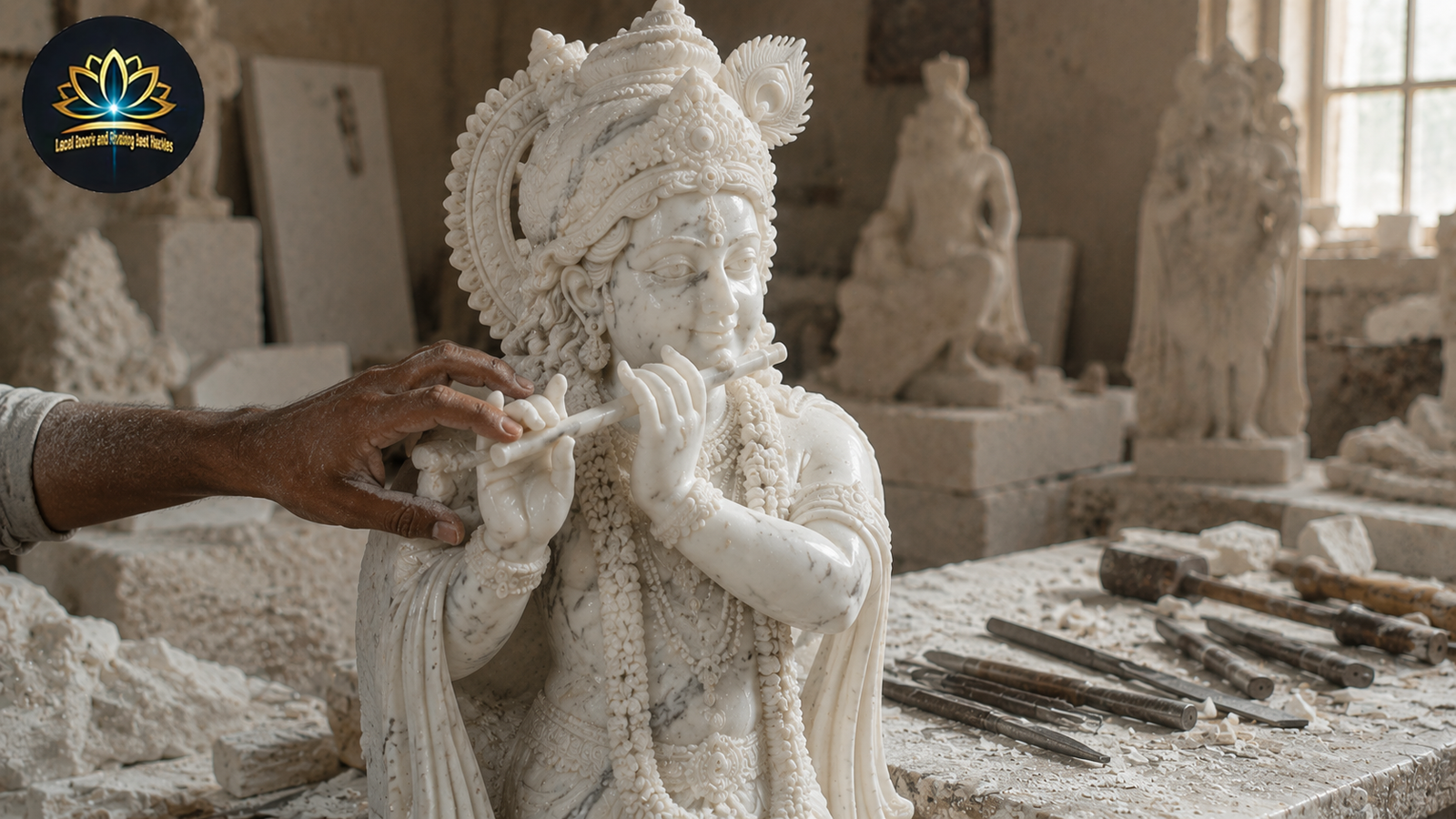
Someplace along the road, a lot of purchasers have wound up with a Krishna statuary that was marketed to them as marble, authentic marble idol just to find years later on that it was actually made from marble dust blended with resin, or worse, ordinary painted plaster. It is not constantly deceit on the vendor’s component either. Sometimes also the seller does not fully understand the composition of what they are reselling. In any case, the individual that winds up disappointed is normally the buyer, standing in front of their home temple asking yourself why the sculpture really feels lighter than anticipated or why it never ever rather creates that cool, stone like existence genuine marble has.
This guide goes through sensible methods to inform genuine marble besides typical replacements, without requiring any type of special devices. The majority of these checks can be done right at the point of acquisition, utilizing absolutely nothing more than your hands and a little bit of focus.
Why This Even Happens authentic marble idol
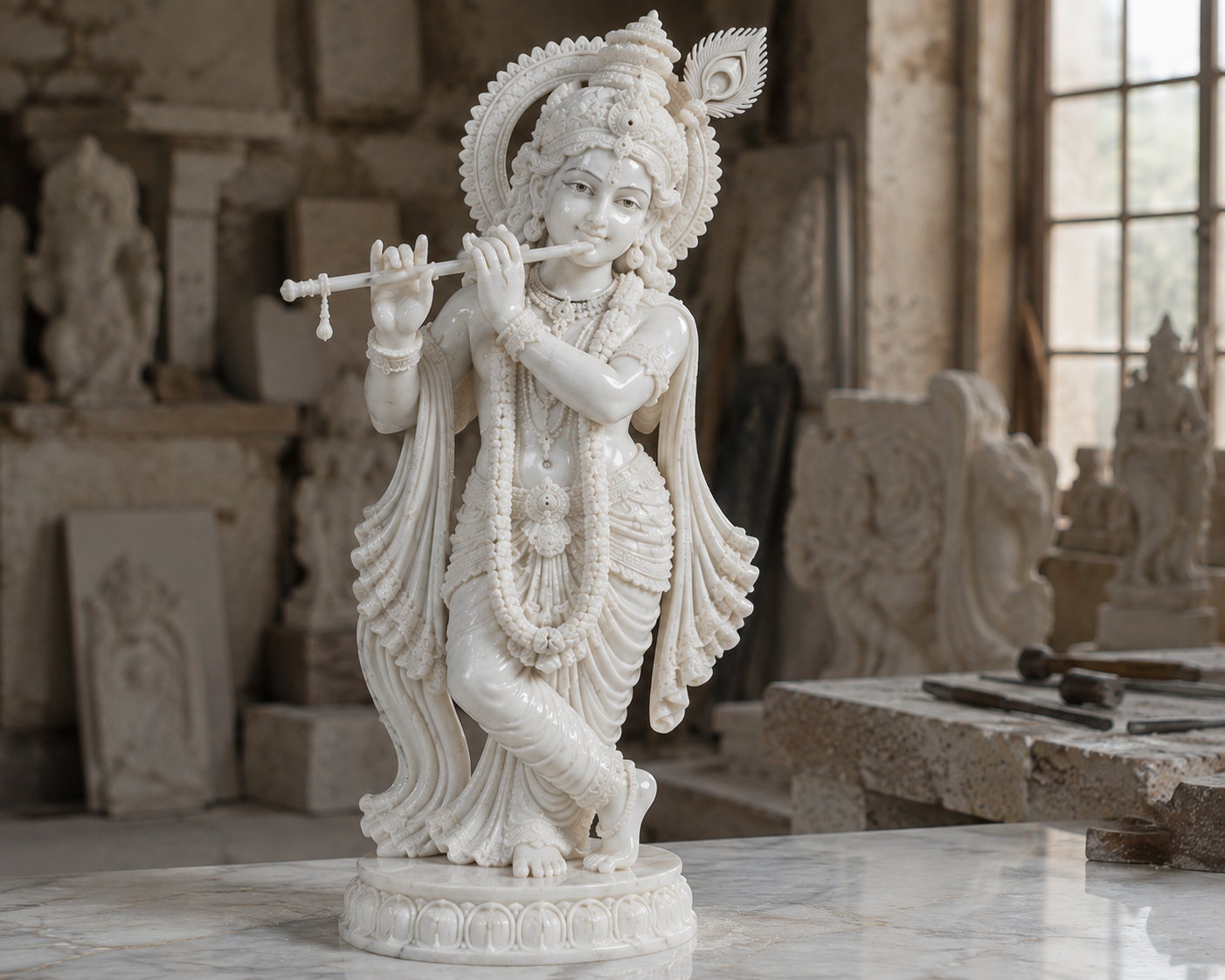
Prior to getting involved in the examinations, it helps to recognize why fake or composite “marble” statues exist in the marketplace whatsoever. Authentic marble is an all-natural stone, and hand sculpting it takes live, ability, and product expense. Composite choices, made from marble dirt bound with resin, or from plaster of paris, can be cast in a mold much quicker and far more affordable. Visually, especially in a photograph or under showroom lighting, a well finished composite item can look convincingly close to actual marble, specifically once it is painted and brightened.
This is not necessarily constantly scams. Some sellers are in advance that they are offering marble dust idols as a much more affordable choice, and there is absolutely nothing incorrect with that as long as it is revealed clearly. The issue develops when a marble dirt or plaster item is cost the price of solid marble, or when the material is just not stated at all.
The Weight Test
This is normally the very first and most trustworthy check. Authentic marble is a dense all-natural stone, and it really feels visibly hefty for its size. Pick up the sculpture, or ask to hold it if you go to a shop, and contrast that weight to what you would expect from a solid block of rock that size.
Marble dirt composite pieces, since they are cast rather than carved from a strong block, are generally lighter than authentic marble of the very same dimensions. Plaster of paris idols are lighter still, often drastically so. If a statuary feels surprisingly light in your hands for its dimension, that is worth asking about directly.
The Cold Touch Test
Genuine marble has a natural thermal property that is hard to fake. Even in a cozy area, an authentic marble statue really feels definitely trendy to the touch, which coolness lingers for a few secs prior to slowly matching your hand’s temperature. This occurs due to the fact that marble is a dense stone that performs heat in a different way from plaster or material composites, which tend to really feel closer to room temperature nearly right away.
Try this by positioning your palm flat against the statue’s surface area, ideally somewhere with a wide level area like the base or the back. If it feels only slightly amazing, or heats up to match your hand within a 2nd or more, that is a signal worth examining additionally.
The Water Absorption Test
A small drop of water can tell you a surprising amount. On genuine polished marble, a drop of water tends to bead up and sit on the surface for a moment before slowly starting to seep in. On plaster of paris, water is absorbed almost instantly, often leaving a visible dark, damp patch that spreads quickly. Marble dust composites behave somewhere in between, though they generally absorb faster than solid marble due to the resin binding process.
This test is best done in an inconspicuous spot, such as the underside of the base, since even genuine marble can develop a slight water mark if tested repeatedly on a visible surface.
The Sound Test
Gently tapping the statue with a fingernail or a small coin, again on an inconspicuous area like the base, can reveal a lot about what is underneath the surface. Genuine solid marble produces a solid, somewhat dense sound, similar to tapping a stone kitchen counter. Composite or hollow cast pieces tend to produce a duller, sometimes slightly hollow sound in comparison.
This one takes a bit of practice to judge confidently, so if you are unsure, it helps to tap a piece you already know is genuine marble first, such as an existing marble surface at home, to get a sense of what that sound should feel like.
Checking the Veining
Natural marble has veining, thin streaks of mineral variation running through the stone, and this veining is always irregular and unique to that particular block. No two natural marble pieces have exactly matching veining patterns.
Composite and cast pieces, if they attempt to mimic veining at all, often show a more uniform, repeating, or artificially smooth pattern, since it is either painted on or comes from a mold used across many identical pieces. If you look closely at a statue’s veining and it looks suspiciously symmetrical or repeats in an unnatural way, that is a signal the material may not be solid natural stone.
A Quick Reference for What to Check
| Test | Genuine Marble | Composite or Plaster |
| Weight | Noticeably heavy for its size | Lighter than expected |
| Touch | Cool, lingers before warming | Warms quickly, closer to room temperature |
| Water drop | Beads briefly, then slowly absorbs | Absorbs quickly, often leaves a dark patch |
| Sound when tapped | Solid, dense tone | Duller, sometimes hollow tone |
| Veining | Irregular, unique to the piece | Uniform, repeating, or artificially smooth |
Price as a Signal, Not Proof
It is tempting to assume that a low price automatically means a fake statue, and while price is a useful signal, it is not proof on its own. Genuine marble statues do carry real material and labor costs, and a price that seems unusually low for the stated size and detailing is worth questioning. At the same time, size, complexity of the pose, and the amount of hand painting or gold leaf work involved all affect price too, so two genuine marble statues of the same height can reasonably be priced quite differently.
The safer approach is to treat an unusually low price as a prompt to ask more questions about the material, rather than as definitive proof of anything on its own.
Asking the Right Questions Before You Buy
The most reliable way to avoid disappointment is simply to ask directly. A transparent seller should be able to tell you clearly whether a piece is solid marble, marble dust composite, or another material entirely, and should not be evasive about it. It also helps to ask where the marble is sourced from, since terms like Makrana marble or Vietnam marble refer to specific, well known quarry sources used in genuine idol carving.
If you are ordering a custom piece rather than buying something already finished, you have an added advantage. You can ask to see photos or a video of the marble block before carving begins, and check in on progress during the production process. This kind of visibility is much harder to get when buying an already finished piece from an anonymous online listing.
Buying Directly From a Workshop
One practical way to reduce the risk of ending up with a fake or misrepresented statue is to buy directly from an established marble workshop rather than through a reseller with no direct connection to the actual carving process. At Kamal Moorti & Painting Kala Kendra, statues are hand carved from genuine natural marble by artisans working directly with the stone, and customers placing custom orders can ask questions about the material and process throughout, rather than relying only on a finished product photo.
This does not mean every reseller is untrustworthy, but a direct relationship with the workshop that actually does the carving generally makes it easier to verify what you are getting before it arrives at your door.
Frequently Asked Questions
Can marble dust idols still be a reasonable purchase?
Yes, as long as the material is disclosed clearly and priced accordingly. The issue is not the material itself but being misled about what you are actually buying.
Is the water test safe to try on a statue I already own?
Yes, as long as you test on an inconspicuous area like the underside of the base and wipe the drop away promptly afterward.
Does a heavier statue always mean it is genuine marble?
Weight is a strong indicator but not the only one. It is best used alongside the other tests, such as the cold touch and sound test, rather than relied on in isolation.
Why does veining matter so much in identifying real marble?
Because natural veining forms through geological processes and is never perfectly uniform or repeating. Artificial or painted veining tends to look too neat or too symmetrical once you look closely.
Is it better to buy a custom statue than a ready made one for authenticity?
Custom orders generally offer more transparency, since you can ask about the marble source and check in during production, which is harder to do with an already finished piece bought sight unseen.
Bringing Home a Statue You Can Trust
A Krishna statue is meant to be part of your home for a long time, so it is worth taking a few minutes to check what you are actually bringing in. Whether you use the weight test, the cold touch check, or simply ask the seller direct questions about the material, a little diligence goes a long way toward avoiding disappointment later.
If you would like to see genuine hand carved marble work up close, you can browse the marble Krishna statues collection at Kamal Moorti, or explore the Shree Radhe Krishna pair designs if you are looking for a Jugal Jodi piece. To learn more about how the workshop carves and finishes each statue, visit the About Us page, or reach out through the contact page or call +91-9829678999 to ask any questions about material and sourcing before you order.

Pingback: Krishna Marble Statue Manufacturing Atlanta: Kamal Moorti
Pingback: Radha Krishna Marble Statue Manufacturing San Jose
Pingback: Radha Krishna Marble Statue Manufacturing Kitchener
Pingback: Krishna Marble Statue Manufacturing Minneapolis
Pingback: Krishna Marble Statue Manufacturing Surrey | Kamal Moorti
Pingback: Krishna Marble Statue Manufacturing Columbus | Kamal Moorti